




VLF XXI’s ‘virgin’ playwrights bare humanity’s longing for acceptance
Text size
RON Evangelista
PHOTOGRAPH courtesy of Renzo Tubilleja
Buddies, associates? One happy family?
A traditional dish called zongzi is served during China’s Dragon Boat Festival, which falls in June. It is a rice…
Divina credited the firm’s achievements to its members, thanking them for their ‘hard work, dedication, teamwork, and…
‘Sec. Vince Dizon, please explain how this finding of your own team should not be flagged as a ghost project in Taguig.’
Translating the intricate language of the human soul into words demands immense dedication and courage. It is not a process for the faint-hearted. Writers often shed blood, sweat, and tears in pursuit of a vision that has haunted them for days, months, or even years.
Since its establishment in 2005, the Virgin Labfest (VLF) — the country’s pioneering theater festival of untried, untested, and un-staged one-act plays — has transformed such daydreams and ambitious ideas into theatrical realities. For its 21st edition, carrying the theme “Hubo’t Hubad,” the festival becomes a sanctuary for narratives that lay bare humanity’s innate longing to be desired, understood, seen, and celebrated.
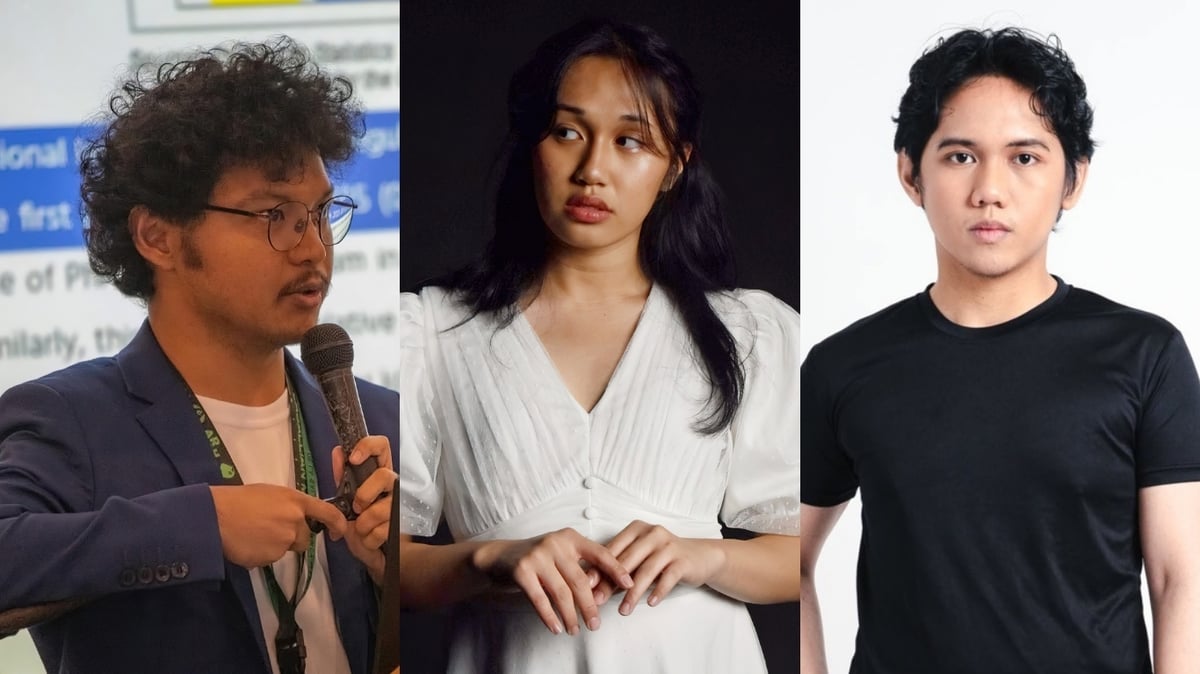
Among this year’s first-time — or “virgin” — playwrights are Elijah Felice Rosales, author of Human Rights Story of the Year; Alab Usman of Haram; Ron Evangelista of She’s Electric and Gab Mactal of Lualhati.
The harrowing but rewarding road to VLF XXI
“My first love talaga (really) is writing for theater,” Mactal confessed, recalling that her journey began in seventh grade.
While writing Lualhati, the Theater Arts student struggled with not knowing how the play would end. At a low point, she visited the Saint Aloysius Gonzaga Chapel at Ateneo de Manila University despite not considering herself religious.
“It was a low point, then may random girl na nakakita sa akin (who happened to see me). Niyakap ako (She embraced me). I just surrendered to the fact that I didn’t have everything figured out,” she recalled.
Media and philosophy teacher Evangelista encountered a similar creative impasse while drafting She’s Electric.
“Pagdating sa scripts, naramdaman ko kasi na (When it comes to scripts), I feel like there’s a certain freedom. Doon ako talaga na-hook (That was what truly drew me in). I have so much to tell,” he shared. The absence of catharsis in academic writing eventually led him toward theater and fiction.
“Umabot ako ng (I reached)12 drafts,” Usman, a full-time freelance artist, said with a chuckle.
Haram grew out of his college thesis. Before writing the stage directions, he developed character sketches of his protagonists, drawing inspiration from real-life struggles he encountered online.
“Doon ako nagsimula talaga, since wala pa akong background dati sa pagsusulat (That was where I truly began because I did not have any previous background in writing),” he said.
Rosales, meanwhile, has worked as a journalist for nearly a decade. Through Human Rights Story of the Year, he entered the Philippine theater as a playwright.
“Kahit sabihin mo na (Even though) the piece is meant to be watched by hundreds of people at the same time, na collaboration makes it work, the writing process is a lonely act,” he reflected, emphasizing the importance of finding fellow artists who believe in the same vision.
Finding strength in humanity’s flaws and gray areas
Rosales’ Human Rights Story of the Year explores an enduring dilemma faced by media practitioners.
“May mga sitwasyon kasing naghihilahan ’yong tama at mali. Kapag ginagamit sa balita ang kuwento ng marginalized, sila ba ’yong nakikinabang o ang media? (There are situations in which right and wrong pull in opposing directions. When the stories of marginalized people are used in the news, who truly benefits — the marginalized communities or the media?)” he asked.
Rather than offering easy answers, Rosales hopes audiences will wrestle with the same questions that shaped his script.
In She’s Electric, Evangelista confronts the deeply human desire for love and acceptance through an absurd situation conceived during a depressive episode.
“Napaisip ako na parang mahihirapan akong makahanap ng taong matatanggap ako for who I am, dahil sa perceived eccentricities ko (I began to think that I might have difficulty finding someone who would accept me for who I am because of what others perceive as my eccentricities). Everybody just wants to be understood,” he said.
Mactal’s Lualhati, meanwhile, invites older queer people to reckon with the beliefs and expectations that shaped their upbringing.
“My play naman is an invitation for older queer people to reconcile with how they were raised. I’m sure sobrang iba sa (they are different from) how I was raised,” she explained.
Dedicated to those who feel compelled to justify their existence or confine their identities within social conventions, the play examines the religious guilt that may arise from the imposed belief that nonconformity is an anomaly.
Usman places kindness — the value he sees at the heart of all religions — at the center of Haram, which intertwines the lives of three queer Muslims.
“I believe na shared experience ’yong pag-come out, pero marami akong (I have many) friends sa (in the) province na nagtatago pa rin (who are still hiding) until now,” he said, acknowledging the painful disparity between the relative openness he has witnessed in the city and the circumstances faced by people in his hometown of Zamboanga City.
The VLF Stage as the fulfillment of an artist’s dream
During VLF 2024, Usman served as dramaturg for Neil Arkhe Azcuna’s Si Hesus Na’a Sa US. This year, he shares the festival stage with Azcuna as a playwright — a profound full-circle moment for the artist behind Haram.
“I believe ang VLF ay isa sa mga (is one of the) medium para ipakita sa mga tao ’yong kultura at (to show people the culture and) religion ko [Islam]. Nabibigyan kami nito ng espasyo (It gives us space),” Usman said.
Rosales, an avid VLF audience member since 2013, first mounted a work during the culmination of the festival’s Writing Fellowship Program in 2023. Fascinated by the inner workings of the theater festival, he felt immense joy upon becoming one of VLF XXI’s mainstage playwrights.
“Alagang-alaga kami sa puna. Ang writer, mahal ang mga tauhan niya, pero para sa ’kin, mahalaga ang kritisismo, ’yong disiplina (We are carefully guided through criticism. Writers naturally love their characters, but for me, criticism and discipline are essential),” he said.
A newcomer to the theater world, Evangelista discovered that VLF’s prestige lies not only in its reputation but also in the passion invested by every person involved in bringing a production to life.
“It’s cheesy, pero no’ng na-experience ko siya (but when I experienced it), I realized I love this. The first time na nag-full run kami [ng She’s Electric], naluha ako nang kaunti (I slightly teared up),” he recalled. Seeing his work fully realized onstage left him needing a moment to absorb the experience.
“Is this a dream?” was Mactal’s first thought upon learning that Lualhati had been accepted into VLF.
She wrote the play during the Covid-19 pandemic, unaware that it would one day reach the stage.
“The VLF reveals parts of yourself and undresses the work. Hubad ka talaga sa harap ng (You are really naked in front of the) keyboard para sa play mo (for your play),” she said.
Baring the soul in VLF XXI: ‘Hubo’t Hubad’
In its 21st year, the Virgin Labfest confronts the courage, frailties, and shortcomings that define humanity — and the devastating yet poignant consequences they can bring. While granting playwrights the freedom and opportunity to tell their stories, the festival challenges audiences to behold the beauty, brilliance, and grime that make up the human soul.
Evangelista, Rosales, Usman and Mactal embraced this challenge. They weathered the emotional whiplash of being accepted into VLF, endured nerve-racking critiques, and witnessed the strongest versions of their works emerge in time for their premieres.
Beyond their talent and commitment, however, their courage deserves recognition. Through their plays, they have stripped away protective layers, dissected deeply personal stories, and laid them bare onstage for audiences to witness.
VLF XXI: Hubo’t Hubad performances are scheduled at 2 p.m. and 8 p.m. from 3 to 28 June at the Tanghalang Ignacio Gimenez, also known as the CCP Black Box Theater.
