
Alitagtag’s Tapusan 2026: Bright karosas enliven Flores de Mayo tradition


The town of Alitagtag, nestled along the southern shore of Taal Lake in the central part of Batangas, scintillated on the evening of 31 May as 11 karosa, or floats, designed in different themes, adorned with flowers and illuminated with lights, delighted spectators during its traditional celebration of Tapusan.
Tapusan is the culminating event of Flores de Mayo (Flowers of May), the month-long Roman Catholic practice of honoring the Virgin Mary through the daily offering of flowers to her images, along with prayers and catechism. In many parts of the Philippines, the observance concludes with Flores de Mayo processions. In several towns of Batangas, Cavite and Laguna, this conclusion is celebrated as Tapusan, which is Tagalog for “ending,” and is observed by a variety of religious and community activities.
Alitagtag’s Tapusan not only marks the end of Flores de Mayo but also the close of a month of religious activities and festivities in the town, such as the Pagtatagpo ng Magkapatid na Krus on 2 May, the fiesta of the sitio of Binukalan, and the town fiesta on 7 May. Its highlight is a procession in which the karosa, the carriages bearing images of the Virgin Mary, are transformed into large and elaborate floats.
The tradition is believed to have begun even before Alitagtag became a separate town from Bauan in 1910. Devotion to the Blessed Virgin Mary grew in the Philippines after Pope Pius IX declared the dogma of the Immaculate Conception on 8 December 1854, through the papal bull Ineffabilis Deus. Father Mariano Sevilla’s Flores de María ó Mariquit na Bulaclac later helped popularize Flores de Mayo, which was first held in Santa Cruz, Bulacan, in 1867. The practice eventually spread to other parts of the country, including Batangas.
Unlike celebrations organized mainly by the church or local government, Tapusan in Alitagtag is largely community-led. At the center of the festivity are the kapisanan from the town’s different barangays. By early or mid-May, Alitagtagueños begin preparing their floats. In many barangays, a hermana or hermano mayor, much like in town fiestas, helps finance the float, provides food for the workers and makes key decisions. The hermana or hermano mayor also leads the procession. In barangays without one, the kapisanan itself shoulders the cost of creating the float, whose theme and design change every year.
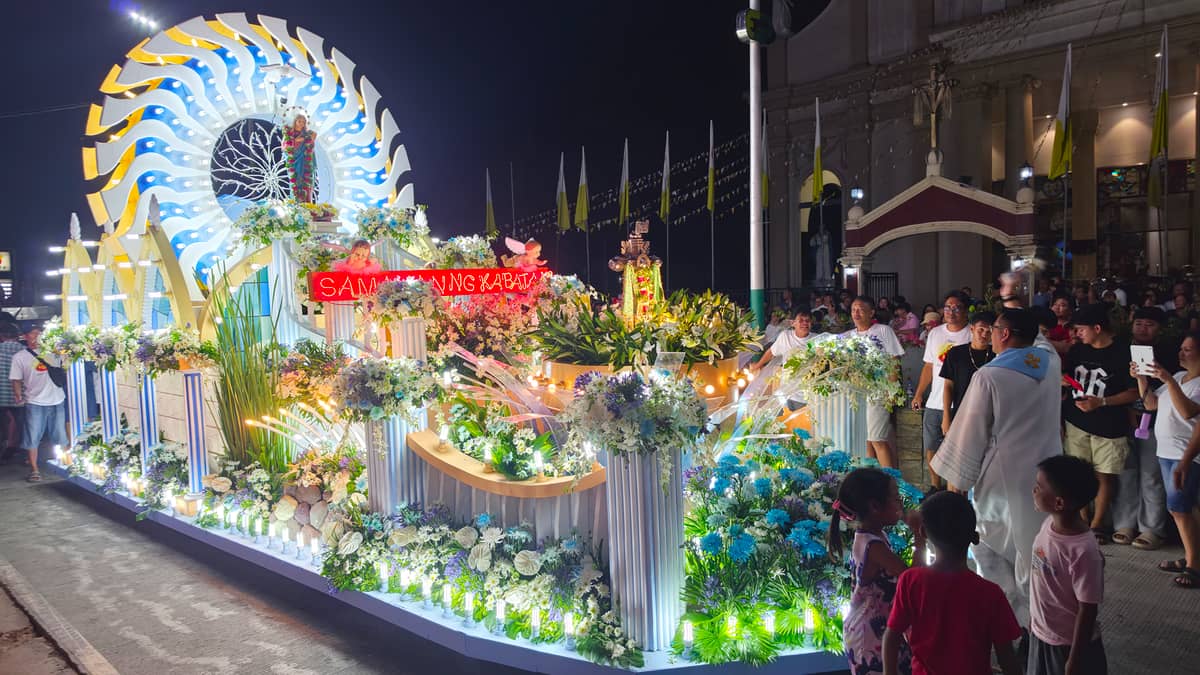
FLOAT of Samahan ng Kababataan of the barangay of Poblacion East.
The participating groups for 2026 were Kapisanan ng Flores de Mayo of the barangay of Poblacion Centro; Samahan ng Kababataan of the barangay of Poblacion East; Kapisanan ng Ilaw sa Karimlan of the barangay of Muzon Primero; Kapisanan ng Buklod ng Kababataan of the barangay of San Jose; Kapisanan ng Bulaklak sa Mayo of the barangay of Concepcion; Kapisanan ng Bagong Pag-asa of the barangay of Balagbag; Kapisanan ng Diwa ng Kababataan of the barangay of Poblacion West; Kapisanan ng Bukang Liwayway of the barangay of Pinagkurusan; Samahan ng Pagkakaisa of the barangay of Dalipit West; Kapisanan ng Bahay Kubo of the barangay of Dominador East; and Kapisanan ng Perlas ng Silangan of the barangay of Dalipit East.
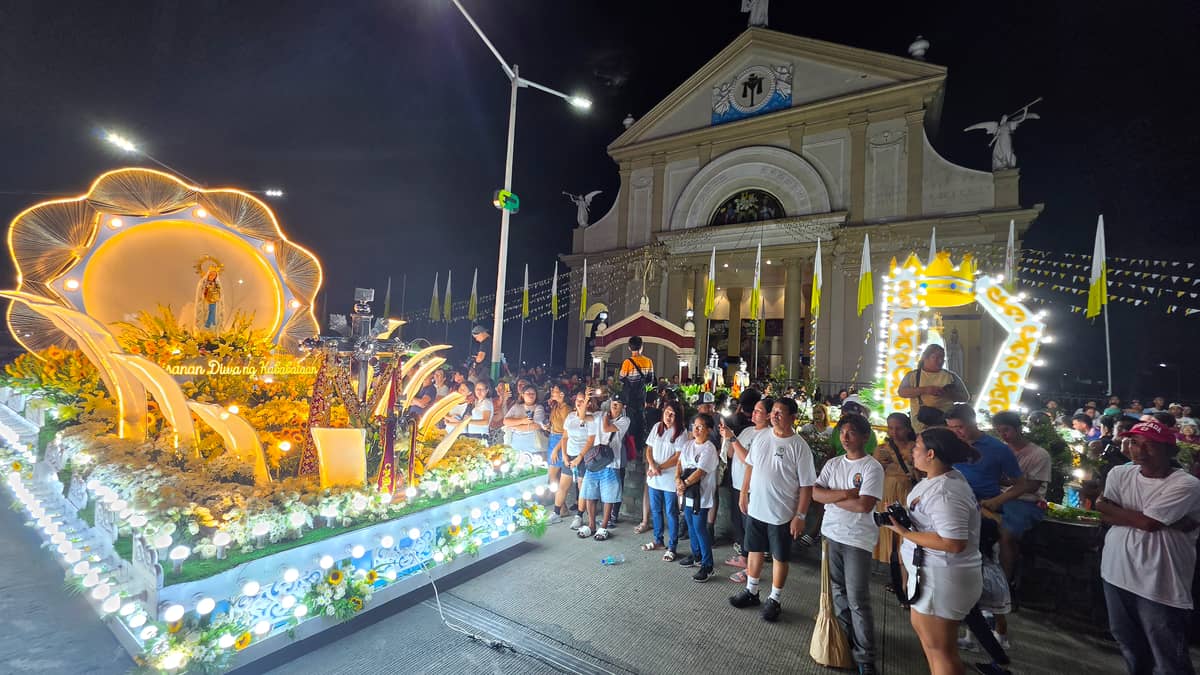
THE karosa of Kapisanan ng Diwa ng Kababataan of the barangay of Poblacion West.
The Kapisanan ng Bagong Samahan of Dominador East had paraded its float on 30 May, bringing the total number of floats to 12. Other barangays held their own Tapusan celebrations on other dates, including the Kapisanan Ilaw sa Landas’ in San Jose on 1 June and the Kapisanan ng Pagkakaisa’s in Kanto Santa Cruz on 2 June.
As the sun began to set on 31 May, each karosa made its way from its home barangay to the Invencion de la Santa Cruz Parish Church at the town proper. They were accompanied by sagala, women and girls chosen for the procession and dressed in elegant gowns, together with their escorts. Some contingents brought marching bands or street dancers, adding music and movement to the evening procession.
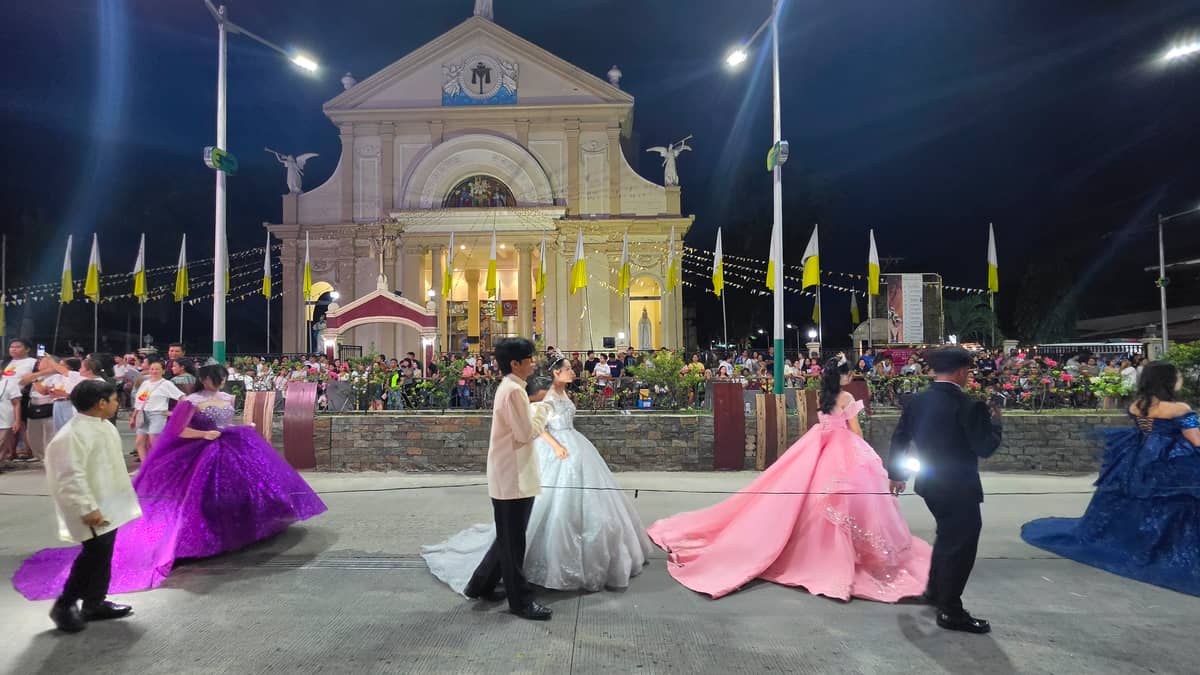
EACH float is accompanied by sagala and their escorts.
Each float was richly decorated with flowers and brightened with lights. Aside from Marian images, the floats also carried the image of the Holy Cross, the revered patron of Alitagtag. Upon reaching the church, the floats stopped to be blessed by the parish priest. Representatives from the kapisanan described the features of their floats and explained the meanings behind their themes and designs before the contingents returned to their home barangays. The whole event lasted about five hours.
Alitagtag gradually returned to its quiet rhythm. But every Tapusan, the town lights up again, bright with communal creativity, devotion and the enduring grace of an old tradition kept afloat by its people.