
Toyota reaffirms commitment to Philippine auto industry growth
TOKYO — Japanese automotive giant Toyota Motor Corporation (TMC) reaffirmed its commitment to the Philippines, pledging continued support for the country's automotive manufacturing sector and broader industrial ecosystem.
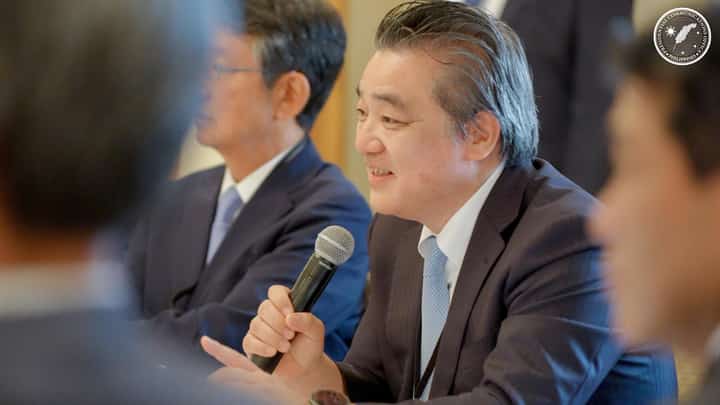
During the high-level Tokyo Business Roundtable on Thursday, held as part of President Ferdinand Marcos Jr.'s state visit to Japan, TMC Asia Region CEO Masahiko Maeda highlighted Toyota's nearly 38 years of operations in the Philippines and its role in supporting local economic growth.
"Toyota remains committed to being a reliable, long-term partner to the Philippines, supporting industrial development and ASEAN cooperation. We encourage the government to promote CKD-based local manufacturing across all technologies. This will help micro, small, and medium enterprises (MSMEs), deepen localization, strengthen local suppliers, attract investment, and sustain employment," Maeda said.
Toyota Motor Philippines Corp. (TMP) continues to lead local automotive manufacturing through the production of models such as the Vios, Innova, and Tamaraw, while maintaining Complete Knocked-Down (CKD) operations in the country.
Maeda emphasized the need for continued government support to sustain the local automotive industry amid shifting global supply chains, including support for internal combustion engine vehicles, which remain closely linked to supply chains and everyday mobility needs.
A key component of Toyota's Philippine operations is Toyota Aisin Philippines Inc. (TAP), which manufactures and exports automotive transmissions. Through TAP, the Toyota Group has exported manual transmissions worth more than $3.8 billion to markets across Asia, Africa, and Latin America, reinforcing the Philippines' position in the global automotive value chain.
Maeda also highlighted biofuels as a critical component of Toyota's forward-looking strategy under the Asian Zero Emission Community framework, noting their potential to strengthen both energy security and agricultural development.
By promoting the adoption of biofuels such as E20 and B5, he said, the Philippines can build a cleaner mobility ecosystem while creating economic opportunities for local farmers and enhancing energy self-sufficiency.
Backing PH-Japan ties
Maeda likewise reaffirmed Toyota's commitment to strengthening bilateral ties between Japan and the Philippines.
For his part, President Marcos underscored the long-term value of Japanese investments, describing Japanese companies as key contributors to the country's development.
"Japanese companies have long been part of the Philippine story. But today, I want to say this clearly: you are no longer just investors in our economy; you are the builders of our economy. Across infrastructure, manufacturing, energy, mobility, logistics, digital transformation, trade, tourism, and services, Japanese enterprise has become deeply embedded in the Philippine development journey," Marcos told Japanese business leaders.
The roundtable concluded with participating Japanese corporations expressing confidence in the Philippines' economic direction.
Officials said continued collaboration between the Philippine government and major industrial players such as Toyota is expected to further strengthen the 70-year economic and diplomatic partnership between the Philippines and Japan.