
Spain pork imports resume after ASF review
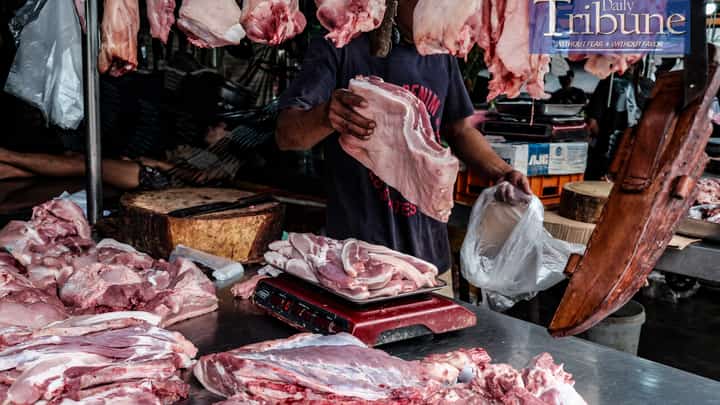
A MEAT vendor chops a pork belly upon order on August 18, 2024. The spread of African Swine Fever (ASF) in the Philippines has led to panic among hog raisers, prompting some to sell infected pigs to traders, further worsening the situation. The Bureau of Animal Industry (BAI) has intercepted several trucks carrying pigs from ASF-hit areas, and the Department of Agriculture (DA) suspects that these traders are a major source of the virus's spread. The government is set to start vaccinating pigs soon to control the outbreak, though concerns remain about the limited availability and effectiveness of vaccines. If the situation deteriorates, the government may consider importing pigs to address potential shortages. PHOTO BY YUMMIE DINGDING
Photo by Yummie Dingding for DAILY TRIBUNE
The Philippines has reopened its market to Spanish pork imports after the Department of Agriculture (DA) recognized Spain’s regionalized control measures against African Swine Fever (ASF), signaling a shift toward more flexible trade policies aimed at stabilizing meat supply and easing pressure on local pork prices.
Agriculture Secretary Francisco P. Tiu Laurel Jr. approved the resumption of imports through Department Circular No. 22, allowing pork meat, pig skin, and other swine products from Spain to re-enter the Philippine market under strict sanitary and quarantine rules.
The decision comes as the government continues balancing food security concerns with efforts to protect the domestic hog industry, which remains vulnerable after years of ASF outbreaks that disrupted local production and pushed pork prices higher.
The Philippines suspended Spanish pork imports last year after ASF cases were reported in parts of Europe, prompting tighter border restrictions on swine products.
Under the revised policy, imports from Spain must comply with bilateral sanitary agreements, Philippine quarantine regulations, and the government’s ASF regionalization framework under Administrative Circular No. 12 issued earlier this year.
The Bureau of Animal Industry (BAI) said its assessment found Spain’s veterinary monitoring and disease-control systems sufficient to minimize ASF transmission risks from approved low-risk zones.
Tiu Laurel said the government remains cautious but is now adopting a more science-based approach to food trade management.
“We remain vigilant against ASF, but we also recognize the importance of science-based risk assessment and international cooperation in securing stable food supply chains,” he said.
“Allowing imports from properly regulated and monitored areas in Spain helps diversify our pork sources while maintaining strict animal health standards,” he added.
The agriculture chief noted that regionalization allows disease outbreaks to be isolated within specific areas instead of triggering blanket nationwide trade bans, aligning Philippine policy with international veterinary standards.
Industry analysts said reopening Spanish pork imports could help improve supply availability and moderate retail pork prices as the country continues rebuilding its hog inventory.
Spain remains one of the world’s major pork exporters and has long supplied the Philippine market prior to the temporary restriction.
The department said the order takes effect immediately unless later revoked or amended.