
Digital tools upgrade makes BoC’s 2025 trade facilitation thrive
Strategic partnerships further amplified the impact of BOC’s modernization initiatives.

CUSTOMS Commissioner Ariel Nepomuceno (left) and Federation of Philippine Industries chairperson Beth Lee talk about how the Bureau of Customs would improve its services to importers and exporters, primarily by means of digitization, in a forum at the Manila Polo Club, Makati City, last year.
The Bureau of Customs (BoC) said its push to make all transactions at the bureau digital has resulted in momentous growth in trade facilitation.
Apart from the digital tools upgrade, Customs Commissioner Ariel Nepomuceno also attributed the faster trade engagements to strengthening digital customs services, streamlining policies, and deepening collaboration with stakeholders to ensure faster, more predictable, and transparent clearance of goods across ports of entry.
Proving this, the Bureau, last year, introduced the upgraded Online Tax Estimator, a more intuitive, web-based tool that helps importers anticipate duties and taxes with greater accuracy, even before lodging declarations.
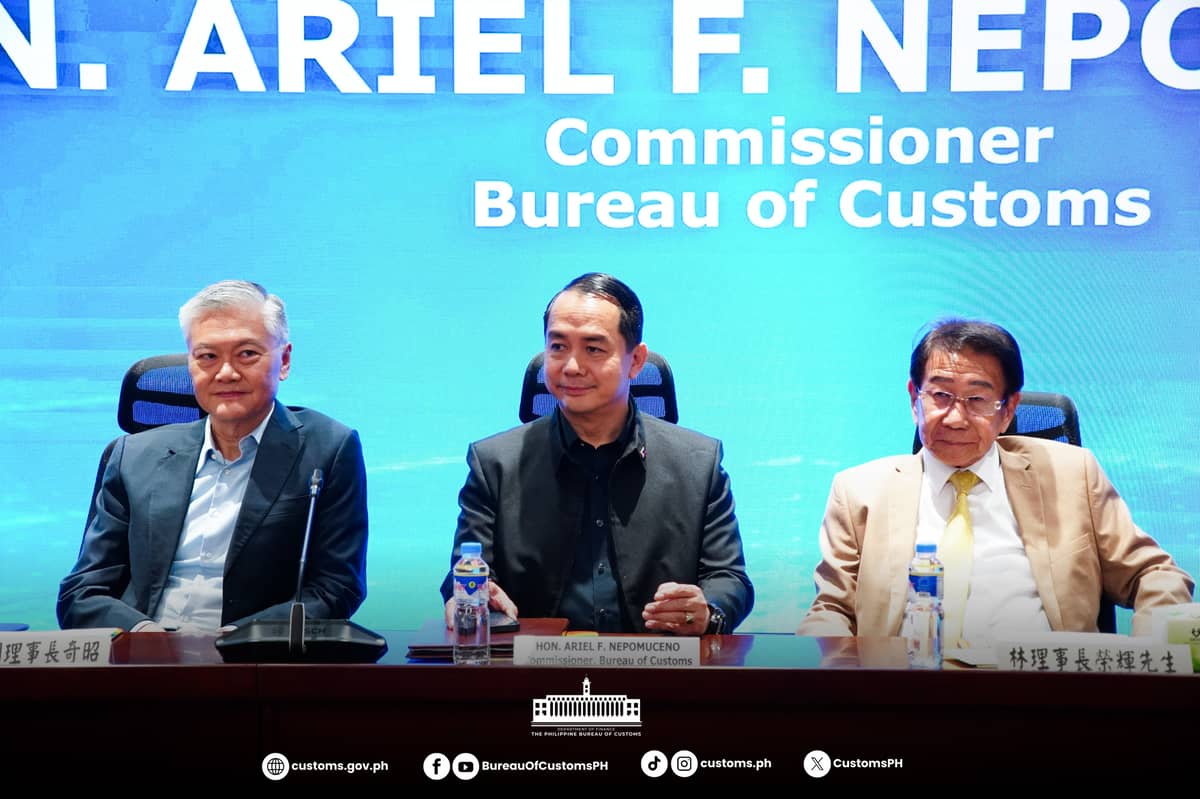
BUREAU of Customs Commissioner Ariel Nepomuceno (center) recently met with officials of the Federation of Filipino Chinese Chambers of Commerce and Industry, Inc., headed by its president Victor Lim (rightmost) and Executive Vice President Jeffrey Ng, as the business group backs Nepomuceno for his ongoing reforms anchored on integrity, accountability, and modernization.
Aside from that, the BoC also launched the Origin Management System, which automates the issuance and processing of the Product Evaluation Report, a mandatory document for goods intended for export under Free Trade Agreements, reducing processing times and promoting export competitiveness.
The BoC, to strengthen regional interoperability, also implemented the ASEAN Electronic Document Exchange, enabling faster cross-border verification of trade documents and ensuring regional interoperability. In addition, the agency proposed the integration of the Automated Export Declarations System across economic zones to support the future digitization of export submissions, with the potential to reduce errors and strengthen compliance.
Moreover, the BoC also improved processing for strategic and export-related goods through critical operational upgrades, including the streamlined clearance of aircraft parts at Clark International Airport and the full rollout of the electronic Certificate of Origin portal.
Easing trade barriers via reforms
The BoC also reinforced predictability and reduced administrative burdens for traders, as part of its policy improvements in 2025, which go hand-in-hand with digital reforms.
Importer accreditation validity was extended from one year to three years, allowing companies to plan operations with confidence and enabling BOC to focus on risk-based monitoring.
Further, a nationwide standardization of off-dock tariffs strengthened transparency and consistency in logistics costs, while clearance procedures for cross-border e-commerce goods were also streamlined to improve online trade efficiency.
Measures such as the temporary suspension of routine Green Lane scanning at airports and the effective implementation of a 60-day rice import suspension demonstrated the Bureau’s calibrated approach in balancing facilitation, border security, and market stability.
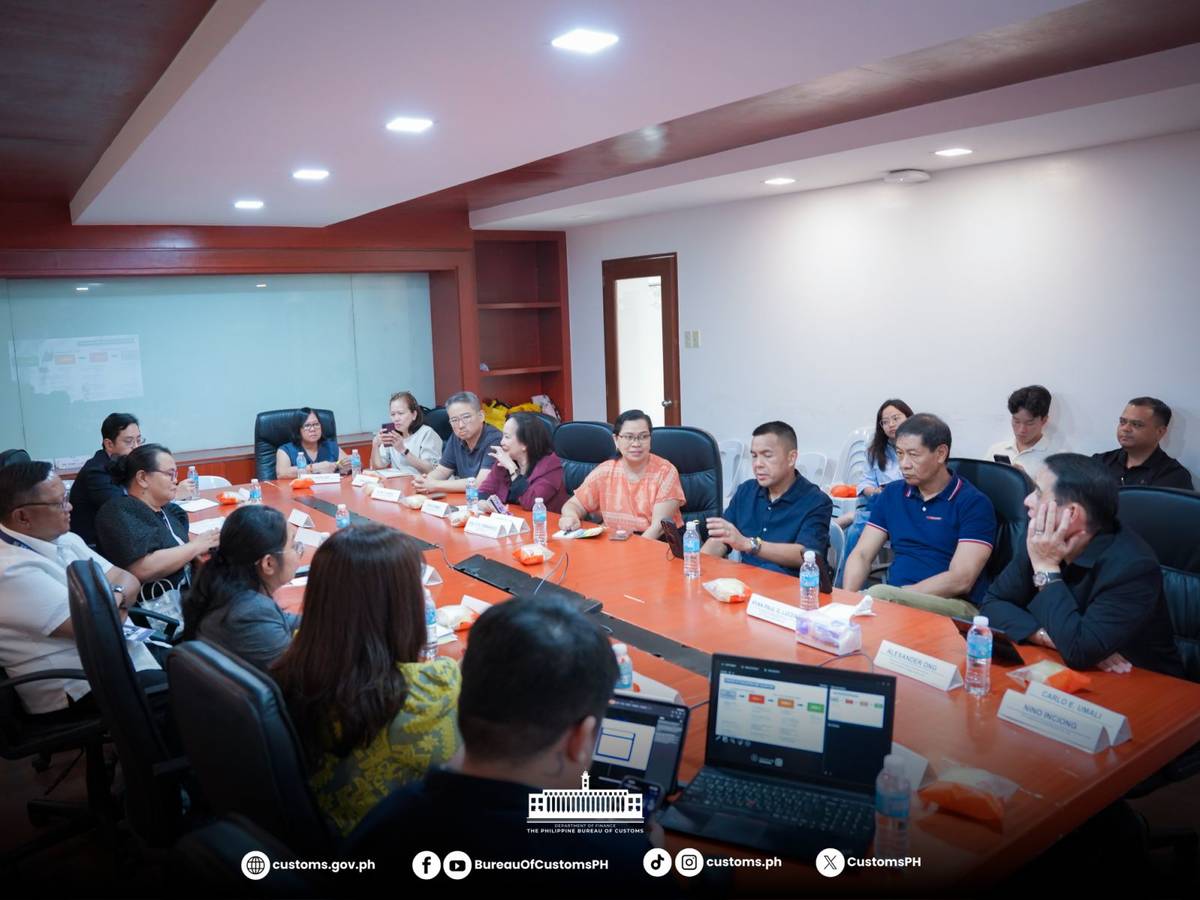
BUREAU of Customs personnel gather in a meeting on how to further improve their transactions by means of digital tools, heeding the orders of Customs Commissioner Ariel Nepomuceno.
Digitizing service delivery
Likewise, the BoC enhanced service delivery through the Enhanced Tax Exemption System Lite (e-TES Lite), further digitizing the filing and processing of tax and duty exemption applications.
To expand trust-based facilitation, the BOC strengthened its engagement with compliant traders through the Authorized Economic Operator (AEO) and Super Green Lane (SGL) programs.
In 2025, 11 companies were formally accredited under the AEO program, including Sony Philippines, Coca-Cola Europacific, Toyota Motor Philippines, Brother’s Industries, and Aboitiz Philippines, among others.
Meanwhile, SGL membership grew to 273, continuing the Bureau’s efforts to reward low-risk traders through expedited customs processing and improved supply chain efficiency.
Collaboration with business groups
Strategic partnerships further amplified the impact of BOC’s modernization initiatives.
Collaborations with the Philippine Chamber of Commerce and Industry (PCCI) and Makati Business Club (MBC) supported technical guidance and the co-design of key digital upgrades.
Agreements with the Subic Bay Metropolitan Authority (SBMA) also helped optimize customs operations within the freeport.
Moreover, BoC’s consultations with the Federation of Filipino Chinese Chambers of Commerce and Industry (FFCCCII) and the US-ASEAN Business Council strengthened the agency’s adherence to global best practices and improved the trade environment for investors and industries.
The Bureau also strengthened interagency coordination, including engagement with the Strategic Trade Management Office (STMO) and investment promotion agencies, to ensure seamless regulation of dual-use and strategic goods.
In support of evidence-based improvements, the BOC advanced reforms through the National Time Release Study (TRS), which was developed with the World Customs Organization.
The TRS enables the Bureau to identify bottlenecks and reduce cargo clearance times, and implement targeted interventions across processes and ports.
Reform momentum was further supported by initiatives from ARISE Plus Philippines and the DIGIPINAS project, strengthening e-commerce processing and supporting enhanced digital risk assessment for cross-border goods.
These efforts contributed to the Philippines’ strong regional performance, with the country ranking second in ASEAN in the 2025 UN Global Survey on Digital and Sustainable Trade Facilitation, reflecting measurable gains in efficiency, transparency, and modernization.