
Boost in seafarer education funding urged

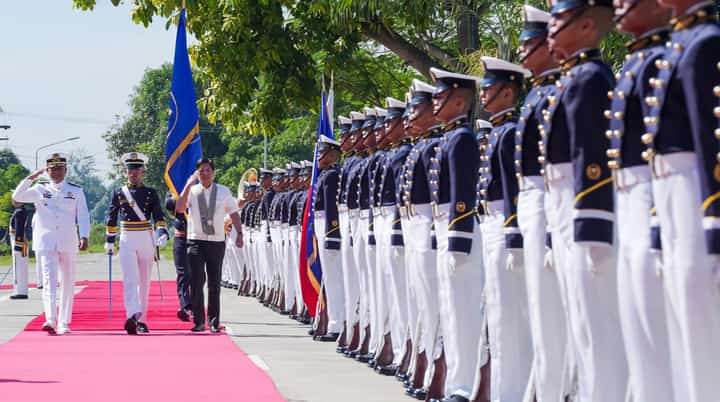
Alumni of the Philippine Merchant Marine Academy (PMMA) are calling on the national government to boost funding for seafarer education, saying stronger investment is crucial to sustaining the country’s role as the world’s top supplier of maritime workers.
The appeal was raised during the PMMA Alumni Grand Homecoming 2026, held on Saturday at the academy’s campus in San Narciso, Zambales.
Outgoing PMMA Alumni Association president and CGA Commodore Jeremias M. Simon, MNSA, said government support must keep pace with the Philippines’ massive contribution to the global shipping industry.
“Filipino mariners make up more than 25 percent of the world’s 1.5 million international seafarers, dominating both officer and rating positions,” Simon said. “In 2024 alone, over 500,000 seafarers were deployed, contributing about P1.06 trillion to the Philippine economy.”
Simon noted that during his term, the alumni association focused on nation-building by helping develop PMMA graduates, but stressed that real progress requires sustained government backing.
“The Philippines is not a maritime power, but a maritime manning power,” he said. “That didn’t happen overnight — it started more than 200 years ago, during the Spanish era.”
He pointed out the stark funding gap among government academies: the Philippine Military Academy (PMA) receives P1.7 billion, the Philippine National Police Academy (PNPA) about P1.5 billion, while PMMA gets only P300 million.
That amount, he explained, already covers daily meals for 1,100 cadets, salaries of 300 employees, and the upkeep of 69 hectares of land and facilities.
“If the government does not invest in the maritime industry — especially maritime education — we will stay where we are,” Simon said.