
The power of all the gods: The Pantheon of Rome


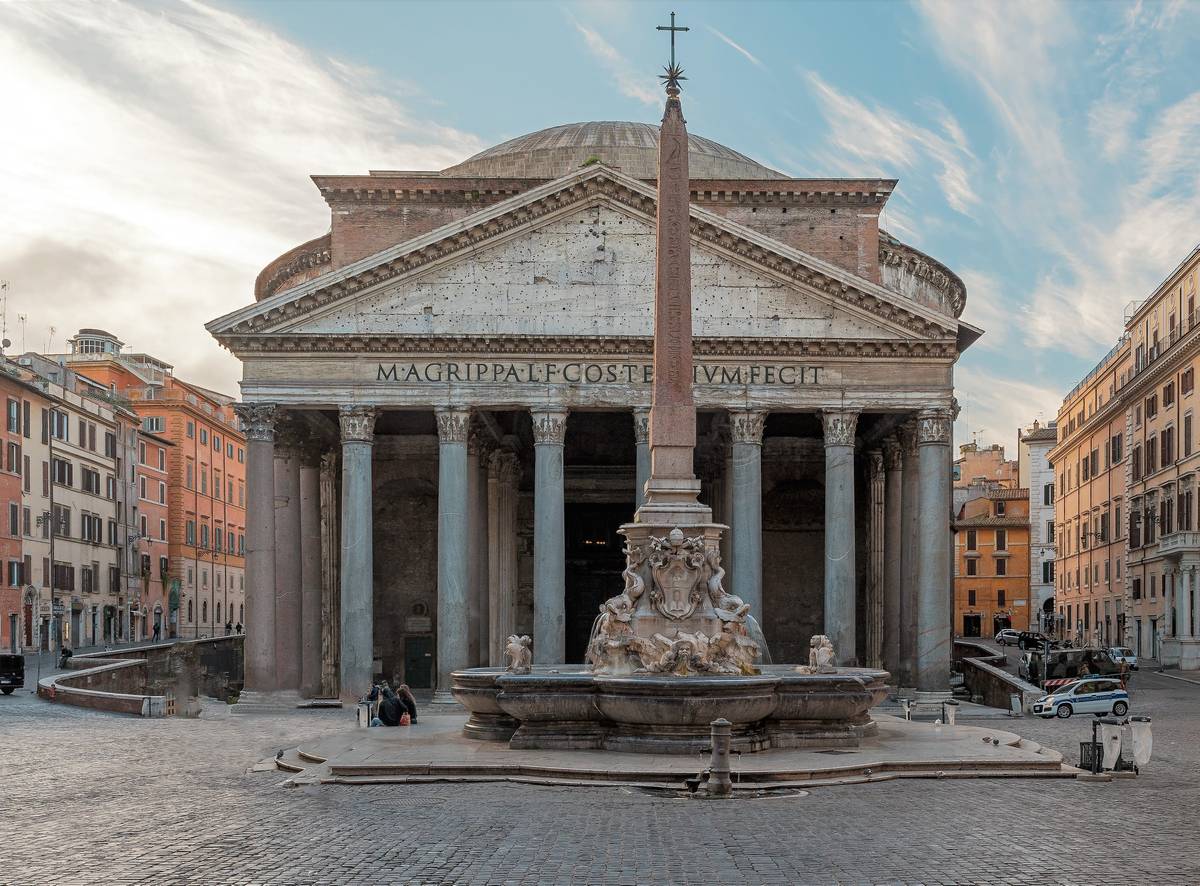
THE Pantheon in front of the Piazza della Rotonda.
PHOTOGRAPHS BY EDU JARQUE FOR DAILY TRIBUNE
After a leisurely paseo through the fabled streets of Rome — passing by the impressive Arch Constantine, the ancient site of the Colosseum, and the ruins of the once-upon-a-time Roman Forum and the Palatine Hill — I found myself by the Piazza della Rotonda once again, in front of the imposing architectural marvel that is The Pantheon. Though I have visited this engineering titan several times before, nothing has ever prepared me through the years for the stillness of its presence.
History dictates The Pantheon began as a Roman temple in the second century, howbeit its narrative stretches further back. Military genius Marcus Vipsanius Agrippa commissioned the original structure during the reign of Augustus, only for it to burn down around A.D. 80. Then Domitian rebuilt it. Lightning struck, and fire took it again by A.D. 110. In an age when lightning was thought to be the god Jupiter’s displeasure, the setbacks must have felt ominous.
Trajan likely began the third incarnation, and Hadrian finished it approximately A.D. 126. Known for restraint, he left his own name off the building. He chose instead to honor Agrippa, reusing the original inscription that still faced the square: M AGRIPPA L. F. COS TERTIUM FECIT.
I recall The Pantheon’s purpose remained one of its great mysteries. Its name came from the Greek Pantheion, meaning “of all the gods.” And yet, no single function has ever been definitively agreed upon. Since A.D. 609, it has served as a Catholic church — the Basilica of St. Mary and the Martyrs, or simply Santa Maria Rotonda.
From the outside, the portico with eight massive Corinthian columns held up the pediment which had seen history unfold before its very own proverbial eyes. Behind it, unseen from the square, reigned the rotunda — a circular area crowned by a roof which has remained the largest unreinforced concrete dome in the world.
Upon entry, I totally understood why visitors stalled in the doorway. Almost automatically, everyone looked up! The circle gave way into an oculus — the eye of the building — perfectly centered. Light poured down, shifting slowly as the time of day measurably went on, as it shone upon the coffers of royalty and power.
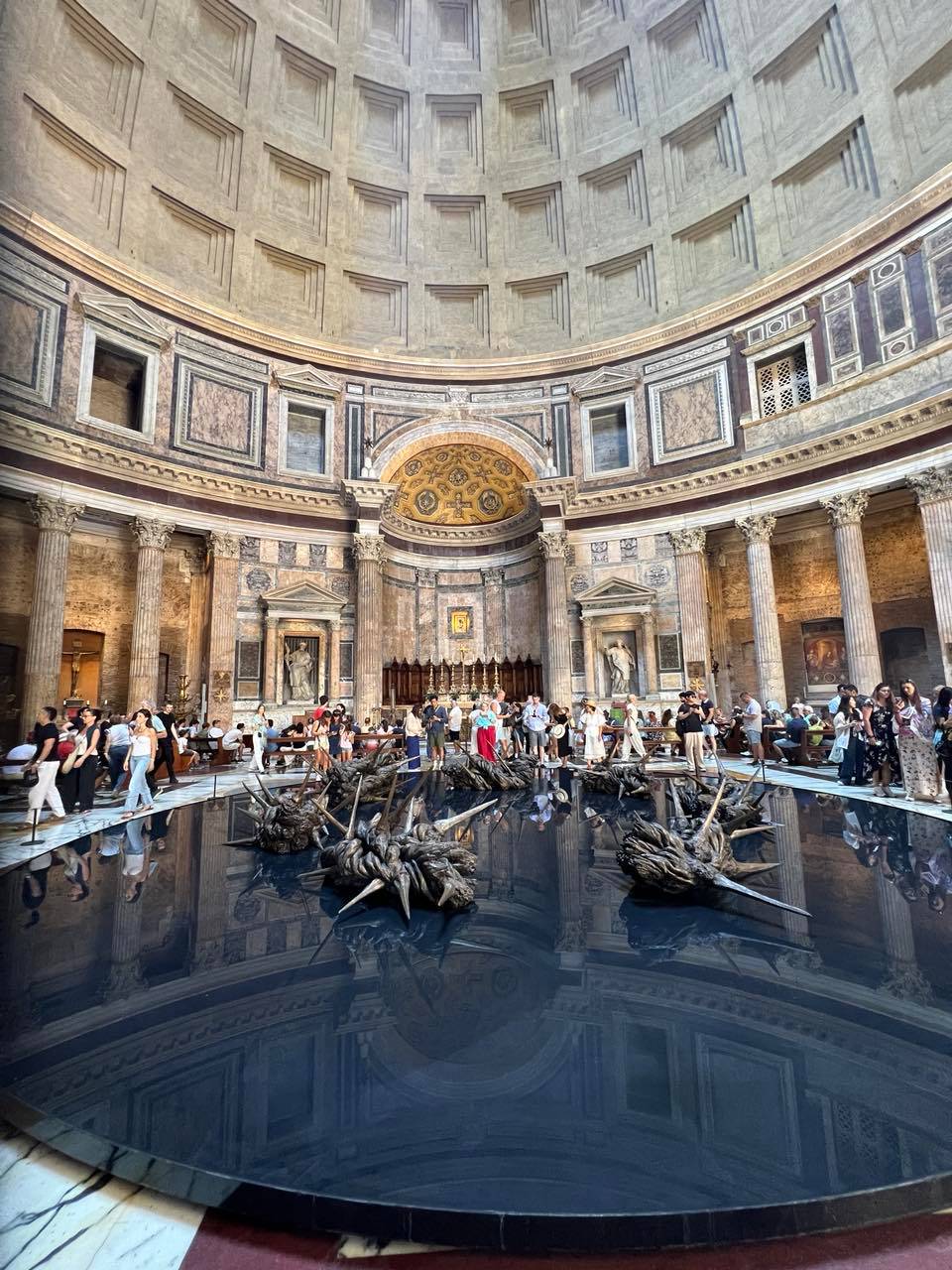
THE Crown of Thorns underneath the oculus.
Directly beneath the oculus stood Corona Gloriae, a contemporary installation by Helga Vockenhuber unveiled just last year. Seven bronze forms came together as a broken crown of thorns. At high noon, sunlight aligned perfectly above it. The symbolisms — suffering, martyrdom, redemption — felt intensified by the ancient architecture which enveloped it.
I paused at the chapel of the Virtuosi of The Pantheon, once home to Rome’s leading painters, sculptors and architects. Vincenzo de Rossi’s sculpture of Saint Joseph with the Infant Christ stood with quiet dignity.
Nearby, another chapel held the Tombs of King Umberto I and Queen Margherita of Savoy, their presence a reminder that the space had become a national mausoleum.
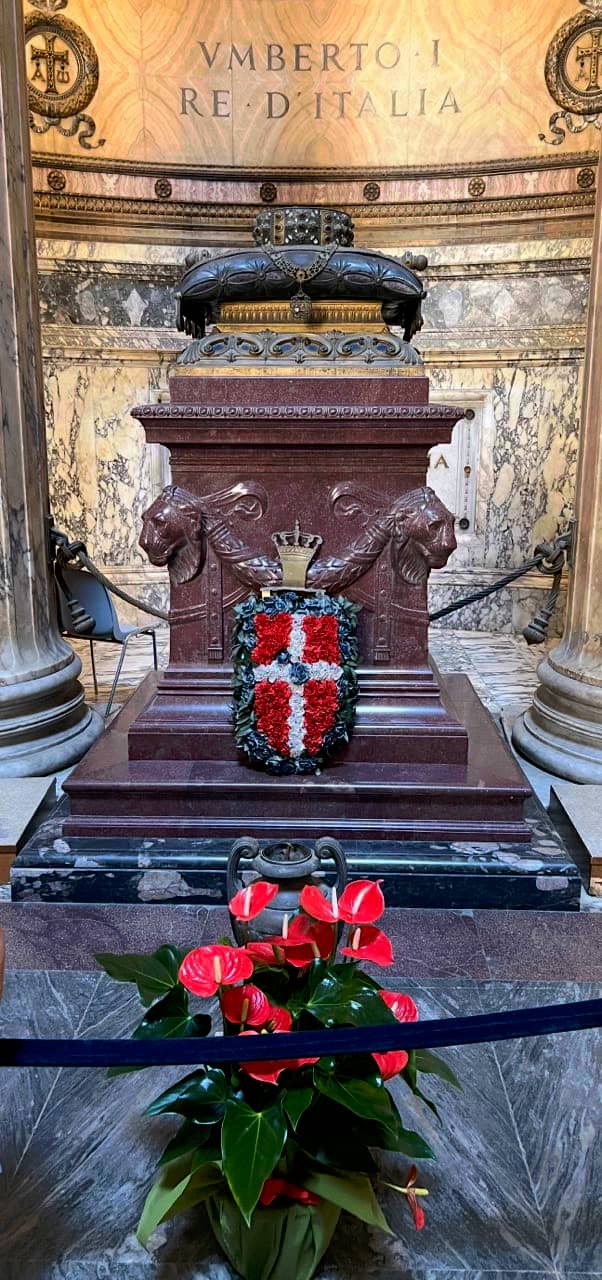
THE final resting place of Umberto I, the second king of Italy.
Our knowledgeable bursting-with-trivial-trivia tour guide whispered loudly “In Naples, a local pizzaiolo — a skilled pizza maker — created a dish in her honor using tomatoes, mozzarella and basil — colors of the Italian flag. Pizza Margherita has endured long after the monarchy faded!” Standing before her marble final resting place, I realized a queen fondly remembered was likewise thought of every day by millions in something as beloved as a slice of pizza.
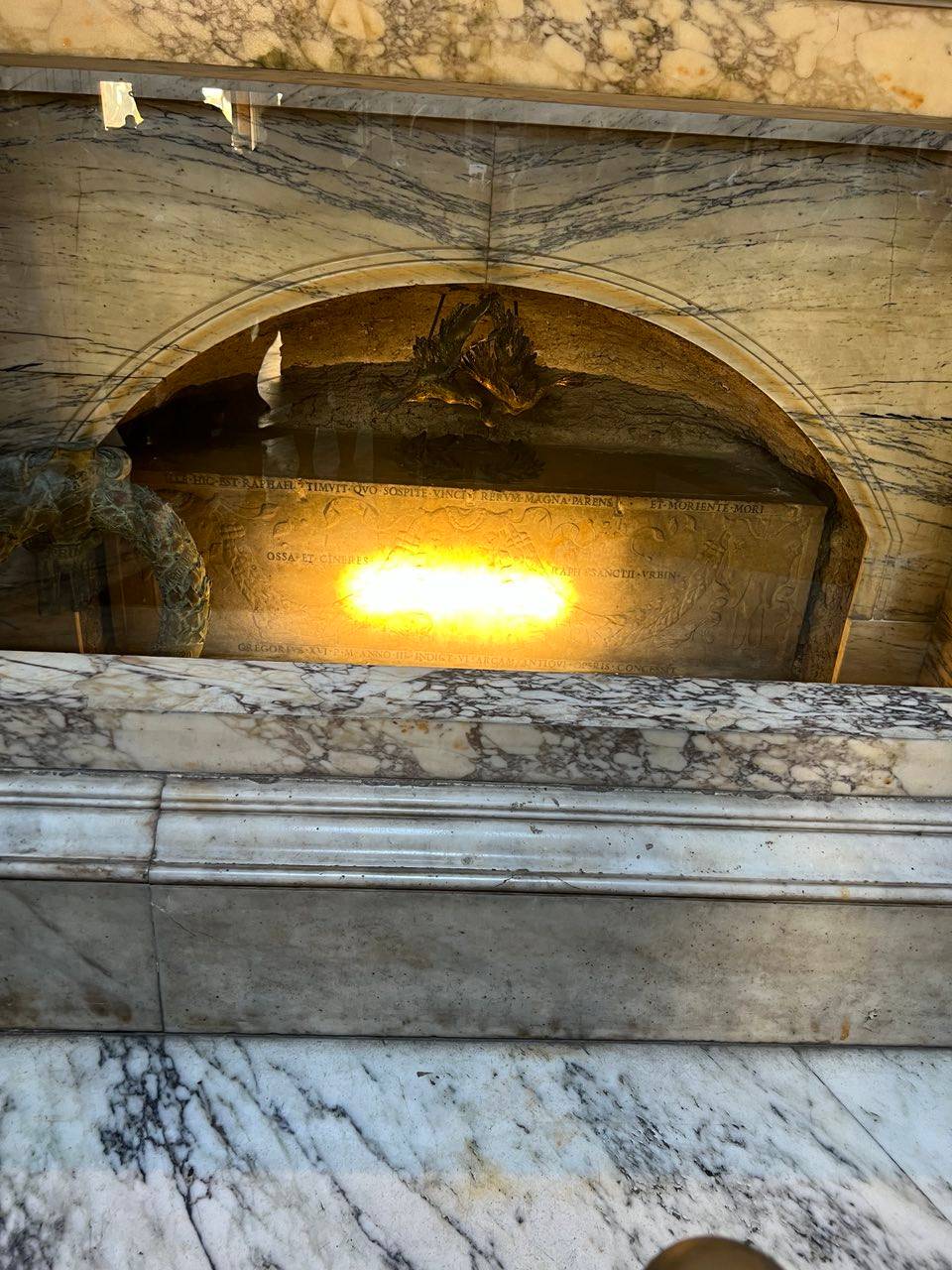
THE tomb of the legendary Raphael.
Further along laid Raffaello Sanzio da Urbino, better known by his mononym Raphael. His sepulcher lay beneath a statue of Mary and Child. The master, who died young in 1520, was buried beside his fiancée Maria Bibbiena. However, by several accounts, his heart belonged to Margherita Lute, the baker’s daughter immortalized in his paintings. I watched visitors linger longer than usual, as if reluctant to disturb the silence.
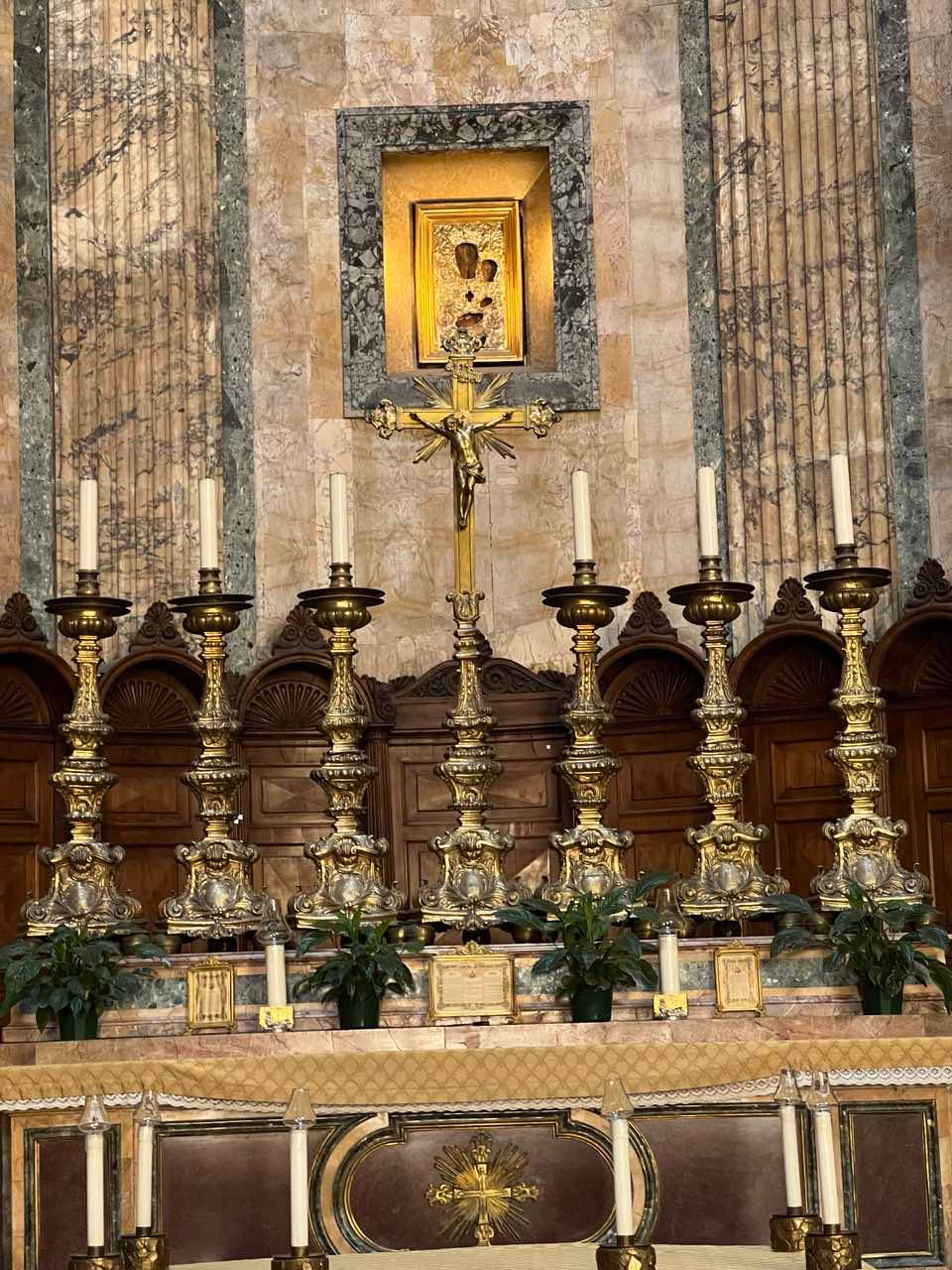
A ZOOMED in view of the altar.
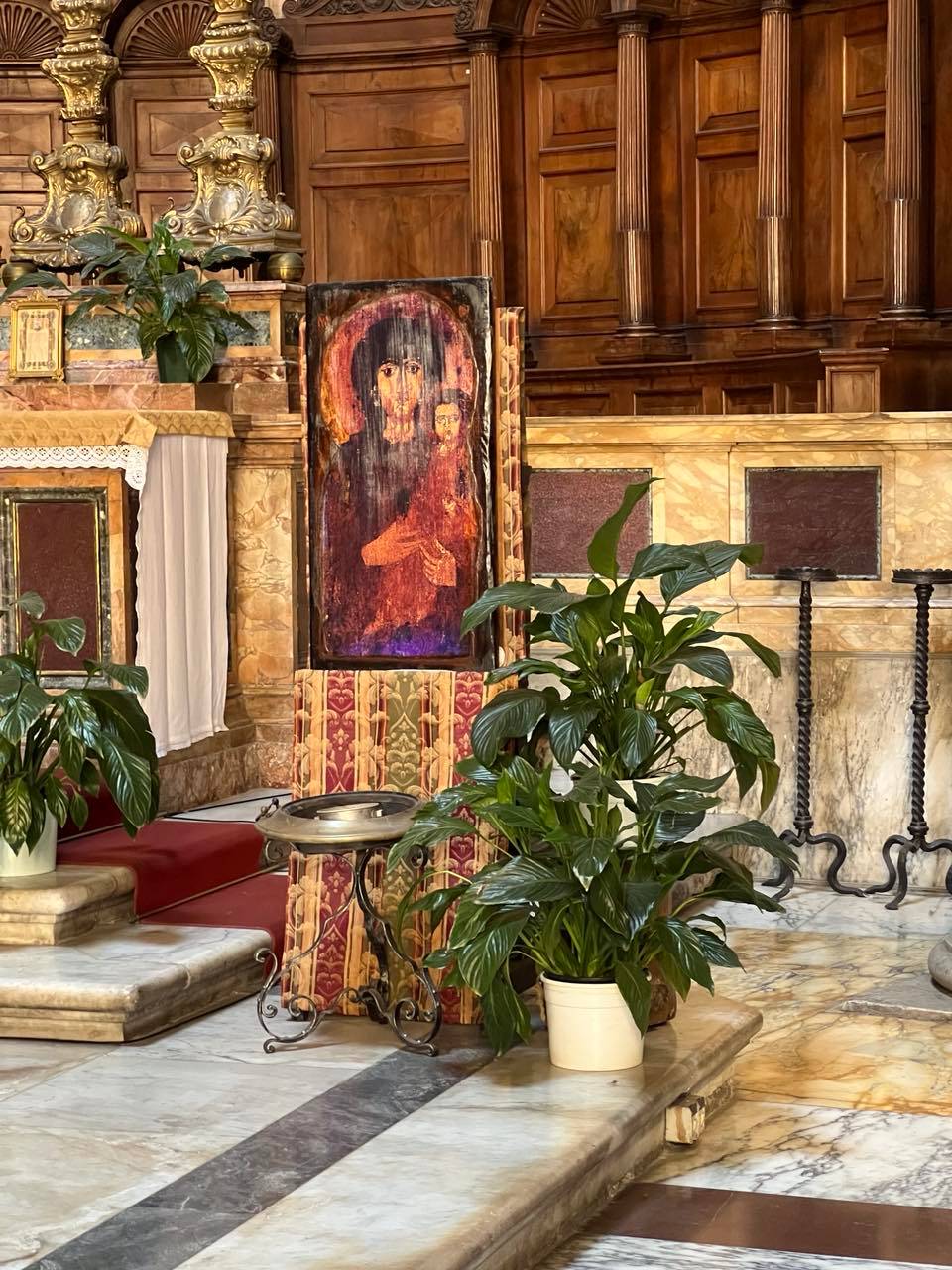
MADONNA of the Pantheon.
At the altar way opposite the entrance, the Madonna di San Luca drew quiet devotion. Nearby, the wooden icon of Santa Maria ad Martyres — an exceptionally rare Byzantine Virgin iconography — had survived since The Pantheon’s consecration as a church. Legend traced this icon to Saint Luke, a Greek physician better known as one of the four evangelists!
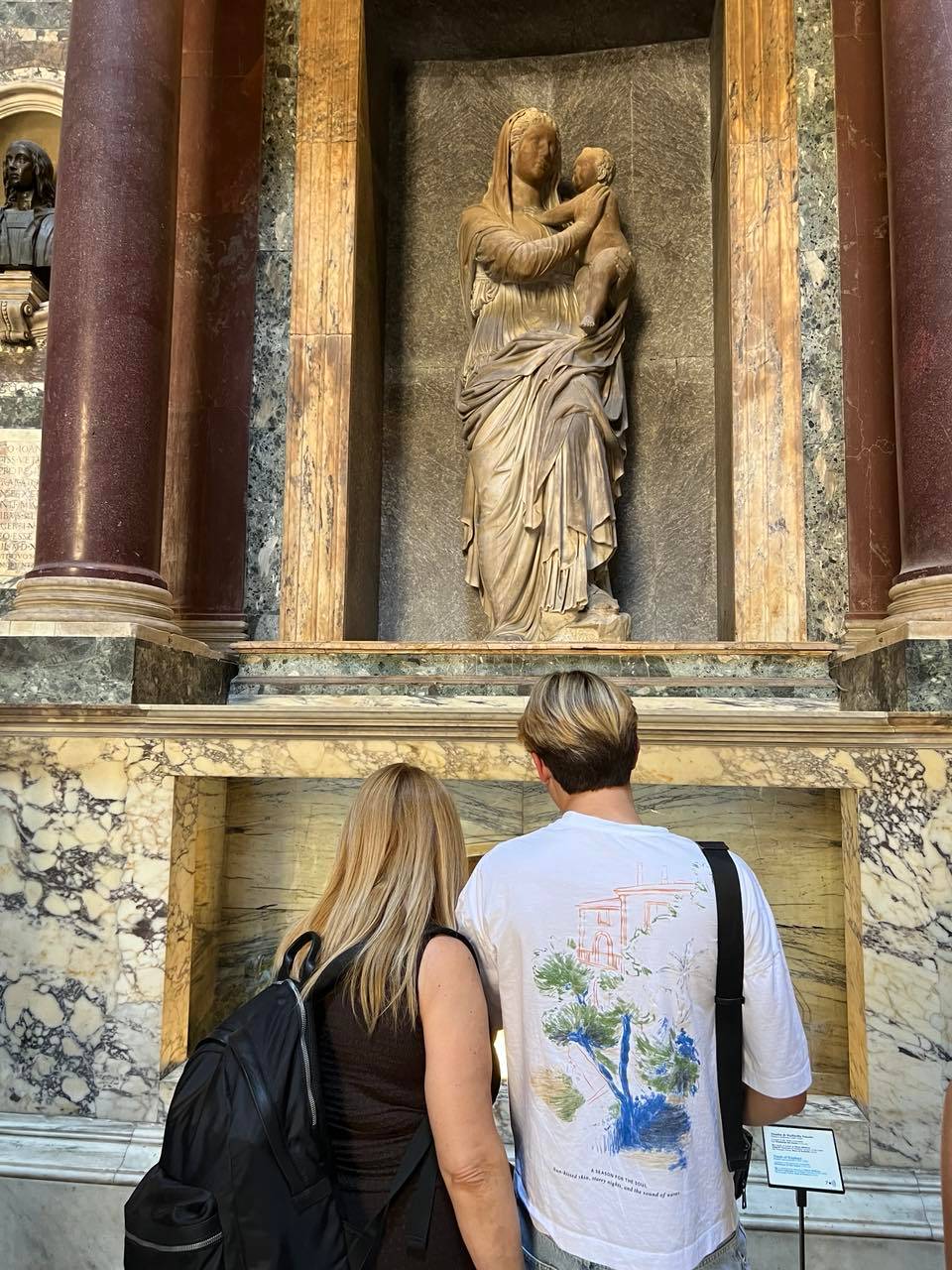
A COUPLE admires the Madonna del Sasso (Madonna of the Stone).
Time had gotten the best of us. Amid the subdued reverence within, we finally had to bid goodbye. But stepping back to the Piazza della Rotonda told its own tales. Today, cafés line the square, tourists lingered by the fountain. But it had not always been this way. I had been told that for centuries, the zone had been crowded with stalls, taverns, filth and crime. Pope Pius VII ordered its cleanup in the early 1800s, leaving a plaque that still faced The Pantheon as proof of the transformation. Spot it if you can!
Nearby, an Egyptian obelisk rose where they once never belonged, spoils brought to Rome after Augustus conquered Egypt in 30 B.C.
This made us pause and reflect — just as much as the several Egyptian obelisks traveled continents to reach Rome, several pilgrims and visitors have done the same — and all found their eventual way to The Pantheon — perhaps by the will of all the gods.