
The year the mountains spoke

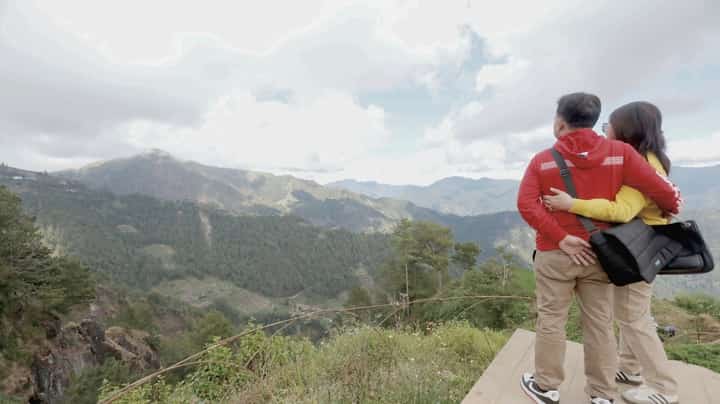
LOCAL tourists enjoy the mountain views in Atok, Benguet — one of the highest and coldest places in the Philippines — as cooler temperatures settle over the Cordillera region. The Philippine Atmospheric, Geophysical and Astronomical Services Administration said temperatures in nearby Baguio City are dropping with the onset of the amihan season.
DAILY TRIBUNE images
As 2025 winds down, the Cordillera Administrative Region looks back on a year that felt heavy, complicated, and unmistakably defining.
From the quiet ridges of Mountain Province to the always-awake streets of Baguio City, the past 12 months unfolded like a long climb — marked by health scares, political shake-ups, criminal cases that rattled public trust, and steady reminders of how fragile life in the highlands can be.
The year opened under a cloud of concern. Early in 2025, health officials reported a 156 percent spike in influenza-like illnesses, with Baguio City and Benguet taking the hardest hit. The cold grip of the Amihan season worsened respiratory cases, just as tourist arrivals were peaking. Masks reappeared, hospital readiness was tested, and the region was forced to confront — once again — how vulnerable it becomes when cold weather and crowds collide.
As summer gave way to the monsoon months, attention shifted from health to infrastructure. Heavy rains triggered soil collapses and landslides along key routes like the Halsema Highway and roads in Kalinga. Communities were briefly cut off, rescue teams were stretched thin, and the DPWH stayed on near-constant alert. It was a familiar story in the Cordilleras — one that raised urgent questions about long-term engineering solutions in a landscape that never stops moving.
Politics, too, kept the region busy. Following the midterm elections, legal battles over local mandates landed before the Commission on Elections, with protest cases testing the credibility of victories and the patience of voters. In provinces like Abra, leadership transitions came with promises of reform, tempered by the usual tensions that come with shifting power. Looming in the background was a familiar aspiration: the renewed conversation on regional autonomy, and what it might finally look like in practice.
Then came the case that dominated headlines in the year’s final stretch — the mysterious death of a former high-ranking DPWH official in Baguio City. The investigation prompted the creation of a Special Investigation Task Group, pulling in digital forensics, CCTV mapping, and telecom data. Hotels, movements, and timelines were scrutinized, exposing just how modern — and complex — crime-solving in the highlands has become.
The case also triggered a reckoning within law enforcement. Several ranking officials in Benguet were relieved amid allegations of procedural lapses, signaling a hard line from the Police Regional Office Cordillera. It was a rare but clear message: Accountability applies even to those tasked with enforcing the law.
The courts, meanwhile, delivered one of the year’s most sobering decisions. In December, a Baguio court handed down multiple life sentences to a member of the clergy convicted of raping a minor. The ruling resonated far beyond the courtroom, reinforcing the message that moral authority does not place anyone above justice — and that protecting women and children remains non-negotiable.
Security concerns flared again toward year’s end as authorities intensified their fight against illegal drugs. Large-scale marijuana busts — including the seizure of more than 61 kilograms in Kibungan — highlighted how deep the narcotics trade still runs in remote mountain areas. These operations, often involving dangerous treks through rugged terrain, underscored the region’s ongoing role in supply routes leading south to Manila.
Conflict also lingered in the background. Late-year clashes between government forces and insurgent groups in parts of Abra resulted in casualties, a stark reminder that peace remains fragile in certain corners of the Cordilleras. Indigenous communities continued to feel the impact, caught between security operations and the need to protect ancestral land.
Yet 2025 was not all hardship. Baguio’s economy showed renewed confidence, especially in tourism and hospitality. Major hotel expansions worth hundreds of millions of pesos signaled strong investor belief in the city’s future as the country’s “Summer Capital,” even as urban pressures mounted.
Environmental concerns stayed front and center. Local governments pushed re-greening efforts, tightened waste management rules, and debated how to protect Baguio’s pine-lined identity amid relentless development. It was a year-long balancing act between growth and preservation.
Culture, too, reclaimed space. Festivals and indigenous gatherings returned in full force — not just as tourist draws, but as powerful affirmations of Igorot identity, heritage, and land rights. Throughout the year, stories of communities defending ancestral domains reminded readers that the Cordillera’s soul is deeply rooted in its people and traditions.
As December closes, the news of 2025 reads like a layered map of the region itself — where forensic science meets ancestral wisdom, and where moments of silence are broken by legal battles, social reckoning, and calls for change.
The Cordillera ends the year much as it began it: tested, reflective, and resilient. From courtrooms and highways to mountainsides and town halls, 2025 revealed a region taking a hard look at itself — determined to move forward with the same quiet strength that has long defined life in the highlands.