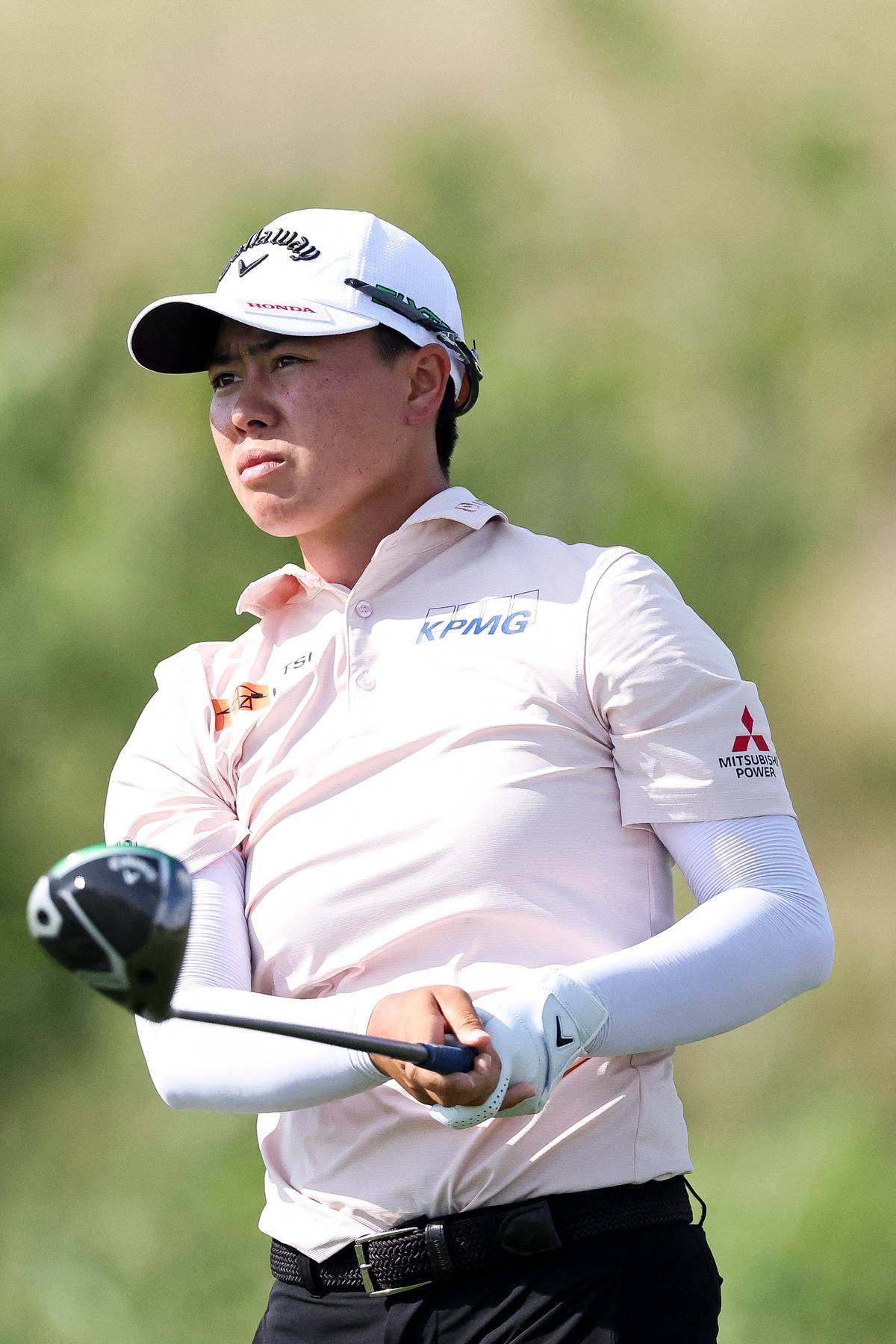
At the Asian Games in Jakarta, a 17-year-old named Yuka Saso stepped into the spotlight. Her individual gold, paired with a team gold alongside Bianca Pagdanganan and Lois Kaye Go, was a statement: the Philippines had arrived in women’s golf.
Saso’s power and calm demeanor stood out, and for the first time in decades, the idea of a Filipino winning a major didn’t seem far-fetched — it felt inevitable.
That moment came on 6 June 2021. At just 19, Yuka Saso made history by winning the US Women’s Open at the Olympic Club in San Francisco. She became the first Filipino golfer to win a major championship, tying the record as the youngest to do it.
The image of her lifting the trophy, tears in her eyes as the Philippine flag waved behind her, sent goosebumps across the nation. People who had never watched golf before suddenly knew her name.
Though Saso would later choose to represent Japan due to dual citizenship rules, her victory left an indelible mark. She would later capture her second US Women’s Open last year.
She inspired countless kids — especially young girls — to pick up a club and believe that anything was possible. Since then, we’ve seen the rise of more young stars.
One of them is Rianne Malixi who won the US Girls and US Women’s Open Championship last year and reached a career-high third in the world amateur rankings.
The Junior Golf Foundation of the Philippines has expanded its programs to reach more regions, holding year-round tournaments and building true grassroots momentum. Junior golfers are now competing in international events, and the number of Filipinos landing university scholarships — particularly women — has risen sharply. It’s not just about a dream anymore. There’s a path.
And while golf remains an expensive sport, new par-3 courses and driving ranges in Cavite, Laguna, Batangas and Pampanga are slowly changing that. They’re giving more kids the chance to learn, play and fall in love with the game.
Through it all, the courses have played their part.
Wack Wack, Luisita, The Country Club — these legendary venues have been the stage for Philippine golf’s biggest moments. At the same time, regional gems like Del Monte, Apo Golf, Sta. Barbara and Anvaya Cove have helped spread the game’s reach and deepen its roots.
Even golf tourism has blossomed, with Subic, Clark and El Nido hosting international visitors and events that blend sport with stunning scenery.
As we look ahead to the 2028 Los Angeles Olympics, the feeling is different now.
Philippine golf isn’t hoping for its moment — it’s preparing for it.
The next generation is more confident, more skilled, and more supported than ever before. And whether they’re chasing a medal, a major, or their first birdie, they’re carrying with them the momentum of 25 years of hard-earned progress.
Maybe that’s the real story. It’s not just about who won what or when. It’s about how a sport grew up with the country — and how it continues to inspire pride, purpose and a whole lot of passion.