
Barrierless tollways still 2-3 years away — TRB
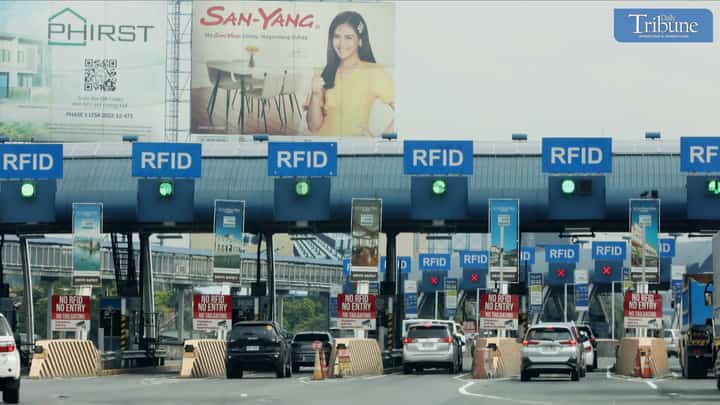
(FILE) NLEX Corp. posted NO RFID, NO ENTRY reminders at their toll gates. Motorists who do not have RFID stickers or insufficient RFID load will soon face fines.
Photo by Analy Labor for the Daily Tribune.
Despite efforts to expedite implementation, the full rollout of barrierless toll collection in the country remains at least two to three years away as the Toll Regulatory Board (TRB) finalizes the necessary policy framework for the transition.
“The barrierless tollways implementation, we are looking at about two to three years from now,” said TRB Executive Director Alvin Carullo in a recent interview.
Barrierless tolling, which removes physical barriers at entry and exit points, is expected to improve traffic flow and make expressway travel more efficient. However, Carullo noted that significant preparations are still required, including technology upgrades and coordination among toll operators.
The TRB, in collaboration with toll operators, is drafting the policy framework that will govern the transition. Metro Pacific Tollways Corp. is already installing an Automatic License Plate Recognition (ALPR) system across its toll plazas.
“So by August, it should be up and ready for testing,” Carullo added, explaining that the system will enable contactless toll collection and allow for interoperability across different expressways by the end of the year.
San Miguel Corp. is also preparing for its transition and is in the process of securing a provider for its own barrierless system.
“So hopefully, down the road, in two to three years' time, our toll roads will be barrierless,” Carullo said.
The TRB had initially planned to implement the barrierless system by November 2024, but delays in the Toll Collection System Interoperability Project have pushed back the timeline. This project aims to allow motorists to use a single RFID sticker and maintain just one account or wallet across all toll roads.
Despite the temporary suspension of cashless toll collection for further review by Transportation Secretary Vivencio Dizon, Carullo said that the system, along with toll interoperability, could still be implemented within the year.
For interoperability, Carullo mentioned that final proof-of-concept testing is scheduled for August or September, followed by a one- to two-month dry run before full implementation.
While progress is being made, motorists will have to wait a bit longer before experiencing a seamless, barrier-free tolling system.