
Breakout year for EV — By all indications, electric-powered mobility is here for good
People might have also wondered if they would see more of this ‘toy’ since riding horses, horse-drawn carriages, and steam-powered (later electricity) trams were, for the longest time, the convenient means of moving around the city and outlying towns that were cheap and relatively safe.

PHOTOgraphS COURTESY OF DONGFENG DONGFENG'S Nanobox is a compact hatch that is perfect for moving around the city and even occasional jaunts to nearby provinces.
It's not hard to imagine what the residents of Manila in the year 1904 felt the moment they saw the Richard-Brasier, a motorized carriage powered by a nine-horsepower, two-cylinder engine, which was the first car to be driven in the country.
For the Richard-Brasier's rich owner, owning it must have been a novelty, even probably like an expensive "toy" worth bragging about since it was outrageously expensive and that time, shipping one from Europe took about three months.
People might have also wondered if they would see more of this "toy" since riding horses, horse-drawn carriages, and steam-powered (later electricity) trams were, for the longest time, the convenient means of moving around the city and outlying towns that were cheap and relatively safe.
More than a century later, the market felt the same sense of fascination when PGA Cars brought in the Taycan in 2020. It was thrilling to see Porsche's first-ever full-electric, four-door sports car roaming our streets for the first time. Many wondered how they could afford this almost P19-million zero-emission vehicle that could cover 416 km on a single charge.
The introduction of the Taycan in the Philippines was a watershed moment because two years later, the Electric Vehicle Industry Development Act or Republic Act 11697 would lapse into law, attracting more EV manufacturers to bring in their latest models — not just the exorbitantly pricey ones but also those that are least expensive — and provide Filipino auto buyers with more choices.
To help the EV industry, the law made sure that EV importers would get tax incentives and discounts while those who would buy EVs would enjoy perks not only when registering with the Land Transportation Office but also when using our roads since EVs are exempted from the number-coding scheme until April 2030.
Breakout
The year 2023 was indeed a breakout year for EVs in the Philippines as numerous manufacturers entered the market including BYD, the world's fastest-growing electric vehicle manufacturer, and Tesla, maker of the Model Y, which is now the world's bestselling car (beating the likes of Toyota Corolla and the RAV 4 despite being priced almost double).
The consumers' previous concern, the "range anxiety" or the worry about the adequacy of their vehicle's battery charge to complete a journey has largely subsided, as it's now common for EVs that can travel over 300 km on a single charge. Even the limited availability of charging stations is now being addressed thanks to the EVIDA law.
Worries about battery safety? This has also been largely solved, thanks to major advances in battery technologies that now make them safe during major accidents.
But the most welcome development is that, now the Philippine market has more EV brands to choose from. For those who feel it's about time to make a more environmentally friendly choice, here are some of the most notable EV models that are available in the market.
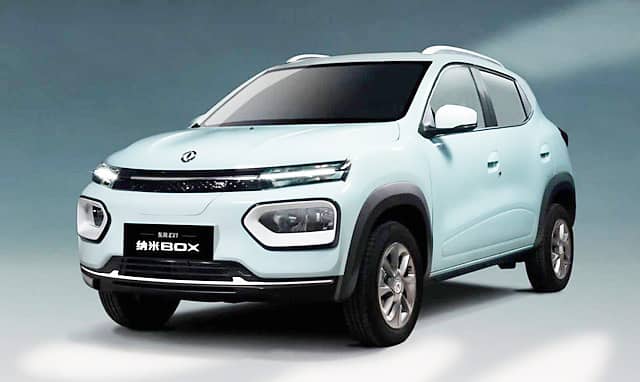
AT P888,000, the Dongfeng Nanobox is giving its rivals in sub compact segment a run for their money.
Dongfeng Nanobox EV
The Nanobox is a compact hatch that is perfect for moving around the city and even occasional jaunts to nearby provinces.
It comes with a 28.9-kiloWatt/hour ternary lithium battery pack, which when fully charged could drive one up to 351 kilometer. While it is not advisable to drive this far on a single trip, having this range means you won't have to worry about charging too often or running out of "juice" if you are just driving the Nanobox EV around Metro Manila.
At P888,000, the Nanobox EV is already an excellent choice considering that its size — 3.732-meter long, 1.579m wide, and 1.515m tall — is already comparable to the dimension of market favorite and gasoline-powered Toyota Wigo, that measures 3.76 m x 1.665 m x 1.515 m.
The Nanobox is powered by a front-mounted electric motor that produces 44 hp and 125Nm of torque. While it has a top speed of 100 km/h, such limitation will not be an issue especially when driving around Metro Manila's congested roads. Besides, with this EV's 100 km/hr maximum speed limit, the driver won't naturally be over-speeding on open roads and expressways.
Buyers of the Nanobox EV will get an onboard 6.6 kW charger which can fully recharge the battery pack in less than four hours. With a DC charging system, however, it can recharge the Nanobox from 30 percent to 80 percent in just 30 minutes.
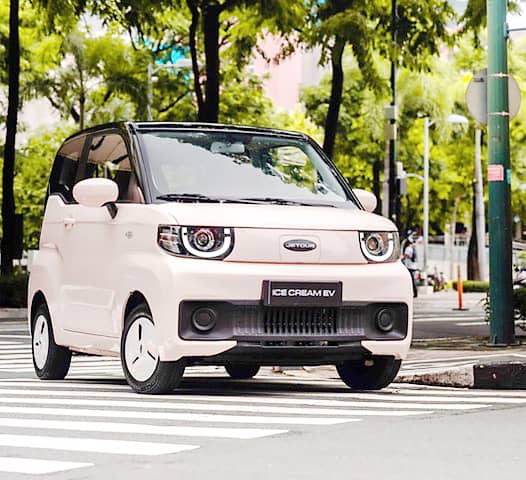
Photograph Courtesy of JETOUR PH<br />JETOUR'S Ice Cream is one of the most compact, and perhaps cutest, EVs available in the Philippines.
Jetour Ice Cream EV
The Ice Cream is one of the most compact, and perhaps cutest, EVs available in the Philippines. It could seat four adults on its 2.98-m long, 1.496-wide, 1.637-m tall (a ground clearance of 120 mm) body. While there's not much space at the back for cargo, the second-row seats could be folded to accommodate bags and other items.
Aside from a choice of pastel colors (strawberry, matcha, blueberry and vanilla) and adorable design, it also has a very appealing price tag — P699,000 — perfect for those looking for a backup car or even a gift for your college graduate.
Its 27-hp motor generates 85 Nm of torque and enables the hatch to attain a maximum speed of 100 km/h. The Ice Cream EV's fully charged 13.9 kWh lithium-ion battery has a maximum range of 170 km, which is just right if you are going to use it for driving around Metro Manila and nearby places like Tagaytay City.
Recharging a nearly depleted Ice Cream EV takes about 6-8 hours. With the width of its dashboard, the Ice Cream EV's digital instrument cluster doubles as the infotainment screen. The same screen also displays the image coming from the reverse camera, which is a helpful tool when parking in reverse.
As an added sales pitch, Jetour informed the DAILY TRIBUNE that the Ice Cream EV's battery pack comes with an eight-year or 120,000-km warranty (whichever comes first). Moreover, the vehicle itself is given a three-year or 100,000-km warranty.
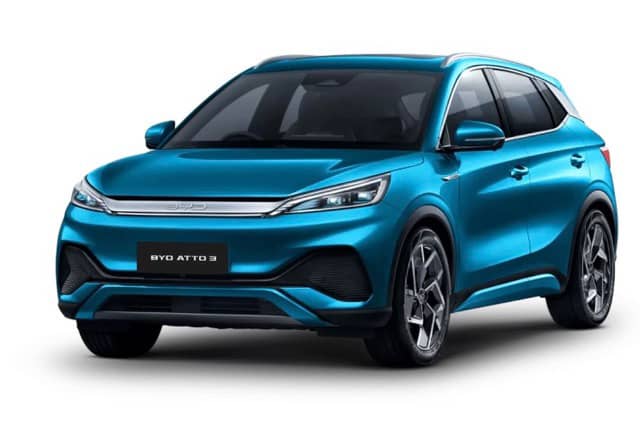
Photograph courtesy of BYD PH<br />BYD's Atto 3 is a 5-seater hatchback powered by one of the world's most advanced and safest battery packs called the Blade Battery.
BYD Atto 3
Based in Shenzhen, China, vehicle brand Build Your Own Dream or BYD is one of the world's largest electric vehicle makers and Tesla's biggest rival. The company started as a mobile phone battery maker in 1995 before shifting to making rechargeable batteries in 2000 and vehicles with internal combustion engines in 2003. With its extensive knowledge and experience in making batteries for EVs, it was around 2007 that BYD decided to invest more in producing EVs.
Recognizing BYD's EV manufacturing prowess, Japanese automakers invited the company to be one of the exhibitors at the recently concluded Japan Mobility Show in Tokyo, an opportunity which made BYD the first-ever Chinese automaker participant in the 69-year-old premier automotive extravaganza.
It was no surprise then that AC Motors, which is Ayala Corporation's automotive subsidiary, chose to take over the distributorship of BYD in the Philippines, as the conglomerate completes its full EV ecosystem.
With all the EV support infrastructure being set up by the Ayala Group in its malls and residential developments around the country, any auto buyer's decision to buy BYD's P1.598-million Atto 3, is a very good one.
The Atto 3 is a 5-seater hatchback (4.455m long, 1.875m wide, and 1.615m tall) powered by one of the world's most advanced and safest battery packs called the Blade Battery. BYD's Blade Battery was developed not only to improve efficiency, but to offer greater levels of safety when compared to the standard lithium battery.
The Atto 3's 60-kW battery is so efficient that it could cover 480 km on a single charge. Its front-wheel mounted electric motor generates 201 hp and 310 Nm of torque, enabling the Atto 3 to accelerate from zero to 100 km/h in 7.3 seconds and reach a top speed of 180 km/h.
The Atto 3 available in the Philippines is the same model that has been awarded a five-star safety rating by Euro NCAP, Europe's leading independent safety assessment program. It comes with seven SRS airbags, ISOFIX-ready rear seats, and an automatic emergency braking system with front and rear collision warning system, among other safety features.
Charging the Atto 3 takes 30 minutes to 1 hour when using a DC fast charger while it takes 7-8 hours when a standard AC charger is used.
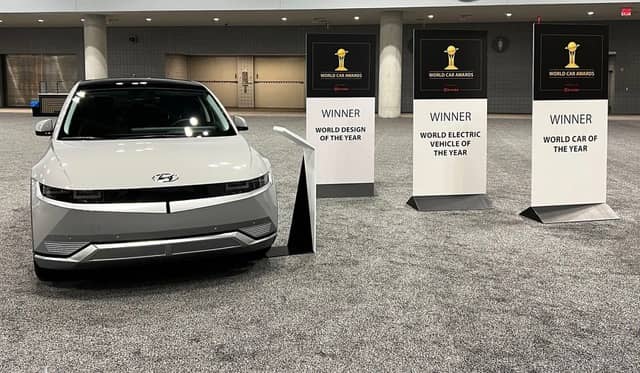
MOTORHYUNDAI Ionic 5 won big at the prestigious 2022 World Car Awards where it copped the World Car of the Year, World Electric Vehicle of the Year and World Car Design of the Year titles.
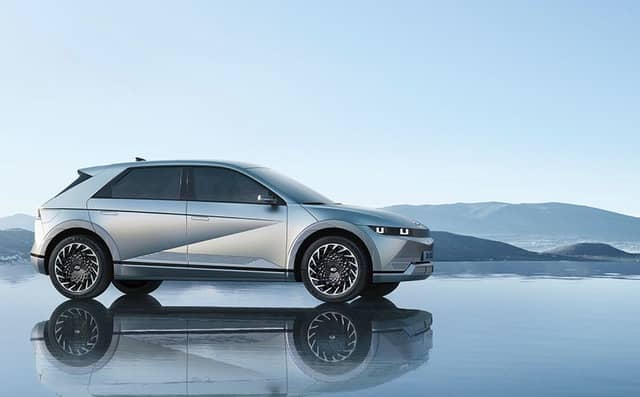
Hyundai Ionic 5
Here is the reason you should consider the Hyundai Ionic 5: The all-electric crossover won big at the prestigious 2022 World Car Awards where it copped the World Car of the Year, World Electric Vehicle of the Year and World Car Design of the Year titles.
You will take a second look at the Ionic 5 with its unique retro sci-fi look, especially its pixelated front lights, diagonal crease down the sides, and the smart cubic light clusters that illuminate's the rear of the EV.
Apart from the design, the Hyundai Group said the Ionic 5's Electric-Global Modular Platform provides advantage in design, space, practicality, performance, and efficiency that conventional electric vehicles may find very hard to duplicate.
For the Philippine market, Hyundai Motor Philippines is offering two versions: The standard (at P3.068 million) has a 58 kW battery that has a range of 354 km and the long-range version (P3.698 million) which has a 72.6 kW battery that could cover 428 km on a single charge.
The Ionic 5's standard 58-kW battery generates 168 hp and 350 Nm of torque while the long range's 72.6-kWh battery generates 215 hp and 350 Nm of torque.
Both versions have a rear-wheel mounted motor that enables the Ionic 5 to accelerate from zero to 100 km/h in 8.5 seconds (7.4 seconds for the long-range version) and reach a maximum speed of 185 km/h.
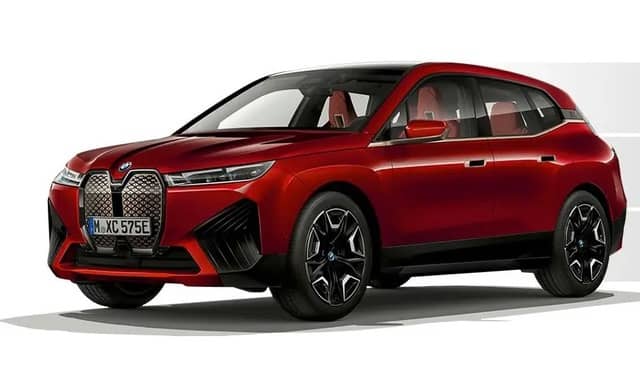
BMW iX
BMW iX
If you're someone who's fond of luxury cars, SMC Asia Car Distributors Corp. has something for you: The iX all-electric Sports Activity Vehicle, which is BMW's first electric sports activity vehicle in the Philippines.
Bearing an initial price tag of P6.29 million, the iX has a range of 370 km on one full charge. Its 71 kWh motor generates up to 326 hp and 630 Nm of torque and can sprint from zero to 100 km/h in six seconds. This luxury EV can reach a top speed of 200 km/h.
The iX uses lightweight materials extensively, including aluminum and carbon-fiber composite in its chassis (which are visible when you open the doors or rear hatch) and aluminum suspension components.
Still, the iX is a very heavy vehicle, tipping the scales at 3,010 kilogram. Fortunately, much of the weight is beneath the floor in the battery pack, creating a low center of mass that helps the iX stay stable around corners.
This BMW is packed with a new generation of sensors, software stack, and powerful computing platform. It bears five cameras, five radar sensors, and 12 ultrasonic sensors and comes with BMW's six-year inclusive warranty, a five-year BMW factory warranty, as well as an eight-year high-voltage battery warranty.
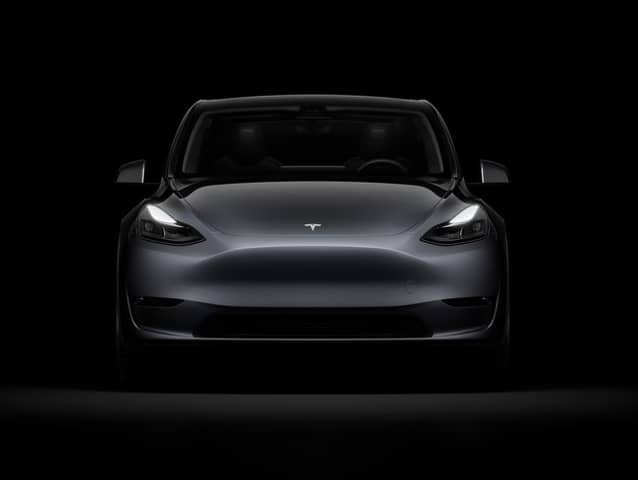
MODEL Y is essentially a taller and roomier SUV version of Tesla's Model 3, with the same blend of great range, minimalistic design and high-tech features.
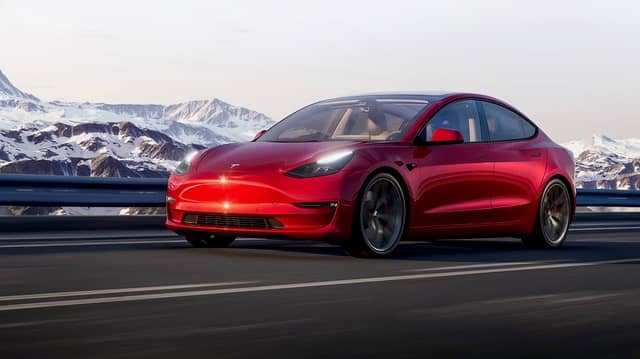
Tesla Model 3 and Tesla Model Y
In September, Altersun Energy Resources' EV Solution finally brought the American EV brand Tesla to the Philippines. Tesla, which is one of the few successful independent automakers and a pioneer in the electric car market, is currently the global leader in fully electric vehicle sales, set to generate $114 billion in sales at the end of 2023.
Of course, everybody wants to own a Tesla, a brand known for focusing on one EV model at a time. And while Tesla continues making the Model S, it is rolling out new models to expand its customer base.
Other models include the SUV-style Model X, the Model 3 sedan (which is the "most affordable" in its lineup), and the crossover Model Y. The last two are the only models currently available in the Philippines.
While the Model 3 is Tesla's entry sedan, it is still priced at P4 million. But its 437-km range and acceleration from zero to 100 km/h in 5.8 seconds not to mention a top speed of 225 km/h, are more than enough to convince Tesla fans to just forget the price tag and enjoy this sleek-looking ride.
Like all Teslas, the Model 3 carries its battery under the vehicle's floor, resulting in a low center of gravity that helps this sedan change direction crisply and feel planted and stable when cornering. While it carries numerous advanced safety and driver assistance technologies, the Autopilot feature was deactivated for the Philippine market.
The Model Y, on the other hand, is much bigger, and slightly more expensive at P4.6 million. It can cover 418 km on a single charge and its 67.6 kWh battery that powers the motor at the rear enables this vehicle to accelerate from zero to 100 in 6.7 seconds and attain a top speed of 217 km/h.
The Model Y was launched globally in 2020, two years after the public got a sneak peek of the EV in 2018. This year, it became the top-selling EV globally, probably owing in large part to its five-door body, excellent interior with a spacious trunk, and a higher driving position behind the wheel. Its minimalist design is also a plus for most EV buyers.
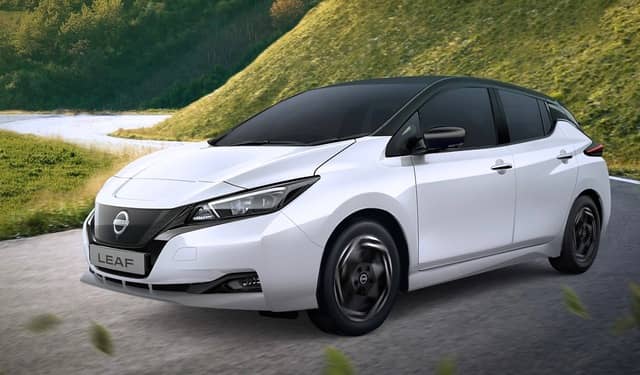
PHOTOGRAPH COURTESY OF NISSAN PH<br />WHEN it comes to pure electric mobility, the Nissan LEAF is one of the oldest and most trustworthy models.
Nissan LEAF
Nissan's flagship full-battery electric vehicle has been in the market since 2021, one of the few EV models that dared to entice Filipino buyers to switch to a cleaner drive.
To help the sales of the P1.998-million LEAF, Nissan Philippines immediately established seven charging stations in the country through its dealerships, creating the largest nationwide EV charging station network.
The LEAF has a 40-kWh lithium-ion battery that has a range of up to 311 kilometers on a full charge. Its e-powertrain provides a maximum output of 148 hp and 320 Nm of torque, enabling the Nissan LEAF to sprint from zero to 100 km/h in 7.9 seconds, while reaching a top speed of 140 km/h.
While the Nissan LEAF can be fully charged in 15-18 hours at home through a dedicated wall outlet with the supplied universal charging cable, owners can also go to quick charging stations that fully charge the battery in as fast as 40 to 60 minutes.
It's also one of the safest EVs in the market today as it is packed with intelligent driving assistance features including Intelligent Cruise Control, Intelligent Around View Monitor, High Beam Assist, and Hill Start Assist.
The LEAF also features Intelligent Emergency Braking, Intelligent Driver Alertness, Rear Cross Traffic Alert, Blind Spot Warning, Lane Departure Warning, Intelligent Lane Intervention, and Intelligent Trace Control, a unique system that senses driving based on the driver's steering and acceleration/braking patterns, and controls brake pressure in individual wheels to aid tracing at corners and create a smooth vehicle response.
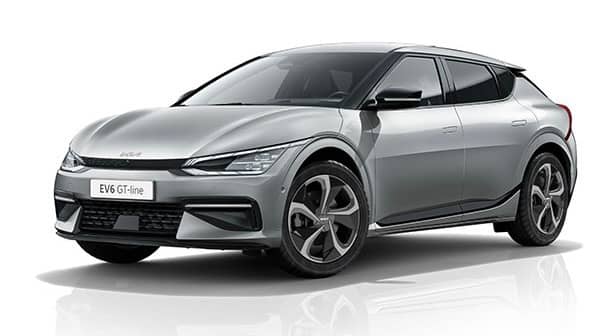
PHOTOGRAPH COURTESY OF KIA<br />KIA'S EV6 is not only agile as it has a five-star rating from the crash test experts at Euro NCAP.
Kia EV6
The Kia EV6 may be considered as Hyundai Ionic 5's twin since they share the same platform and electric powertrain, and also have the same technological features. But the EV6 has better horsepower and torque as it is geared toward buyers who love to drive fast.
The Kia 5-door crossover SUV generates 226 hp and 350 Nm of torque, and its large 77.4-kWh lithium-ion battery can cover a distance of 528 km on a single charge.
It takes around 7 hours to charge the EV6's batteries using a 240-volt AC charger. The fast-charging DC system is much faster at 73 minutes (up to 80 percent) although using a 350-kWh fast charger only takes 18 minutes (up to 80 percent charge).
Shortly after being crowned 2022 European Car of the Year, the EV6 has claimed overall victory in the prestigious 2022 Red Dot Design Awards, nabbing the Red Dot: Best of the Best title, which acknowledges a product not only in terms of aesthetics, but also functionality, ergonomics, quality and ecological compatibility.

PHOTOGRAPH COURTESY OF FORTHINGMOTOR<br />FORTHING Friday SUV is Dongfeng's flagship EV offering.
Dongfeng Forthing Friday
Dongfeng's new compact pure electric SUV is readily identifiable by its modern sleek sporty profile, sloping hood and a grille-less front end. For those wondering why it is named as such, "Forthing" is a popular brand in China and "Friday" is China's favorite day.
Here in the Philippines, Dongfeng offers two variants of the Forthing Friday, both with very long ranges to cater to the diverse needs of the Filipino driver.
The first variant that is equipped with a 57.8-kWh battery pack has a range of 430 km and is priced at P1.98 million. Those who require an even longer range would be impressed with the P2.58 million second variant that is equipped with a 85.9-kWh battery pack that could cover an impressive 630 km on a single charge.

PHOTOGRAPH COURTESY OF LOTUS CARS<br />The Lotus Eletre is a high-performance electric crossover SUV that has at least 600 hp — 905 hp on the R variant — crazy active aerodynamics, deployable lidar sensors and a super nice interior.
Lotus Eletre
If you want an attention-getting EV, you should consider buying the Eletre from British sports car manufacturer Lotus Cars. The Eletre is an all-new, all-electric full-size hyper crossover SUV that is priced P10.499 million and brought to the country by Lotus Cars Manila, a subsidiary of the Autohub Group.
There are three variants offered: The Eletre and Eletre S have a range of up to 600 km, while the Eletre R has a range of 490 km.
But you don't just buy the Eletre for its range. The R variant generates an astounding 905 hp and 985 Nm of torque, enabling this particular variant to reach 100 kph from standstill in 2.95 seconds.
Making this possible is Eletre's 412-mm front disc brakes with six-piston calipers and 397-mm rear disc brakes with sliding calipers. Pirelli P Zero tires are also installed on all four wheels of the high-performance EV.
Recharging can be done using a 22-kW AC Wallbox, which will take approximately 5.8 hours to fully power the Eletre although buyers may also opt for a 350-kW DC charger that takes just 20 minutes to recharge the EV to 80 percent.
In addition to this cutting-edge powertrain, the Eletre is complemented by advanced driver assistance systems as well as Level 4 autonomous driving capabilities. Lotus Cars Manila said the Eletre is covered by a five-year or 150,000-km general warranty, while the vehicle's battery comes with an eight-year warranty.