




Poverty, a wellspring of motivation
‘You can become creative in finding ways to get out of poverty’

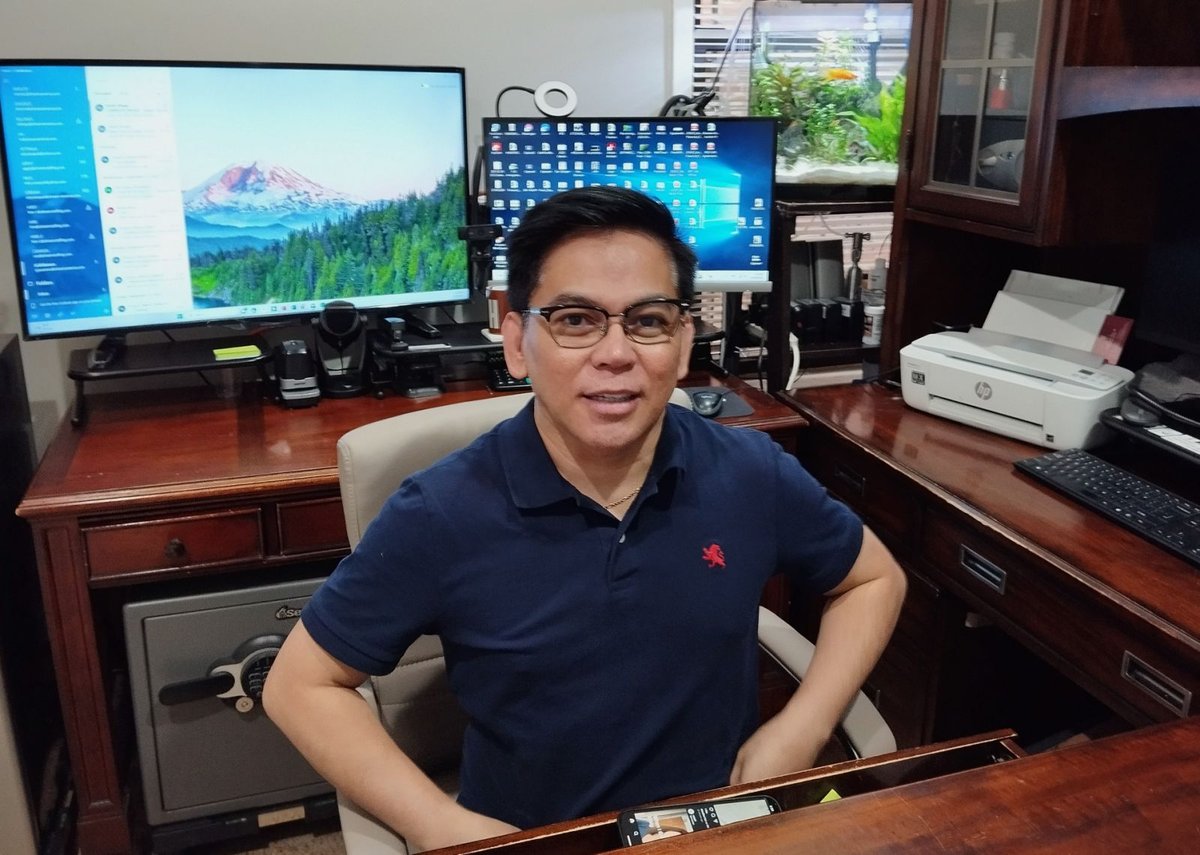
photograph courtesy of ATTY. Nicolas M. Caraquel LAWYER Nicolas M. Caraquel.
Text size
‘You can become creative in finding ways to get out of poverty’
photograph courtesy of ATTY. Nicolas M. Caraquel LAWYER Nicolas M. Caraquel.
A bus terminal in Davao Oriental was where a tender soul once lingered amid the chaos. There was no laughter or carefree play for this young boy — instead, he carved out a livelihood by selling banana cue, a popular Filipino street food.
Growing up in San Isidro, Davao Oriental province, a family of seven children weathered the harsh realities of life, their path marked by struggle and perseverance.
"My father earns a living as a barber. My mother was once a seamstress turned businesswoman. My family taught me the value of hard work, prayer, faith, and determination to find ways to get out of poverty," shared Atty. Nicolas M. Caraquel, now a US-based immigration lawyer.
His family lived in poverty to the point where, despite being in the third grade, his parents implored him to stop going to school. Desperate to make ends meet, his parents pleaded for his assistance in selling banana cues at the bus terminal. His heart ached; he yearned to pursue his studies, but circumstances left him no alternative.
The hard life came to pass. A strong belief in the transformative power of education guided Atty. Nick's journey. With sheer determination, he completed his elementary and high school education. A beacon of hope appeared in the form of a State Scholarship Program, granting him the opportunity to pursue a Bachelor's degree in Industrial Engineering at Ateneo de Davao University.
"I thought being an engineer would put me in a better position to support my parents and younger sister's education financially."
After graduation, he secured a position at a global food manufacturing company in Cagayan de Oro City. Yet, the allure of his childhood ambition to become a lawyer persisted. With his hard-earned savings, he embarked on a path to fulfill his dream, enrolling in law school at Xavier University.
When asked about his motivation for pursuing law, he shared, "Society often looks down upon those who have faced economic challenges. There is a tendency to assume they have no hope, especially in rural areas."
The year 2003 was a triumphant moment — he emerged victorious and proved that people should not look down upon those who have faced economic challenges. "There is hope, especially in rural areas."
Witnessing his mother's struggles left an indelible mark on Atty. Nick. Despite her hopelessness, he vividly recalls her attempts to uplift his spirits. In those moments, he couldn't help but wonder about her thoughts — whether they were colored by hardship, hopelessness, or how others treated her.
'I know it is not easy; sometimes, you will feel like giving up. When that time comes, seek something or talk to someone who inspires you, when the burden gets tougher, kneel and pray. Rest if you may, but don't give up. Chase that dream and have faith.'
The profound experience catalyzed his dream of becoming a lawyer.
"To defend my family should they face mistreatment, to instill a renewed sense of hope within them, and to break free from the shackles of poverty by providing them with financial support."
After a decade of practicing law in the Philippines, he felt the weight of corporate politics and yearned for a break. He took a vacation to relieve himself of work stress. As he awaited his flight, the idea of becoming a US immigration attorney captivated his thoughts.
Atty. Nick made the life-changing decision to work as a full-fledged lawyer in the vibrant city of New York in 2012. Despite having only three weeks of approved vacation time, he took a leap of faith and pursued his legal career in the bustling metropolis.
With credentials as a licensed attorney in both the Philippines and the State of New York, Atty. Nick has dedicated himself to making the dreams of countless individuals come true. His expertise lies in assisting people from various nationalities, including Filipinos, in navigating the intricate processes of family and employment-based petitions, enabling them to pursue their aspirations of living or working in the United States.
Like other Filipino immigration lawyers, his compassionate guidance has touched the lives of many, transcending borders and significantly impacting individuals from diverse backgrounds.
"US immigration issues are close to the hearts and minds of most Filipinos," he said. "I went through it and realized this is where I can help most Filipinos and excel since I am one of them."
Having personally experienced the struggles and uncertainty that many of his clients face, Atty. Nick is committed to providing genuine legal assistance that is both effective and affordable, driven by a genuine desire to make a positive impact.
It is not solely about financial gain, as he actively seeks solutions for his clients' problems when he sees the potential for approval. Conversely, if he believes there is no hope for their cases, he candidly communicates this to them.
Nick sees his work as an immigration lawyer not as a demanding burden but as a thrilling calling. He finds inspiration in the chance to help individuals whose lives hang in the balance, knowing that he is a conduit for their transformation.
Advocating for their dreams and aspirations is not just a profession for him — it is a deeply fulfilling and rewarding mission.
He acknowledges the misconception that accepting a client's case equates to automatic approval, highlighting the importance of understanding that each case must undergo the necessary processes. Handling waiver cases, which often involve issues of fraud, criminality, or unlawful presence, presents the greatest challenge for him.
Despite the emotional burden placed upon him by clients who see him as their sole source of hope, he remains dedicated to finding solutions to their problems.
Now an American citizen, Atty. Nick was honored as one of the 11 Pamana ng Pilipino awardees in 2018. He received the medal personally from then President Rodrigo R. Duterte during the awarding ceremony at Malacañang.
"A sought-after immigration lawyer based in New York who broke out of poverty through his determination and hard work. He assists in facilitating the family reunification process among Filipinos in the United States," a press statement said of his citation.
In the face of poverty, Atty. Nick discovered a wellspring of motivation.
"You can become creative in finding ways to get out of poverty."
Through his own journey, he exemplifies the transformative power of resilience and resourcefulness, inspiring others to harness their inner strength and forge their path toward a brighter future.
"Do not look at poverty as a reason or excuse to stop dreaming big. Work hard to make those dreams a reality," Atty. Nick summarized his secret of success.
"I know it is not easy; sometimes, you will feel like giving up. When that time comes, seek something or talk to someone who inspires you, when the burden gets tougher, kneel and pray. Rest if you may, but don't give up. Chase that dream and have faith."
New York may be thousands of miles away from San Isidro town in Davao Oriental, but he stays connected to his Filipino roots and visits annually — a time to give Christmas gifts to senior citizens, paying tribute to the people and place that influenced his character.
Atty. Nick Caraquel is a banana cue vendor no more because he holds on to a Bible belief that what may seem impossible to humans is attainable through the power of God, who is always just a prayer away.
