
Dionisio brings culpability to public square
Dionisio believes each issue is both a governance failure to diagnose and a teaching moment the public cannot afford to ignore.

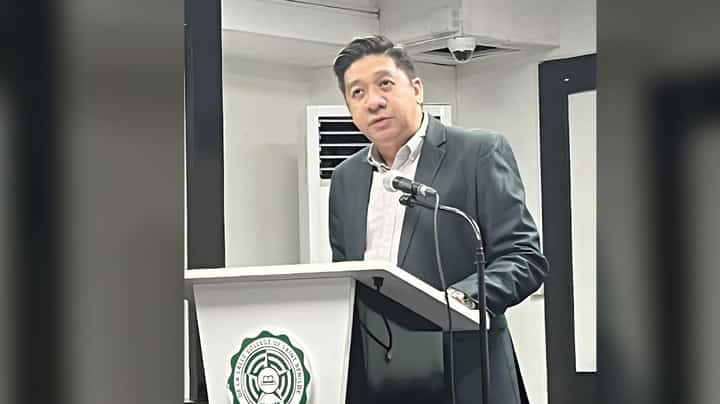
PUBLIC trust depends on the ability of state institutions to function effectively and transparently, according to Dean Gary Ador Dionisio.
PHOTOGRAPHS courtesy of De La Salle–College of Saint Benilde
For Dr. Gary Ador Dionisio, governance was never meant to remain confined to a classroom.
As Associate Professor and Dean of the School of Diplomacy and Governance at De La Salle–College of Saint Benilde, Dionisio has long insisted that political science earns its keep not in lecture halls but in the high-stakes arena of public life, where accountability is tested and too often found wanting.
Appearing on Straight Talk, Dionisio tackled three of the most combustible issues in Philippine politics today: the Senate leadership dispute that has thrown the chamber into procedural chaos, the deepening corruption allegations surrounding flood control projects, and the impeachment proceedings against Vice President Sara Duterte — a case that sits at the volatile intersection of law, loyalty, and political survival.
Dionisio believes each issue is both a governance failure to diagnose and a teaching moment the public cannot afford to ignore.
Throughout the discussion, Dionisio repeatedly returned to a central theme: institutions matter, and public trust depends on their ability to function effectively and transparently.
Discussing the ongoing impasse in the Senate, he argued that the conflict did not emerge overnight but was the product of broader political developments over the past decade.
He described the current period as “another lost decade,” linking present political divisions to what he called democratic backsliding and increasing polarization in Philippine society.
“The current crisis that we have, especially in the Senate right now, is like the tip of an iceberg,” he said.
For Dionisio, the Senate dispute is not simply a battle between rival factions. He warned that a prolonged deadlock could disrupt legislative work and delay action on important measures pending before Congress.
He noted that government institutions must continue to function because public services and national concerns cannot be put on hold amid political conflicts.
His concerns extend beyond the halls of Congress. Dionisio pointed to what he described as a growing crisis of disinformation and a decline in trust in public institutions.
With another national election approaching in 2028, he said citizens must become more critical consumers of information and learn to distinguish facts from propaganda.
“The major crisis that we have is the crisis of disinformation and issues of trust,” he said.
As an academic, Dionisio frequently framed political issues through the language of evidence, procedure, and institutional accountability.
Asked about competing investigations in the Senate’s Blue-Ribbon Committee, he emphasized the importance of representation from both majority and minority blocs and stressed that congressional oversight should not be reduced to partisan interests.
He also underscored the need for objectivity in corruption investigations, arguing that public confidence in government depends on the credibility of accountability mechanisms.
That commitment to accountability was also evident in his discussion of allegations involving flood control projects.
Dionisio acknowledged long-standing concerns about corruption in infrastructure programs and called for reforms in government systems and processes.
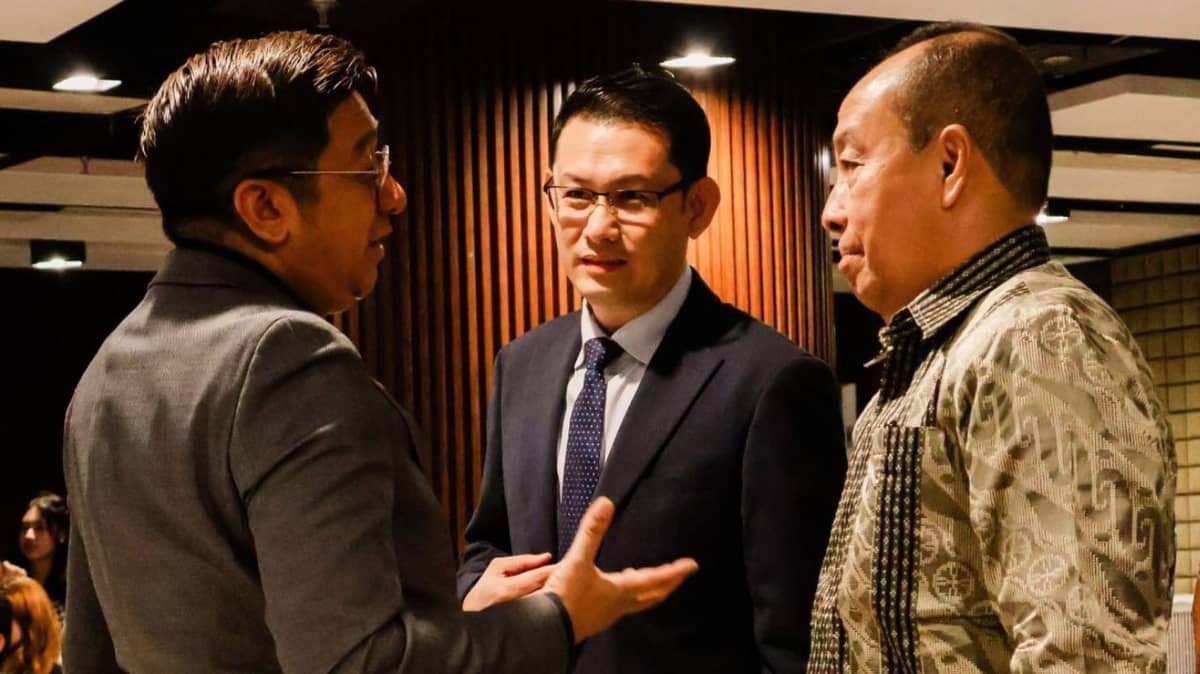
ASSOCIATE Professor and Dean of the School of Diplomacy and Governance at De La Salle-College of Saint Benilde Gary Ador Dionisio (left) discusses the latest issues and concerns in ASEAN with Agus Widjojo (right) of the Republic of Indonesia as well as Sin Saream, Ambassador of the Kingdom of Cambodia to the Republic of the Philippines during the Benilde Model ASEAN meeting.
He argued that anti-corruption efforts should address not only individual wrongdoing but also structural weaknesses that allow irregularities to persist.
Corruption through innovation
“Our corrupt people are innovating,” he said.
“We should also innovate.”
When the conversation turned to the impeachment proceedings against Vice President Sara Duterte, Dionisio described the process as both a constitutional remedy and an opportunity for public education.
He noted survey results indicating significant public support for proceeding with the trial and said the proceedings should allow allegations to be examined and answered through due process.
At the same time, he cautioned against rushing to conclusions, repeatedly emphasizing the importance of evidence and fairness.
“I always follow the evidence,” he said.
The same principle guided his assessment of corruption allegations from individuals claiming insider knowledge of political figures.
While expressing support for uncovering the truth regardless of who might be implicated, Dionisio questioned the consistency of some testimonies and stressed that serious accusations require credible proof.
“Any knowledge claim or new discovery must be backed up by solid evidence,” he said.
Whether discussing legislative conflicts, corruption investigations, or impeachment proceedings, Dionisio consistently approached the issues from the perspective of governance and institutional integrity.
His comments reflected the outlook of an academic who sees political controversies not only as headline-grabbing events but as tests of the country’s democratic institutions.
For Dionisio, the challenge facing the Philippines goes beyond resolving individual disputes. It is about restoring trust, strengthening institutions, and ensuring that governance serves the public interest amid an increasingly polarized political landscape.