
Dizon back on track to end commuters’ fix
His return to the transportation department brings him back to a familiar assignment, but with a wider view of the country’s infrastructure challenges.
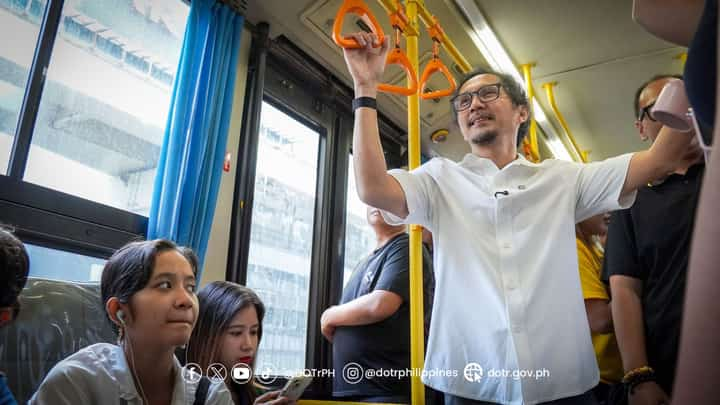
SEAMLESS connectivity Transportation Secretary Vince Dizon returns to the front lines of the country’s mobility challenges, pushing for better-connected transport systems to make daily travel easier, faster, and more convenient for commuters in Metro Manila and its surrounding cities. His focus is on linking transport modes and improving the commuter experience in the country’s busiest economic and commercial hub.
Photographs courtesy of DoTr
Dizon aims to award the bundled PPP project covering Davao, Siargao and Bicol airports by the first quarter of next year.
For Department of Transportation (DoTr) Secretary Vivencio “Vince” Dizon, improving public transportation is not just about drawing up plans behind a desk. It means going to stations, riding buses, inspecting facilities and seeing firsthand the problems commuters encounter every day.
Since returning to the DoTr in October 2026, Dizon has made field inspections a visible part of his leadership, visiting railway stations and busway facilities as he pushes for improvements in the country’s public transportation network.
He employed the commuters’ perspective as he recently unveiled plans to accelerate public-private partnerships (PPPs) for provincial airports and major railway systems in 2027, even as proposed budget cuts threaten funding for foreign-assisted infrastructure projects.
Through coordination with senators, particularly JV Ejercito, chairperson of the finance panel, funding for the flagship projects was included in the P97 billion restored from the House version, which tried to prioritize sources of pork barrel.
Dizon aims to award the bundled PPP project covering Davao, Siargao and Bicol airports by the first quarter of next year.
The unsolicited proposal was submitted by a consortium involving Filinvest and JG Summit, which is seeking to develop, operate and maintain the three airports.
The project, however, remains subject to regulatory approvals and a competitive challenge.
Dizon also announced plans to pursue a solicited PPP for Iloilo International Airport during the first half of 2027, alongside similar arrangements for Bacolod, Puerto Princesa, Busuanga, General Santos and Tacloban airports.
In a subsequent ambush interview, Dizon explained that Iloilo would be offered separately, while smaller airports would be grouped to attract investors.
“Iloilo is the only one that is viable standalone,” he said.
The Department of Transportation is coordinating with the International Finance Corporation and Asian Development Bank to determine the final airport bundles.
Dizon said solicited proposals could accelerate development, citing delays involving an unsolicited proposal for Puerto Princesa Airport.
“Solicited is always better if there is market interest. It’s better for the government and it’s better for the passengers,” he said.
The government’s PPP expansion will also cover Metro Rail Transit Line 3 and Light Rail Transit Line 2, with a proposed 25-year concession for MRT-3.
Dizon said MRT-3 would take priority, with its Swiss Challenge process targeted by the second quarter of 2027, subject to government approval.
He also announced plans for a unified automated fare collection system covering Metro Manila’s railway network, including the North-South Commuter Railway and Metro Manila Subway.
Separately, Dizon said rehabilitation work was underway at three EDSA Busway stations, with approximately 12 to 13 stations expected to be completed by 2027. The remaining stations could be developed through PPPs.
Despite the ambitious timetable, Dizon expressed concern over proposed funding cuts for foreign-assisted projects, including Japanese-supported railway developments.
“I hope that the cuts to the foreign assistance can be restored. If not in full, maybe partially,” he said.
Asked about the possible consequences for the subway and other projects, Dizon declined to speculate.
“I can’t answer that right now. I don’t want to deal with hypotheticals. Let’s wait for the final budget,” he said.
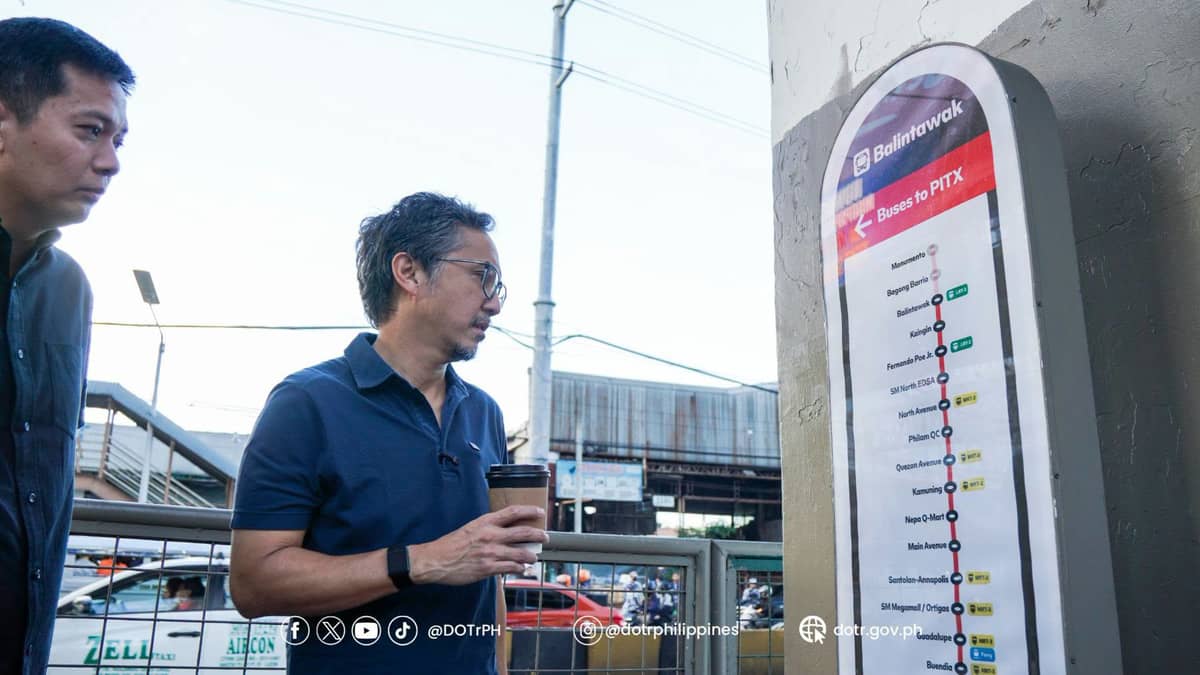
FIRST-HAND experience rule Taking the busway ride to get a first-hand feel of the commuter experience, the DoTr secretary (second from left) travels from Guadalupe Station to Quezon Avenue Station along the EDSA Busway. Dizon has made the upgrading of busway stations a priority, aiming to improve passenger comfort and ease the daily grind of thousands who traverse EDSA.
PBBM’s troubleshooter
His return to the DoTr came after more than a year leading the Department of Public Works and Highways (DPWH), where he was appointed secretary in September 2025 amid investigations into questionable flood-control projects and calls for greater accountability in public spending.
An economist by training, Dizon earned degrees in economics and management of financial institutions from De La Salle University and a master’s degree in applied developmental studies from the University of Reading in the United Kingdom.
Before joining the Cabinet, he served as president and chief executive officer of the Bases Conversion and Development Authority, where he helped advance major infrastructure and development initiatives under the government’s Build, Build, Build program, including the development of New Clark City.
He also served as presidential adviser on flagship programs and projects, undersecretary for political affairs at the Office of the President, and chief of staff to former Senate President Edgardo Angara.
During the Covid-19 pandemic, he became deputy chief implementer of the government’s national response, testing czar and chief coordinator of the Test, Trace, Treat program.
His appointment to the DPWH in September 2025 came at a critical period for the agency, following the resignation of former Secretary Manuel Bonoan amid investigations into anomalous flood-control projects.
President Marcos tasked Dizon with conducting an organizational review and ensuring public funds are spent on infrastructure that genuinely benefits Filipinos.
His return to the transportation department brings him back to a familiar assignment, but with a wider view of the country’s infrastructure challenges.
From addressing long queues at railway stations to improving busway facilities and advancing major rail connections, his agenda is built around making public transportation more accessible, reliable and convenient.
Ultimately, the measure of his leadership will not only be the projects completed or reforms announced, but how much easier, safer and more predictable the daily commute becomes for Filipinos.