
The growing business of vintage sports caps
I’m sure most of you are not familiar with the name Jayson Jay Luzadas. But I’m also certain the name “Boss Toyo” will ring a bell.
Yup, he’s the famous collector and buy-and-sell guy of just about anything of value, particularly sports memorabilia. Many also know him as a vlogger and rapper.
When it comes to Philippine Basketball Association (PBA) and Gilas Pilipinas collectibles, there’s also Doc Michael Rico Mesina. Yup, he’s a doctor of medicine by profession but perhaps an even bigger basketball aficionado.
But believe it or not, there’s another sports memorabilia business quietly growing in the country and gaining popularity, particularly on social media.
I’m talking about vintage sports caps.
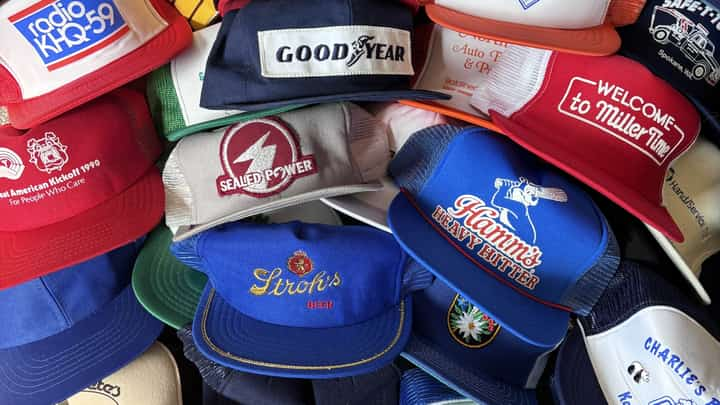
These are authentic old-school headwear, mostly from the 1970s through the 1990s and earlier, or reproductions inspired by that era. They feature classic logos, colors and designs of Major League Baseball, National Basketball Association, US National Collegiate Athletic Association (NCAA), National Football League and National Hockey League teams, including discontinued franchises like the Montreal Expos. Many carry brandings that has long disappeared from today’s sports merchandise.
What surprises me most is that baseball, American football, US college basketball and hockey aren’t exactly popular sports in the Philippines. Yet their vintage caps, particularly snapbacks, don’t just sell. They’re actively traded and resold, with the most sought-after pieces making the rounds among collectors.
Facebook has become a major marketplace for this growing community. Among the popular groups are TP “VINTAGE” GROUP and the original “Vintage the game, logo athletic, starter etc. snapback,” which at one point had more than 100,000 members.
Sellers and resellers like Zealjohn Mallari, Russel Antonio, Donlee Macatangay, Erick Regullano, JM Rimando, Wangbu, From The 206, Budget Vintage Hats, Mamen Worldwide and LA to Manila Bay are among those fueling the growing interest. I know Titan Ultra’s Fran Yu is becoming one.
I recently attended a goodwill gathering at the Supreme Billiards Hall in Parañaque, organized by Macatangay and Flaker Ng Salakot, himself a formidable collector and seller. I was amazed by the turnout, with thousands coming from different places to mingle, meet fellow enthusiasts and show off their prized headwear. There was even a raffle featuring a generous number of collectible caps donated by Macatangay himself. For these collectors, a cap is more than something to wear. It’s a piece of history, identity and sometimes, a prized investment.
The community isn’t limited to Metro Manila. Filipino vintage cap enthusiasts are also thriving in Cavite and Pampanga, as well as in the US, UAE (Dubai) and Taiwan. Here at home, collectors are active in Manila, Parañaque and Taguig.
Just how valuable can these caps get?
From what I gathered, some of the most coveted are Oakland Raiders caps associated with popular rappers Jay-Z and Nas, as well as Eazy-E and N.W.A. Certain pieces reportedly command as much as P400,000 apiece, perhaps even more.
There’s also an interesting basketball connection. Mallari owns St. John’s University caps that became even more valuable after Justin Brownlee, PBA and Barangay Ginebra legend and arguably the league’s GOAT import, autographed them. Brownlee, after all, studied and played college basketball at St. John’s. It’s another example of how a cap’s value can go beyond rarity and nostalgia.
Then there’s the unfortunate case of collector and reseller Ken Adrillano, whose vintage caps, reportedly worth at least P500,000, along with other valuables, were stolen from his café in Tanza, Cavite.
Heck, I have a couple of PBA championship team caps from the 2000s, PBA All-Star Week hats dating back to the introduction of the North vs South alternate-hosting format in 2004 and even a rare original Metropolitan Basketball Association cap. But judging by the market, they seem to be worth next to nothing compared to these American vintage caps.
And I still can’t fathom why.
Perhaps it’s nostalgia, rarity, hip-hop culture or simply the fact that some logos and styles will never be produced again. Maybe it’s all of these things combined.
But here’s something worth thinking about: How did caps representing sports that Filipinos barely follow become more valuable and desirable here than memorabilia from our very own PBA, University Athletic Association of the Philippines or NCAA?
Maybe the bigger story isn’t just the business of vintage caps. It’s how American sports history has found such a passionate following among Filipinos while our own basketball heritage still has so much untapped potential.