
CHEd proposes overseas fellowship program upgrading teacher competencies
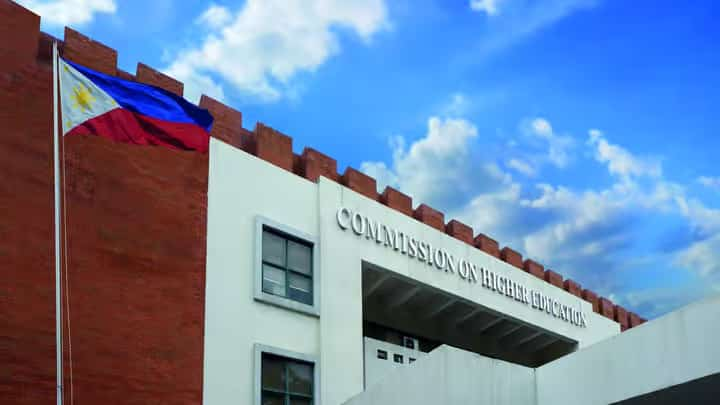
The Commission on Higher Education (CHEd) is proposing a faculty fellowship program to send Filipino teachers to prestigious foreign universities, a move intended to make globally competitive education accessible beyond urban centers and privileged students.
CHEd commissioner Michelle Aguilar Ong said the initiative would enable local educators to study at leading international institutions and apply their acquired expertise upon returning to Philippine colleges and universities.
“So there is this strategy to bring teachers outside of the country and learn from these global prestigious universities and they bring home that knowledge to everyone,” Ong said.
“We want this as much as possible to be a massive program, not just for the few and privileged,” she added.
Ong cautioned that 39 percent of workforce skills globally are projected to shift by 2030, underscoring the urgency for higher education institutions to bolster training in digital transformation and emerging fields.
The proposed teacher mobility program forms part of CHEd’s broader transnational higher education strategy, which seeks to expand academic cooperation through faculty and student exchanges, international partnerships and research collaborations.
CHEd confirmed that funding has been earmarked for faculty development, specifically for educators pursuing master’s and doctoral degrees abroad or at top-tier domestic institutions.
The agency said scholarship guidelines, application timelines and qualification requirements will be posted on its official website.
The push for upgraded faculty qualifications comes on the heels of findings from a 2025 report by the Second Congressional Commission on Education (EDCOM II). According to EDCOM II, only 58.2 percent of higher education faculty members held at least a graduate degree — including 40.5 percent with master’s degrees — during the 2023–2024 academic year.
EDCOM II data also revealed stark regional disparities in higher education access. The National Capital Region recorded the highest college-age participation rate at 47.2 percent, followed by the Cordillera Administrative Region at 44.1 percent and Central Visayas at 35.2 percent.
Meantime, the Bangsamoro Autonomous Region in Muslim Mindanao recorded the lowest participation rate at 18.7 percent.
Additionally, the report documented wide regional variations in higher education attrition rates, with Central Visayas at 60.7 percent and National Capital Region at 52.4 percent, compared with 36.3 percent in Cagayan Valley.