
Palace blames disasters, El Niño for sluggish economic growth
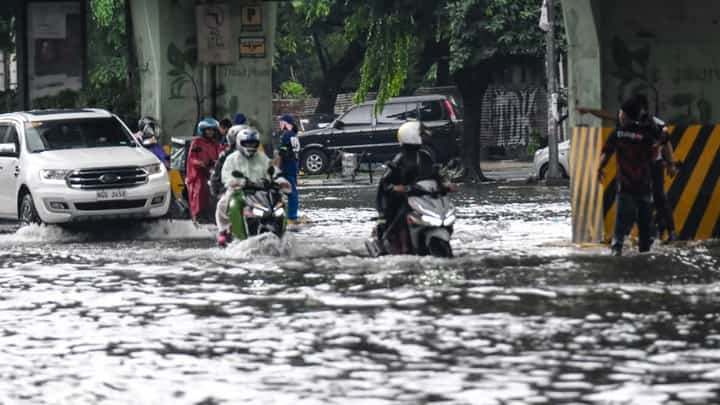
Malacañang on Tuesday, 10 November, attributed the Philippines' sluggish economic growth to successive natural disasters, extreme weather conditions and the continuing conflict in the Middle East, arguing that other Southeast Asian economies face different challenges.
Palace Press Officer Undersecretary Claire Castro defended the administration after the Philippine economy expanded by just 2.1 percent in the third quarter of 2026, one of the weakest performances in the Association of Southeast Asian Nations (ASEAN).
The latest figure, released by the Philippine Statistics Authority (PSA) on Monday, marked a slowdown from the revised 2.4 percent growth in the second quarter and 4 percent in the same period last year.
“Ang nararanasan kasi ng Pilipinas ay malamang hindi nararanasan ng ating mga kapitbahay. Hindi nila naranasan ang sunud-sunod na pagbaha, ang sunud-sunod na malalakas na bagyo, at iyong nararanasan natin ngayon na climate change—I mean, the very strong El Niño—iba ang epekto nito sa Pilipinas. Malapit tayo sa Pacific Ocean, mas mabilis tayong bisitahin ng malalakas na bagyo,” Castro said during a Palace briefing.
She argued that the Philippines' geographic exposure to powerful tropical cyclones made direct comparisons with other Southeast Asian economies difficult.
“So, kung ang pag-uusapan natin, ikukumpara natin kung ano ang nangyari sa bansa nila, halimbawa, ang Singapore, hindi nakakaranas ng ganitong kalakas na bagyo ang Singapore; hindi sila tinatamaan ng malalaking bagyo. So, hindi natin puwedeng ikumpara kung ano ang nararanasan ng Pilipinas sa nararanasan ng ibang bansa,” she added.
Regional economic figures highlighted the gap.
Vietnam recorded a 9.95 percent expansion in the third quarter, followed by Indonesia at 5.47 percent, Singapore at 5.4 percent and Malaysia at 5.3 percent.
The Philippines, meanwhile, registered its slowest quarterly year-on-year growth since the first quarter of 2021, when the economy was affected by pandemic restrictions.
PSA data showed that agriculture, forestry and fishing contracted by 4.8 percent in the third quarter, while industrial output was virtually unchanged. Services grew by 3.7 percent.
Household consumption, a major driver of the Philippine economy, increased by only 2.4 percent, while gross capital formation declined by 0.2 percent.
Chinabank Research warned that economic activity could remain weak or deteriorate further in the fourth quarter as elevated living costs suppress household spending and infrastructure investment remains subdued.
The slowdown has raised doubts about the government's ability to achieve its revised full-year growth target of 3.5 to 4.5 percent.
Inflation adds pressure
Castro also cited the continuing conflict involving the United States and Iran as another factor affecting the Philippine economy through disruptions to energy supplies and global markets.
The Palace official said President Ferdinand Marcos Jr. had directed government agencies to ensure adequate supplies of essential commodities, particularly rice and petroleum products.
The administration's response comes as inflation accelerated to 7.8 percent in October from 7.2 percent in September, according to the PSA.
Transportation costs rose 20.1 percent year on year, while housing, water, electricity, gas and other fuels increased by 9.3 percent.
“Ang sabi ng Pangulo, kailangan sapat ang supply, especially sa bigas – ito kasi iyong talagang kinakailangan ng Pilipino – kapag mababa ang presyo ng bigas, mas nagsasabay eh ang presyo rin ng ibang mga commodities. So, kailangan na ang supply ay sapat,” Castro said.
She also stressed the need to maintain sufficient fuel supplies to prevent shortages that could further disrupt economic activity.
“So, ito po ang mino-monitor ng pamahalaan na dapat ang supply kumpleto, hindi lang sapat, dapat more than enough para magamit at ma-avail ng ating mga kababayan,” she added.
The administration is also preparing for the effects of a very strong El Niño, which state weather bureau PAGASA expects to persist into the first half of 2027.
PAGASA has warned that the phenomenon could bring below-normal rainfall, dry spells and drought to several parts of the country, potentially affecting agriculture and water resources.