
From the shadows to the spotlight: Stepping into the ‘Vaklat!’ world
In Vaklat! Mga Nakakalokang Kuwento ng mga Draga, Pura Luka Vega and illustrator Jap Mikel bring Filipino drag life to the page through a young queer person’s journey of discovery.

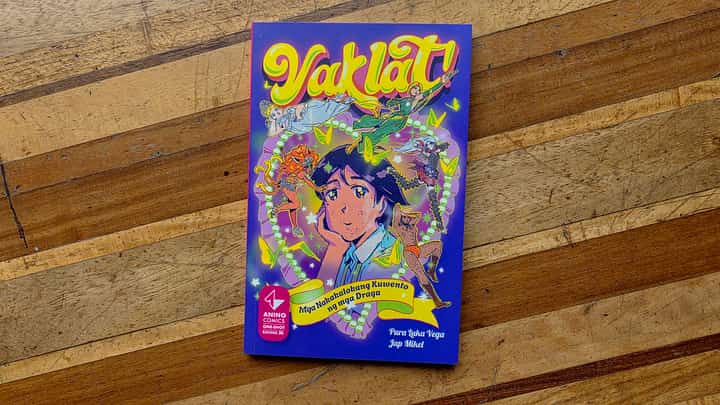
‘VAKLAT! Mga Nakakalokang Kwento ng mga Draga!,’ written by Pura Luka Vega and illustrated by Jap Mikel, follows a young queer person’s discovery of drag.
Photographs by Roel Hoang Manipon for DAILY TRIBUNE
Outside, the city is drab and stern. Inside a bar called Delulu, queens hold court in a blaze of colors: a sweeping green gown, a gleaming crown, costumes that sprout fantastical creatures. A young newcomer watches, wide-eyed, as the room fills with banter, music, and possibilities. The threshold is small, but crossing it opens a world.
In Vaklat! Mga Nakakalokang Kuwento ng mga Draga, written by Pura Luka Vega and illustrated by Jap Mikel, that world extends from the stage into dressing rooms, classrooms, a salon, and the private spaces where people struggle to understand themselves. Drag brings colors into the pages. It also brings the young protagonist, Ally, into a community whose members can be quarrelsome, funny, frightened, generous, and fiercely protective of one another.
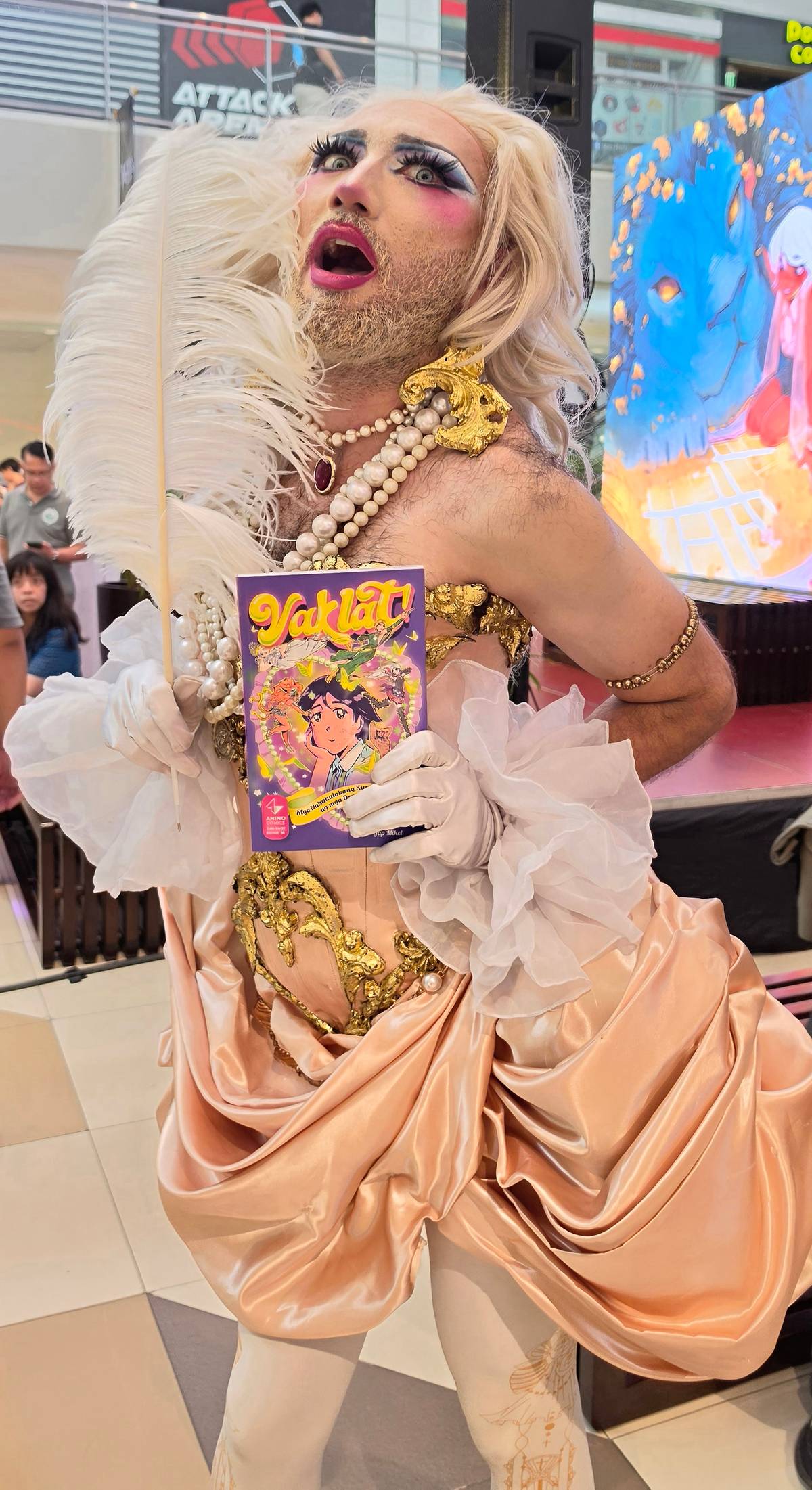
DRAG artist and author Pura Luka Vega.
Published in 2026 by Anino Comics, Adarna House’s comics imprint, the Filipino-language graphic novel follows Ally’s discovery of drag, the lives of the performers who become part of that education, and Ally’s own identity. The book, the first tackling Filipino drag experience to be published in the Philippines, had a preview on 13 June at Viva Café in Quezon City during LGBTIQ+ Pride Month and was also presented at the Philippine International Comics Festival in Pasig City in July.
For Pura, the story is motivated by the need to speak from within the community.
“We need to make sure that our stories are being told the right way from our point of view. We need representation; it matters. And queer stories don’t get to be told as often as we want to,” said the drag artist, who rose to prominence when she appeared in the first season of the television drag competition series Drag Den in 2022. “I hope that the Vaklat! book opens up conversations about acceptance, being there for one another, and about love — you know? — what queer love is.”
That love takes recognizable, sometimes untidy forms. There is the welcome extended to a nervous beginner, the friend who accompanies someone to a clinic, and the older performer who offers advice and a treasured possession. There are also failures of understanding, judgments made too quickly, and the painful work of repairing relationships.
The project emerged from a publishing invitation. Kata Garcia, Adarna House’s managing editor and product development officer, recalled that Anino Comics opened a call in April 2024 for creators to develop comics about Filipino drag. Submissions did not immediately arrive, but the editorial team had someone in mind.
“Tapos, walang nagpapasa, pero in our head, feeling talaga namin si Pura can do it (But no one was submitting anything, and we really felt that Pura could do it),” Garcia said. When they met, the team asked Pura about writing on Pinoy drag, initially imagining an account of a person’s journey into the art form.
What took shape draws on a much wider circle of lives.
“This novel draws from the lived realities of the drag community I grew up with,” Pura said. “It is a love letter to the drag queens who came before me, especially those I have known personally and who have shaped the way I understand and practice drag.”
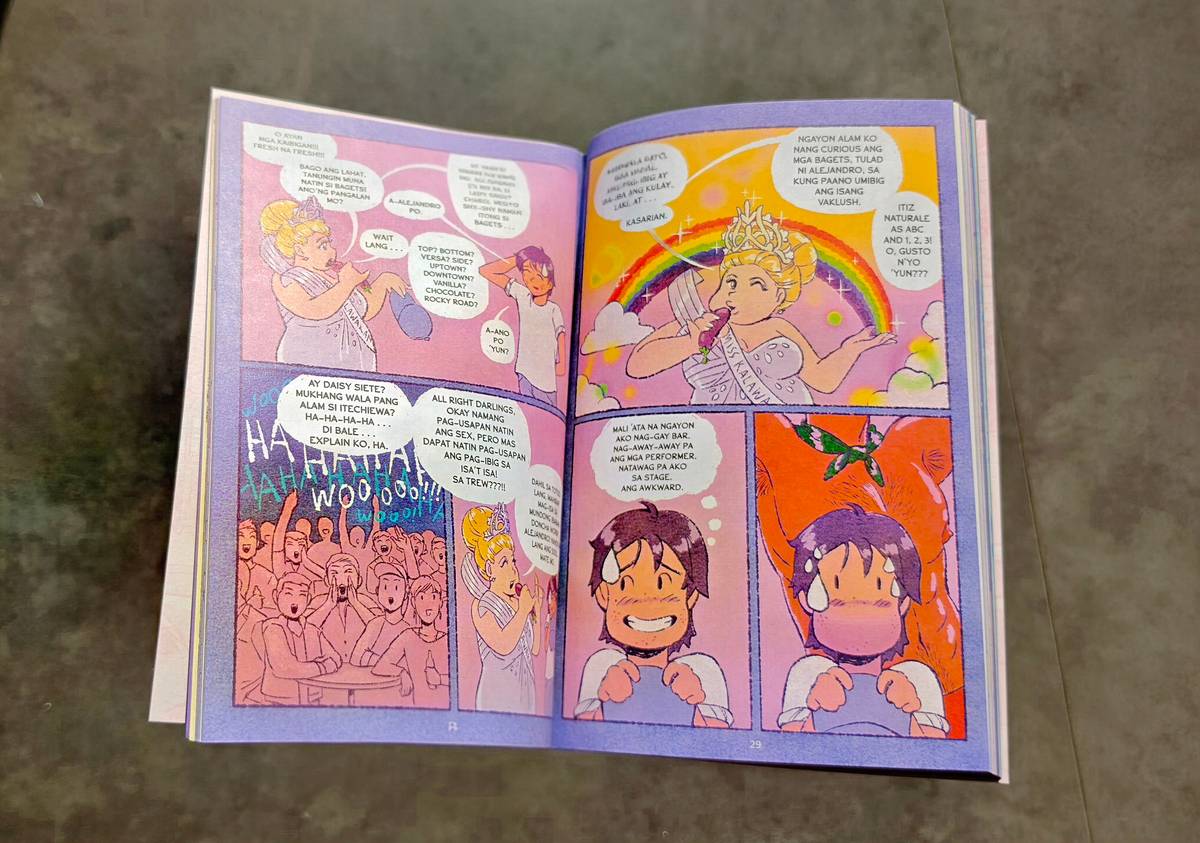
HUMOR and queer slang enliven Ally’s introduction to the world of drag in ‘Vaklat.’
Ally’s tentative entrance provides a reader’s way into that circle. The queens’ names — Cindy Kato, Marie Posa and Annie Malya — announce a world where language itself dresses up. Dialogue tumbles between Filipino, English, and exuberant queer slang. Jokes, teasing and pointed exchanges give the scenes the pace of conversations already in progress; the reader arrives as another person listening at the edge of the room.
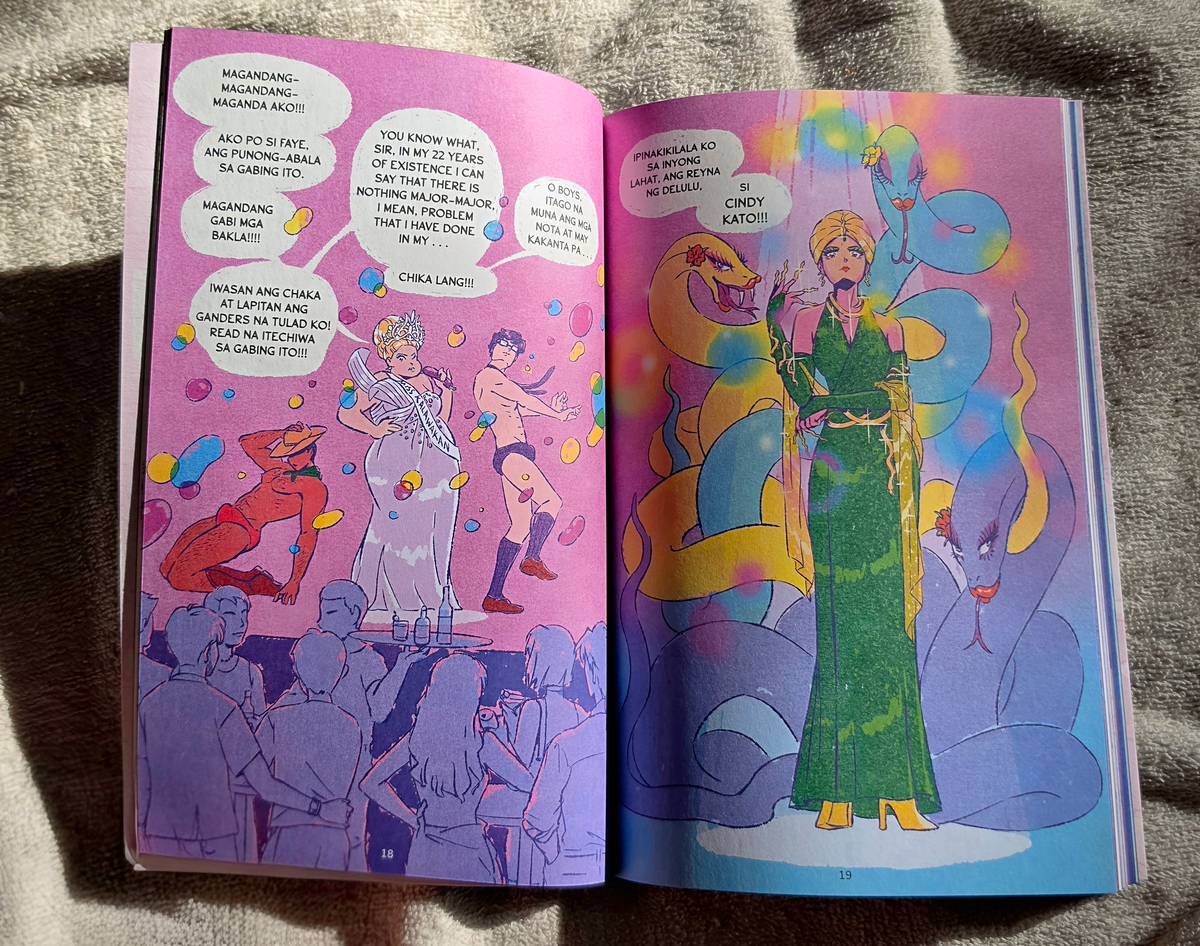
CINDY Kato makes a dazzling entrance in ‘Vaklat!,’ brought to life by Jap Mikel’s vivid illustrations.
Mikel’s illustrations make that entrance palpable. Monochrome scenes establish the streets and the routines beyond the spotlight, while color blooms around drag and its imaginative possibilities. Large, lavish images let a costume or transformation command attention. Smaller panels catch a hesitant expression, an embrace, and the awkward pause after a remark.
The effect gives performance room to dazzle while keeping the people behind it close. Even the glamorous figures must deal with schedules, expenses, other jobs, and the uncertainty of earning enough. A salon and a dressing room belong to the same working life.
Pura wanted those ordinary realities in the story, along with the mishaps that fellow performers would recognize.
“This was heavily influenced by my experiences as a drag performer — all the glitz and glamour, but also the reality of drag,” Pura explained. “Minsan nalalaglagan ng wig, which you will see in the book. Madalas kami matanggalan ng wig. Totoo ’yun (Sometimes our wigs fall off, which you’ll see in the book. Our wigs come off quite often. That’s true).”
Ally’s decision to enter a drag contest also has a personal source. Pura recalled joining Drag Cartel in 2017, where beginners performed for a crown without a cash prize.
“Money was not the motivator. It’s really just wanting to be seen and wanting to be validated for the work,” she recalled.
That desire helps explain the seriousness beneath the spectacle. For someone learning to perform, applause can affirm hours of preparation and the courage required to offer a newly imagined self to an audience. Vaklat! places that longing alongside the practical support that makes a debut possible.
One of its most affecting encounters involves an elder passing a prized possession to the younger generation. Asked about a favorite part of the book, Pura chose this moment of inheritance.
“We want drag to be appreciated by future generations who also have their own spin into the art form because, like any other art form, there’s a risk na baka hindi siya magpatuloy kasi hindi siya naipapasa (that it might not continue because it isn’t being passed on),” she said.
Mentorship here involves more than makeup and costume. It includes learning how to find an individual voice, how to treat other people, and how to carry something forward without simply repeating it. The book’s chapter “Karunungan ng Makabagong Babaylan” gives this exchange the weight of a tradition being entrusted to another pair of hands.
The opening pages establish a historical frame, invoking the babaylan and moving through colonial disruption toward later forms of performance. This is the story’s way of placing its contemporary queens within a longer imagination of gender, community and belonging. Pura wants readers to question the assumption that queer presence is a recent arrival in Philippine life.
“Gusto ko i-share ulit na baka nakalimutan ng mga tao na ang kabaklaan ay nandoon na ’yan kahit bago pa tayo sakupin ng mga Espanyol, mga Amerikano (I want to remind people that queerness was already part of our society before the Spanish and American colonizers arrived — something they may have forgotten),” Pura said.
The community depicted in Vaklat! is also capable of reproducing the prejudice it encounters outside. A storyline involving HIV shows how fear and misinformation strain relationships, and how easily a person’s need for care becomes entangled with shame. Elsewhere, hostility toward a gender-nonconforming character exposes the danger beyond the bar’s welcoming doors.
Pura considered making the story simply happy. The choice to include suffering came from a desire to acknowledge what performers carry beneath their makeup.
“Siguro, gusto kong gumawa ng kuwento na may (Maybe, I want to create a story that has a) reflection of what is happening to the community, to send the message of how important it is to actually safeguard human rights, queer rights,” Pura said. “Pero (But), I think there has to be a slice of reality in the story. And I wanted to really capture it.”
Death, too, became part of that reckoning. The chapter “Kaibigan Mo si Kamatayan” takes the narrative into grief, asking what happens to a community when one of its places at the table is suddenly empty.
“There was a particular part in the story that I was contemplating whether I would depict death,” Pura recalled. “Kasi parang feeling ko medyo heavy ’yung paksa ng kamatayan (Because I felt that death was a rather heavy subject).”
Facing it meant allowing the book to hold loss alongside its laughter. The tenderness of its communal scenes gains force because the people gathered there know how fragile such togetherness can be.
Writing the book also gave Pura a place to work through personal distress.
“If it weren’t for Anino, I don’t think I’d be able to have a beautiful way to escape the situation I was in. At the time, I was battling my court cases. Thankfully, I was able to, you know, win the cases. I won the cases. Na-dismiss naman lahat (All of them were dismissed). But it’s also a way for me to, like, just release whatever emotions I have in my life. Sabi ko, bahala na kung anong mangyari sa akin, mamatay man, heto na ‘yun (I told myself, whatever happens to me — even if I die — this is it). So, I’m very happy that nailabas ko siya (I was able to let it out). So, thank you,” she said.
“I’ve learned how to lean into my art more,” Pura stressed.
At first, there were doubts about being able to write a comic that truthfully reflected a drag performer’s experience. Continuing the work brought unexpected confidence: “Kaya ko pala. Na may patutunguhan pala siya (I realized I could do it — that it was actually going somewhere).”
The finished book has even prompted thoughts of writing another. For now, Pura hopes Vaklat! will reach readers with the power to influence other people’s lives. Asked who should read it, the artist immediately named senators and the president, then explained the wish behind the answer.
“There are people who claim that they are patrons of the art and yet, they don’t know the context of what the art form is,” Pura said. “I want people to actually read and understand what we are going through. Pero siyempre (But of course), the book is for everyone.”
That invitation rests on a simple aspiration: that people can grow into themselves with less shame and recognize the humanity of those whose lives look different from their own.
“We want people, in terms of queer representation, to be just more open about these things because nilikha tayo na iba-iba (we are created differently). And there’s nothing wrong with that,” Pura said. “Kasi (Because) the fear that I have is us losing our humanity. We need to remind ourselves, we are all people here. We should work together.”
Vaklat! keeps returning to the work of that togetherness: welcoming, teaching, listening, making amends, and remembering. Its queens may first catch the eye through their costumes, but they linger through these smaller gestures. Long after the performance, someone still has to open the door, offer a seat, and help the next person find the courage to step into the light.