
Peso breaches P64-$1
Dark clouds gather over new historic low
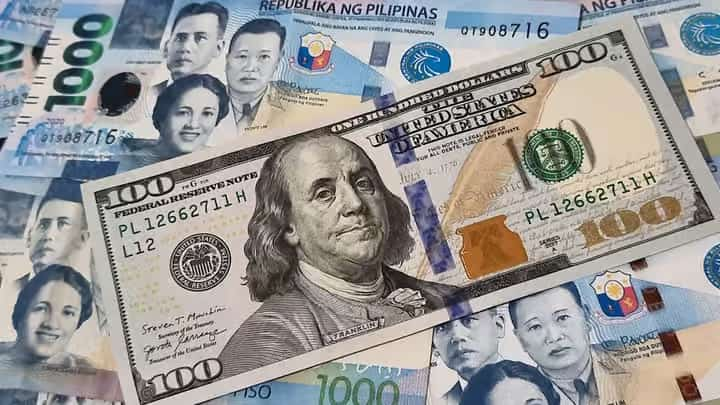
The Philippine peso closed above P64 for the first time, slumping to a sixth consecutive record low of P64.17, down 22 centavos from Monday’s close of P63.95. The currency has depreciated 10 percent since the 28 February close of P57.66, when the Middle East conflict began.
The peso opened at P63.95 and briefly strengthened to P63.90 before renewed dollar demand pushed the exchange rate to a record intraday high of P64.20.
Renewed oil price volatility and escalating tensions involving Iran have added to the pressure, with Brent crude peaking at $117 per barrel over the weekend as US President Donald Trump raised the prospect of renewed military action against Iran, strengthening safe-haven demand for the dollar.
The peso has now depreciated roughly 10 percent since 28 February, extending its decline despite the Bangko Sentral ng Pilipinas’ “jumbo” 50-basis-point policy rate hike last Thursday.
BSP Governor Eli Remolona Jr. clarified that the central bank does not use monetary policy to support the peso, saying the rate hike was intended to combat accelerating inflation, which stands at a three-year high of 7.2 percent.
“We’re not hiking the policy rate to defend the peso,” he told reporters last Thursday.
“We do intervene a little bit in the foreign exchange market, but that’s mainly to avoid swings in the exchange rate that tend to be inflationary. We have estimates of how much the peso has to move before it becomes inflationary, and that’s when we tend to intervene,” he said.
Hands-off
Remolona has defended the BSP’s hands-off stance toward the local currency, although economists have noted that the central bank may be forced to raise rates further if the peso continues its steep slide amid persistent external pressures.
Bank of the Philippine Islands lead economist Emilio Neri Jr. said the BSP may consider an off-cycle rate hike if the currency’s decline continues.
“The magnitude of the change, if it’s too rapid, they might consider it,” he told reporters Monday evening.
Neri, one of the few economists to accurately predict the “jumbo” hike, has also warned that the peso’s slide raises concerns about the country’s foreign reserves, which have fallen by about $13 billion to a three-year low of $99.5 billion.
That is well below the record $113.264 billion reported in February, before the conflict began, he noted.
“While it remains substantial, the uncertain duration of the Middle East conflict increases the importance of maintaining a sufficient buffer, especially in a scenario where the conflict could persist in 2027,” Neri said in a recent commentary.
The BSP, for its part, has said it does not rely solely on the country’s foreign reserves to fight the currency’s slump.
Felt effects
Remolona was also asked last Thursday about the threshold the BSP uses to determine when the peso’s depreciation becomes inflationary but declined to disclose the figure to avoid fueling market speculation.
“Forgive me if I don’t tell you the threshold, because then it helps speculators decide when to go in and when not to go in. But there is a threshold,” he said.
The peso’s depreciation makes imported goods, including fuel, food and raw materials, more expensive, driving inflation and increasing household expenses. Businesses also face higher production and transportation costs, potentially leading to price hikes or reduced profits.
Exporters and families receiving remittances, however, benefit from stronger dollar earnings.
At the same time, rising import costs can widen the trade deficit, while higher debt-servicing costs strain the government and businesses with dollar-denominated loans. These pressures could slow economic growth, which slumped to a 17-year low in the second quarter of this year.
“We worry about the big swings in the exchange rate, because if the swing is big enough, it becomes inflationary. And our mandate remains to fight inflation,” Remolona said.