
ASEAN, EU convene higher education policy dialogue
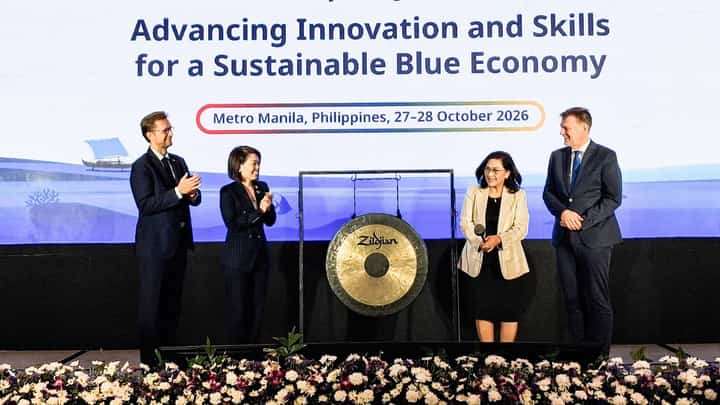
REPRESENTATIVES from the European Union, ASEAN, and the Philippine government gather during the 4th EU-ASEAN Policy Dialogue on Higher Education in Manila on Tuesday. Attending the opening ceremony are (from left) Dr. Radomir Jansky, deputy head of the EU Mission to ASEAN; Constance See, Ambassador of Singapore to the Philippines; Dr. Shirley C. Agrupis, chairperson of the Commission on Higher Education; and Marco Schouten, director general of Nuffic.
Photograph by Sean Magbanua for DAILY TRIBUNE
Policy makers, educators and industry leaders from across Southeast Asia and Europe gathered Tuesday for the opening of the 4th EU-ASEAN Policy Dialogue on Higher Education, focusing on cross-border cooperation in workforce development, research, and marine sustainability.
Organized by the EU-funded Sustainable Connectivity Package-Higher Education in partnership with the Commission on Higher Education (CHED), the two-day forum brings together higher education leaders and Technical and Vocational Education and Training representatives.
“Universities, developed institutions, industry and government must work together to ensure that what we teach and discover and what our industries need are not disconnected efforts but parts of a common agenda,” CHED chairperson Shirley Agrupis said in her keynote address.
Agrupis stressed the need to prepare regional workforces to drive the blue economy while utilizing marine research to ensure sustainable coastal development.
She cited that the Philippine tertiary sector, which includes 2,366 higher education institutions, serves as a vital platform for cultivating specialized talent in marine sciences and sustainable industries.
Singapore’s Ambassador to the Philippines Constance See highlighted the strategic relevance of maritime resources to both regional blocs.
“Achieving sustainable growth will depend not only on new technologies and policies, but also on our ability to develop the people and the skills needed for the future,” See said.
“The blue economy is particularly relevant to both ASEAN and the EU. Our seas and coastal resources underpin livelihoods, trade, connectivity, and economic growth,” she added.
ASEAN Secretary-General Kao Kim Hourn formally opened the sessions, emphasizing that educational partnerships remain central to regional inclusion and economic resilience.
The dialogue comes as Philippine lawmakers consider a proposed Blue Economy Act to establish a governance framework for coastal and marine resources. Agrupis cited that the legislative initiative will incorporate ocean literacy across basic, tertiary, and vocational education curriculum while expanding technical training aligned with industry demands.