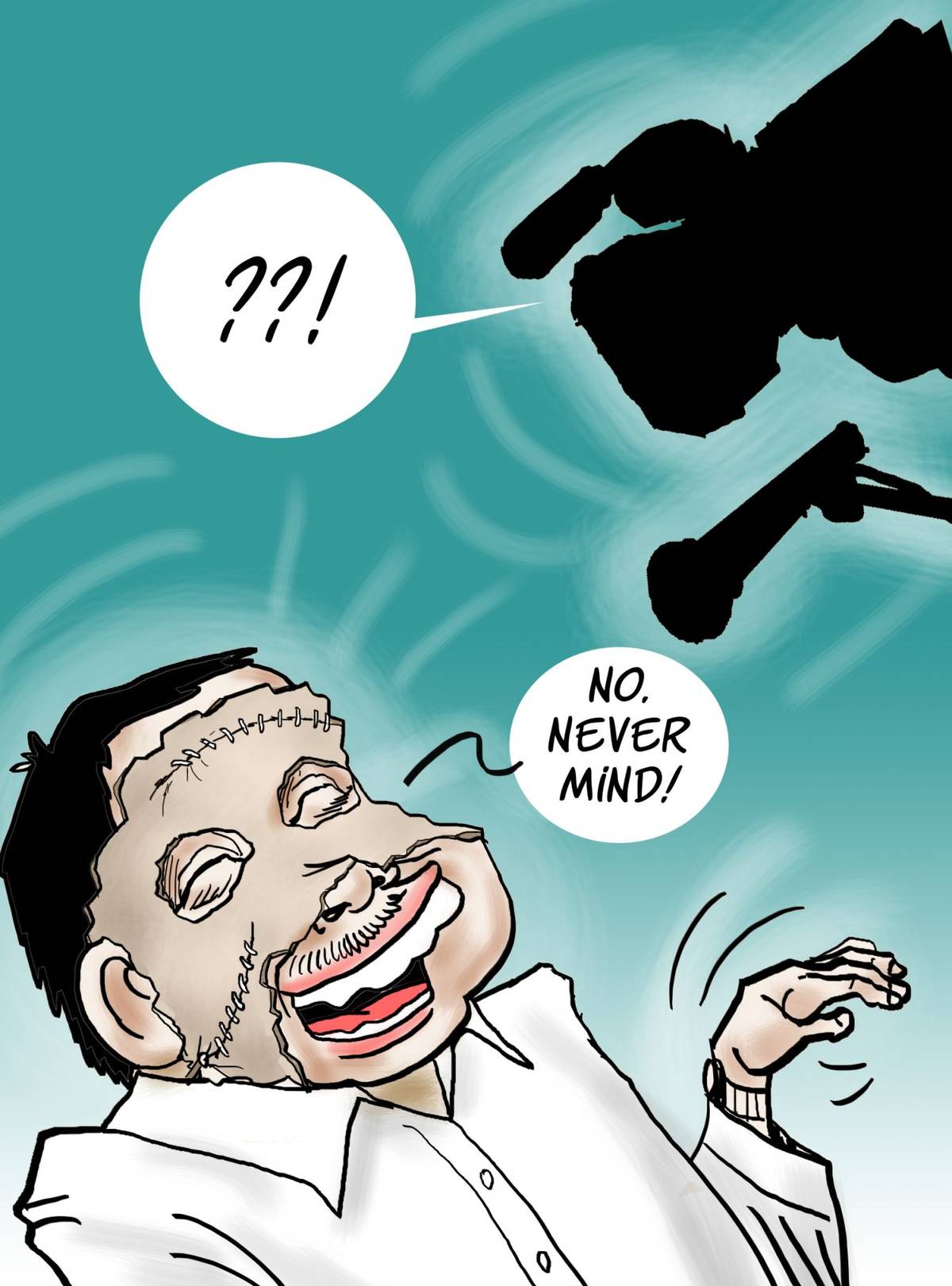
Brazen solon needs MAIFIP badly

Another episode of the leather-faces at the House of Representatives had Nosy Tarsee taunting his avid followers: Which House member, a gavel-wielding committee chairman no less, was caught on video nudging Department of Health (DoH) officials with a little reminder?
“Don’t forget our MAIFIP ha, no never mind.”
It was said with a chuckle, a throwaway line. The “no never mind” came like an afterthought from a man who realized, a half-second too late, that the cameras were rolling.
But what is said in jest is often said in earnest. Nosy Tarsee’s lawmaker, a regular in the chamber when sermons on fiscal prudence are being delivered, just told the nation what the program is really for.
For the uninitiated, the MAIFIP or the Medical Assistance to Indigent and Financially Incapacitated Patients program was supposed to be a lifeline for the poor.
In practice, critics say, it has become pork barrel in a surgical mask. Patients queue at politicians’ offices begging for guarantee letters. Hospitals wait for payment to be liquidated. And a lawmaker’s name gets attached to a family’s worst week.
Meanwhile, the Universal Health Care law is clear that the Philippine Health Insurance Corp. is supposed to be the single payor.
Every peso released on a politician’s say-so is a peso that does not go into transparent, automatic coverage. The program leaves no doubt about who has the discretion, and who must say thank you.
The healthcare system is in the intensive care unit (ICU), and the attending physicians seem unsure what to do. The diagnosis, however, is not in doubt: patronage politics in a white coat.
Nosy Tarsee’s little birdie asks the questions the solon would rather not hear:
What exactly did the lawmaker mean by “our” MAIFIP? Whose is it, the people’s or the politician’s?
Why did the reminder come with a laugh, and why was it retracted just as quickly?
How much has the lawmaker’s office referred through the program, and how many patients were turned away for lack of a letter?
Is the DoH “reminded” often, and by whom?
Health care should depend on what a patient needs, never on who he knows. If the program is as innocent as its defenders insist, then the solon should have no trouble publishing every referral, every guarantee letter, and every peso.
Until then, the joke may be on the rest of us. The patient waits, the hospital waits, and the politician waits for gratitude.