
Whitewashing public funds?

When public money goes missing, Nosy Tarsee discovered that a city government’s easiest option is to look the other way.
In an office dedicated to keeping the community informed, where the city’s stories are shaped, its announcements find a voice, and every public update becomes a message to the people, recent facts should be faced head-on.
A P1.1-million fund was traced to the 2025 State of the City Address funds, with documented dates and people involved, and it was acknowledged that P223,500 remained unaccounted for.
The uncomfortable details were laid out: the empty steel cabinet, missing receipts, a personal PSB deposit made by a staff member before her sudden passing in a road mishap, unanswered questions involving a deceased staff member’s daughter, and a colleague who said she was “only involved in production.” It was accountability in its rawest form.
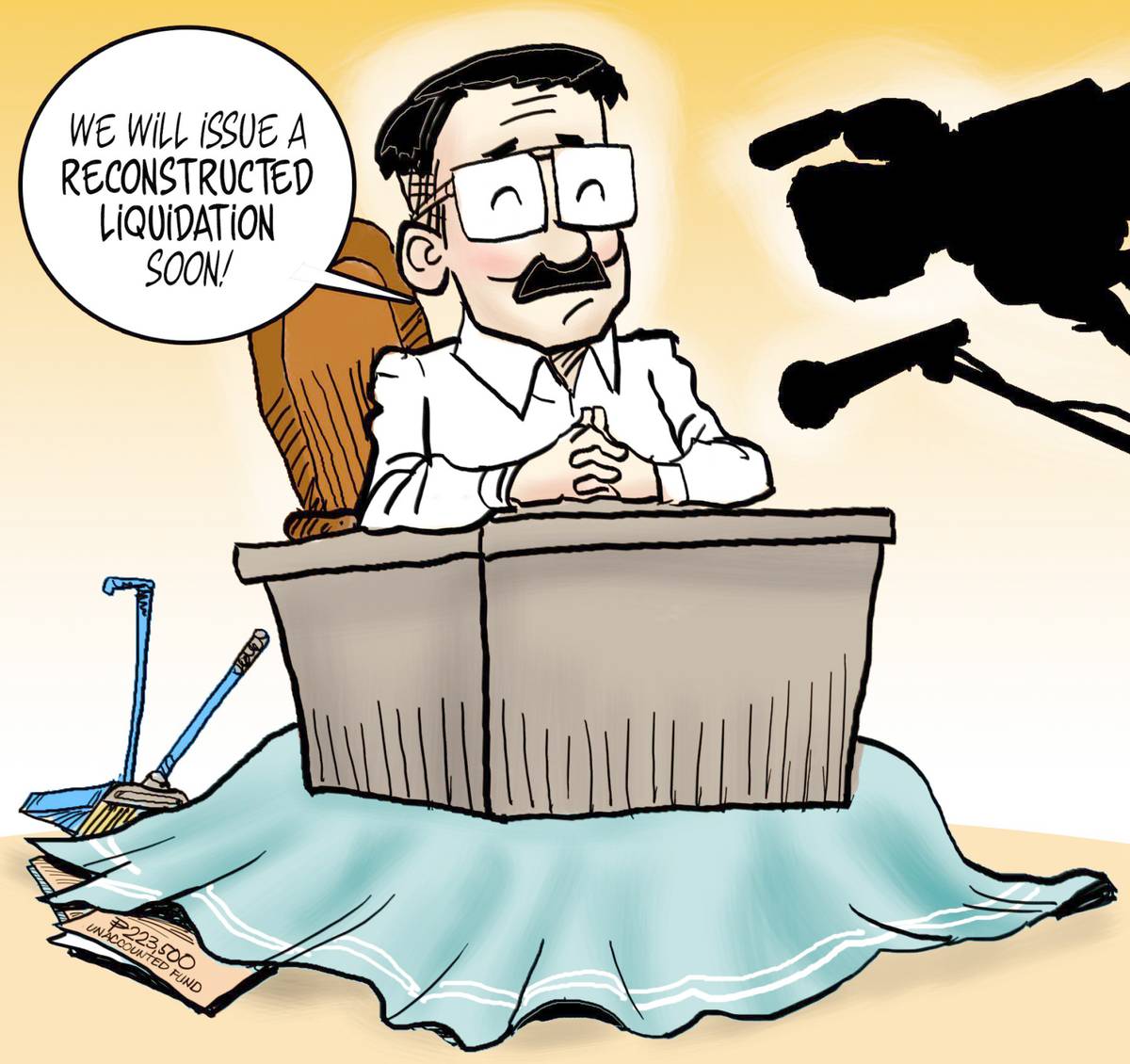
Five months after the liquidation report was submitted, here’s the response: an accounting office employee disregarded that honest-to-goodness liquidation (even saying it was missing from the files) and instead planned to reconstruct the entire liquidation so all P1.1 million would appear accounted for.
No investigation, no recovery, no demand for other receipts, but a reconstruction. Is that in any way an accounting? Or more like fiction writing with public funds? The bureaucratic equivalent of sweeping P223,500 under a rug and then sewing the rug shut?
In short, a reconstructed liquidation is a lie with a cover page. It means filling in the blanks with fake receipts, backdated acknowledgments and signatures that no supplier ever signed.
It means turning a missing cash investigation into a paperwork miracle, and turning accounting office staff into crime scene cleaners, not guardians of the treasury.
If this is what is happening, it is worse than the original loss. Missing money can be traced, and theft can be investigated. But falsifying records makes sure no one will ever get to the truth.