
JV Ejercito, civic leader hit China Coast Guard over BFAR vessel collision
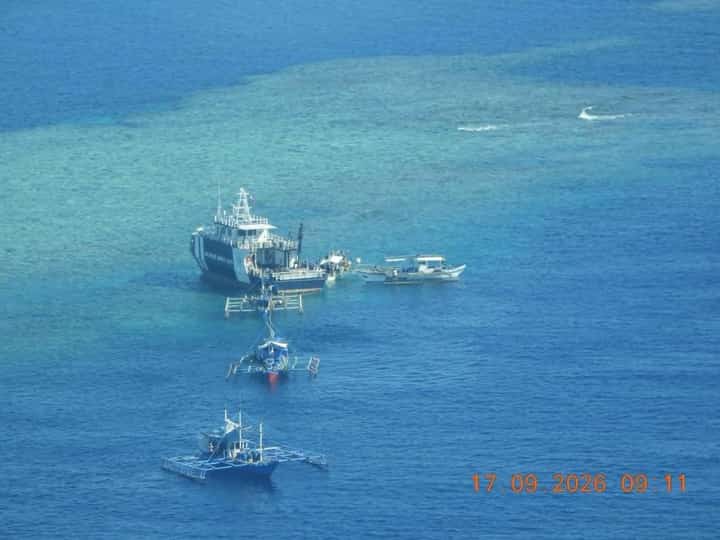
Senator JV Ejercito and civic leader Dr. Jose Antonio Goitia criticized the latest encounter involving the China Coast Guard and a civilian-manned Bureau of Fisheries and Aquatic Resources vessel in the West Philippine Sea, with Ejercito saying Chinese maritime forces have become increasingly aggressive.
“This is really a disrespect to our sovereignty at wala na talagang respeto talaga eh, no?” Ejercito said during the Department of Transportation budget hearing attended by Philippine Coast Guard officials at the Senate on Friday afternoon.
PCG Commandant Admiral Ronnie Gil Gavan stressed that the BFAR vessel was manned by unarmed civilian personnel who were in the area to assist Filipino fishermen through a fuel-subsidy mission.
“So, it is unfortunate to see a public vessel treated like that by the China Coast Guard,” Gavan said.
Collision damages BFAR vessel
On 18 September, China Coast Guard vessel CCG-21585 made contact with BFAR vessel BRP Datu Magat Salamat (MMOV-3015) near Abad Santos Shoal in the West Philippine Sea.
According to the PCG, CCG-21585 had been shadowing the BFAR vessel before making repeated close maneuvers. At about 11:13 a.m., the Chinese vessel made contact with the Philippine vessel approximately 6.36 nautical miles north-northwest of Abad Santos Shoal, or about 54 nautical miles from Palawan, within the Philippines’ exclusive economic zone.
The collision damaged the BFAR vessel’s starboard-side railings, metal stanchions and support structures, while some deck equipment was displaced. No injuries were reported.
Goitia said the nature of the mission made the incident particularly troubling.
“This was a civilian mission, not a confrontation. The Philippine vessel was there to assist our fishermen, yet according to the PCG, it was subjected to dangerous maneuvers. A peaceful government mission should never be met with conduct that puts lives and vessels at risk,” Goitia said.
The Department of Foreign Affairs condemned the incident, citing the Philippines’ rights and obligations under the United Nations Convention on the Law of the Sea, the 2016 Arbitral Award, the International Regulations for Preventing Collisions at Sea and the Safety of Life at Sea Convention.
China has disputed the Philippine account of the collision, underscoring the need to examine available evidence, including vessel movements, communications and video footage, in establishing what occurred.
Goitia said the incident should not deter the Philippines from exercising its maritime rights.
“The Philippines does not seek confrontation, but neither can intimidation determine where our government can lawfully operate. We must remain disciplined and professional while standing firmly on our rights under international law,” he said.
He said the West Philippine Sea is not merely a geopolitical flashpoint but also a maritime area where Philippine agencies perform legitimate duties and Filipino fishermen exercise rights protected under international law.
“The vessel can be repaired. The incident can be investigated. But no collision can redefine the Philippines’ lawful maritime rights,” Goitia said.