
Angara: LGU support key to sustaining PISA gains

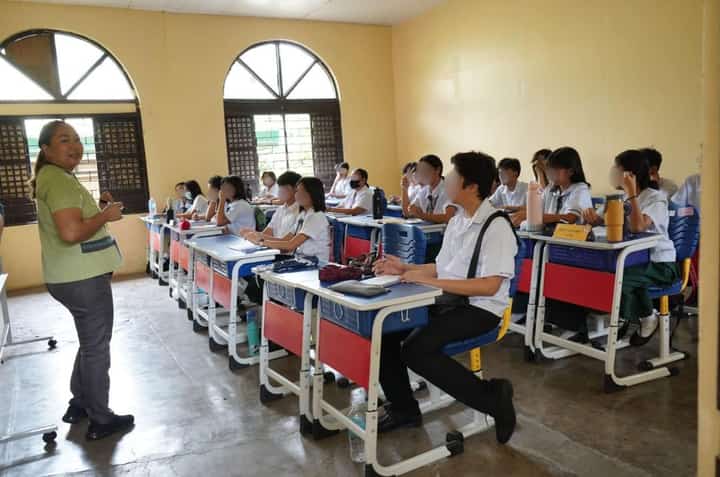
IN PHOTOS | Education Secretary Sonny Angara emphasized the urgent need to sustain learning support and strengthen foundational skills through the Academic Recovery and Accessible Learning (ARAL) Program following significant improvements in the 2025 Programme for International Student Assessment (PISA) results. To maintain this momentum, the Department of Education is requesting lawmakers to secure funding for the ARAL Program under its Fiscal Year 2027 budget.
DepEd PH
Education Secretary Sonny Angara on Friday called for sustained local government support for education after the Philippines posted its strongest Programme for International Student Assessment (PISA) performance since joining the international test in 2018.
Angara said more than 170 local government units (LGUs) took part in preparations for PISA 2025, providing schools with resources and services intended to ensure that learners could take the assessment under proper conditions.
“LGUs played a crucial role, from the provincial, city, and municipal levels down to our barangays. Nakipag-ugnayan sila sa mga paaralan para matiyak na maayos ang testing conditions, kabilang ang standby generators, medical personnel, at iba pang learner support,” Angara said.
The Department of Education (DepEd) cited several examples of local assistance, including funding, improvements to assessment rooms, tablets, laptops, internet connectivity, generators and food.
Caloocan and Pasig were among the LGUs in Luzon that provided such support, along with the provincial government of Camarines Sur and the local government of Ayod, Isabela.
In the Visayas and Mindanao, the municipality of Tapaz in Capiz provided financial assistance for learners’ food and snacks, while the Tandag City government provided internet connectivity, a generator, computer laboratory upgrades and other learner assistance.
The Philippines improved its performance in reading, mathematics and science in PISA 2025, recording its highest scores across the three domains since it first participated in the assessment.
The country also increased the proportion of learners reaching at least the baseline proficiency level in reading, mathematics and science.
Angara said the results highlighted the importance of keeping local governments involved in education beyond support for individual school activities.
“Natulungan nilang matiyak na handa ang ating mga paaralan at mag-aaral para sa assessment at sana maging tuloy-tuloy itong suporta sa edukasyon ng ating mga LGUs,” he said.
He also cited the Special Education Fund (SEF) as a mechanism through which LGUs can support learning recovery and learner welfare.
According to Angara, reforms have encouraged LGUs to use SEF resources for targeted learning recovery efforts, including the Academic Recovery and Accessible Learning (ARAL) Program, as well as nutrition initiatives.
Such local interventions complement DepEd’s efforts to address learning gaps, particularly among learners who need additional academic support.
The PISA results also point to factors beyond classroom instruction that affect learning, including students’ home backgrounds and school environments.
The increased involvement of LGUs is consistent with DepEd’s broader decentralization efforts, which seek to give local stakeholders a greater role in responding to education needs while retaining national standards and accountability.
Organisation for Economic Co-operation and Development (OECD) Director for Education and Skills Andreas Schleicher has similarly stressed the importance of giving schools, regions and communities sufficient capacity and flexibility to respond to their learners’ needs while maintaining clear accountability.
For Angara, the participation of LGUs in PISA preparations showed that improving learning outcomes requires support from both national and local governments.
“Kailangan nating siguraduhin na walang maiiwang komunidad sa pag-unlad ng ating edukasyon,” Angara said.