
Fed hike narrows gap with BSP policy rate
US Federal Reserve Chair Kevin Warsh justified the interest rate hike — the first since 2023 — saying inflation is too high and had persisted for too long, making the rate increase necessary. In May, BSP Governor Eli Remolona Jr. said, ‘The one that affects us most is the easing or hiking cycle of the Fed’s monetary policy. So we watch that and its implications for the world and the global economy.’
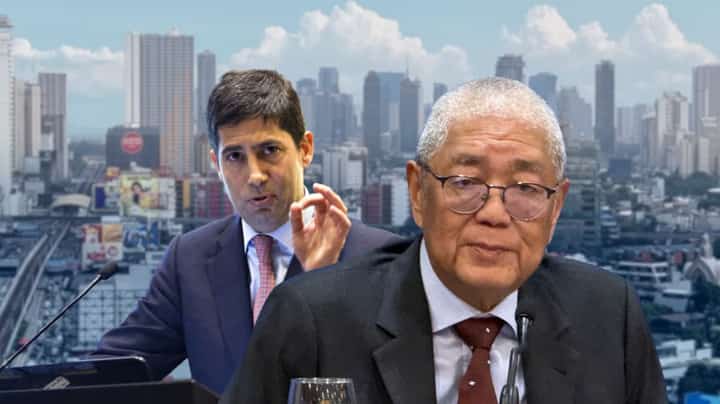
FEDERAL Reserve chair Kevin Warsh (left) said inflation remained too elevated due to the Middle East conflict, prompting the Fed to hike rates for the first time in three years, for reasons similar to those cited by Bangko Sentral ng Pilipinas Governor Eli Remolona Jr. for the BSP’s three rate hikes this year.
DAILY TRIBUNE images
The US Federal Reserve raised its benchmark interest rate by 25 basis points on Wednesday (Thursday Philippine time), its first rate increase since 2023, as inflation remained above the central bank’s 2 percent target, a move that could influence the Bangko Sentral ng Pilipinas’ (BSP) monetary policy decisions at its next meeting in October.
The Federal Open Market Committee (FOMC) unanimously approved the increase, bringing the federal funds rate to a range of 3.75 percent to 4 percent.
Newly appointed Fed chair Kevin Warsh said at a press conference following the decision that inflation remained too high and had persisted for too long, making the rate increase necessary despite calls from US President Donald Trump for lower borrowing costs.
US inflation ‘too high’
“The plain fact is that inflation is too high, and has been for too long,” Warsh said at a press conference, describing the decision as serious but necessary.
The Fed’s latest projections also indicated that Wednesday’s increase may not be its final rate move this year. At least 12 of the 18 policymakers who participated in the projections expect another rate increase before year-end, while four see the need for two additional hikes.
The central bank had kept rates unchanged since January while assessing the effects of the war in Iran on energy prices and the impact of US tariffs on inflation. Since July, however, more policymakers had indicated that higher rates could be needed as inflation remained elevated, particularly for energy prices.
US consumer prices rose 3.4 percent in August from a year earlier, unchanged from July but still well above the Fed’s 2 percent target. The Fed raised its year-end forecast for its preferred inflation measure, the Personal Consumption Expenditures price index, by 0.1 percentage point to 3.7 percent.
At the same time, it raised its projection for US gross domestic product growth to 2.3 percent by year-end from 2.2 percent previously. Warsh pointed to the resilience of the US economy as a factor in its ability to withstand tighter financial conditions.
BSP’s tethered response
For its part, the BSP has acknowledged that it looks to the Fed’s decisions more than those of any other central bank in the world, with US monetary policy often influencing its own decisions.
“The world is interconnected,” BSP Governor Eli Remolona Jr. said in a May television interview.
“But the one that affects us the most is the easing or hiking cycle of the Fed’s monetary policy. So we watch that and its implications for the world and the global economy,” he added.
The BSP has hiked rates three times since the escalation of tensions in the Middle East in March. American and Iranian forces have continued to exchange strikes since the BSP’s latest hike at the end of August, with its key policy rate now standing at 5 percent.
The Philippines’ higher interest rates relative to the US should, in theory, support the peso and help temper inflation, albeit at the cost of slower growth and potentially more volatile capital flows. However, despite relatively higher domestic rates, the peso has remained weak, sliding closer to the P63 level in recent weeks as foreign exchange markets priced in the increasing likelihood of the Fed’s latest hike.
With the Fed’s latest increase, the policy rate differential stands at 1 to 1.5 percentage points. A narrowing gap could increase pressure on the currency, raise imported costs and limit the BSP’s flexibility to cut rates.
The Fed is mandated to pursue maximum employment and price stability. Its interest-rate decisions are aimed at balancing those objectives, with lower rates generally supporting economic activity but potentially adding to inflationary pressure, while higher rates tend to slow demand and price growth. The BSP follows a similar approach, although its mandate focuses on price stability rather than unemployment.