
CinePanalo unites commercial, arthouse cinema
Festival director Christopher Cahilig says accessibility remains at the heart of CinePanalo’s lineup


A month after Cinemalaya mounted a strong 22nd edition, another major Filipino film festival is stepping into the spotlight, with CinePanalo seeking to keep audiences engaged with independent cinema while carving out an identity of its own.
The timing could easily invite comparisons. For CinePanalo festival director Christopher Cahilig, however, the presence of multiple local film festivals is part of a larger movement that can benefit Filipino filmmakers and the industry as a whole.
CinePanalo returns for its third edition from 23 September to 4 October, following Cinemalaya 22’s 6 to 18 August run. Cinemalaya presented nine full-length and 10 short-film finalists this year, while CinePanalo’s 2026 program features seven full-length films and 19 student shorts.
Speaking to DAILY TRIBUNE on the sidelines of the CinePanalo press conference earlier today, 17 September, at Gateway Mall 2, Cahilig acknowledged the pressure that comes with mounting a festival so soon after Cinemalaya.
“Actually, I was very confident with the lineup because it was selected as early as last year,” Cahilig said. “The thing about us is, of course, we want to do well. We want to come up with a festival because we take this seriously. I think Cinemalaya sees us that way as well.”
Part of a bigger movement
Rather than frame the two festivals as competing for the same cinephile audience, Cahilig placed CinePanalo within a broader effort to strengthen the local film industry.
“Cinemalaya, CinePanalo, and other local film festivals are part of this bigger movement to help Filipino filmmakers, right?” he said. “So we are part of this movement.”
Cahilig said there is still pressure to keep pace with the quality of work being presented across the local festival circuit.
“So there is pressure in the sense that, of course, you want to keep pace with the current. We should all move with the current,” he said. “I would say that Cinemalaya has a really great lineup this year. But so do we. We also have a really great lineup.”
Accessibility at the heart of the lineup
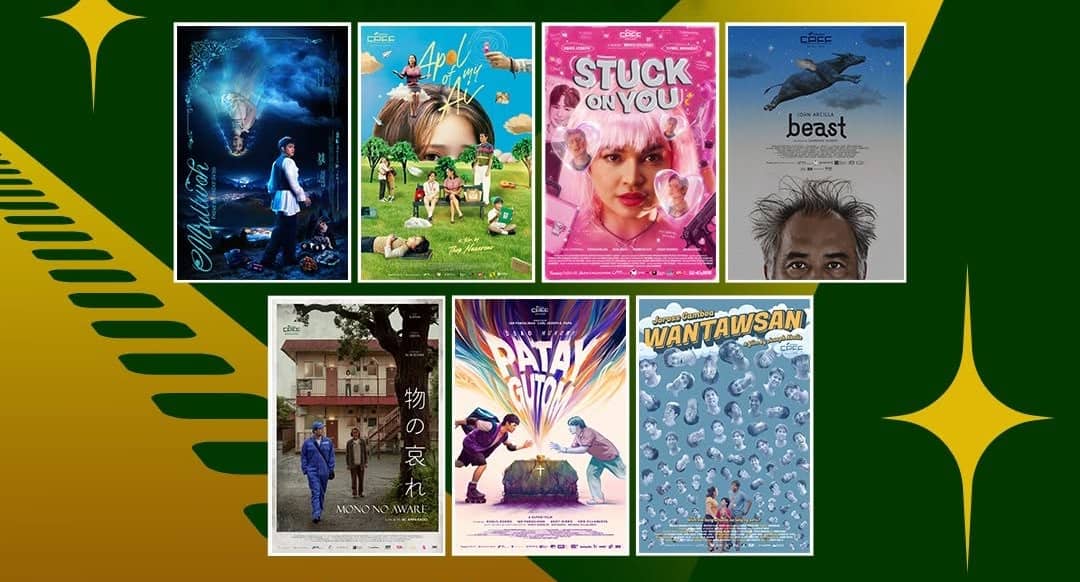
PHOTO: PUREGOLD CINEPANALO/FACEBOOK
For Cahilig, the answer is not to replicate another festival’s programming model but to make CinePanalo accessible to different kinds of audiences. That consideration is particularly important because of the festival’s relationship with supermarket chain Puregold, which serves as its presenter.
“Actually, for us, I think it is also because of our nature. Since we are Puregold CinePanalo and Puregold is there as our presenter, it is very important to us that the lineup of our festival films is accessible to people,” he said.
The programming was therefore designed to offer different kinds of films rather than appeal exclusively to one segment of the festival audience.
“So when we created this year’s festival edition, when we did the programming, we made sure that we had three commercial films, three arthouse films, one socially relevant film, etc. So whatever your taste may be, there is a film for you.”
The seven full-length entries reflect that range, from Thop Nazareno’s coming-of-age film Apol of My Ai and Lawrence Fajardo’s fantastical Beast to BC Amparado’s quiet drama Mono No Aware, Rodina Singh’s queer supernatural film Multwoh (Patay Na Patay Sa’yo), Carl Papa and Ian Pangilinan’s Patay Gutom, Mikko Baldoza’s Stuck on You and Joseph Abello’s Wantawsan.
‘If no one supports you, it’s just an idea’
Cahilig’s comments also point to another factor behind CinePanalo’s ability to experiment with different stories: resources. The festival has received substantial backing from Puregold, with each of its seven full-length entries receiving a P5-million production grant for the 2026 edition.
For Cahilig, financial support can determine whether an ambitious creative idea actually makes it to the screen.
“And no matter how visionary you are, no matter how beautiful the things you want to do in life are, if you have no one to support you, it is just an idea,” he said. “And with CinePanalo, because Puregold came in and helped us, giving us resources, this happened.”
He stressed that the company’s investment in the festival is substantial.
“It is not a small amount of money that Puregold is putting into this cultural movement.”
Cahilig also sees Puregold’s involvement in the arts as extending beyond film.
“And what is also exciting is that you would not have imagined five years ago that Puregold would be at the center of a cultural movement in the Philippines today — in music, in film, in theater.”
The support, he said, also gives CinePanalo a responsibility to make the most of what it has been given.
“So what we always have to do is our best,” Cahilig said. “Of course, as long as there are companies, especially Puregold, supporting us.”
An identity that keeps evolving
That support comes as CinePanalo itself continues to change. The festival has taken a different shape with each edition, raising the question of whether it has finally established a fixed identity or remains in the process of discovering what it wants to be.
For Cahilig, an evolving identity is not a problem to be solved.
“Identity is like a person,” he said. “I was a different person exactly six months ago compared to who I am now. Like, you know, how many things happened to me in the past few months, right? So that is how it is.”
Rather than define CinePanalo permanently, Cahilig said the festival will continue to respond to changes in the industry.
“So CinePanalo will constantly reinvent itself based on the times, based on what the industry needs.”
The festival exists within an industry that does not remain static.
“Because we are in the industry, and the industry changes all the time,” he said. “So it can change, it can be replaced, it can be whatever, depending on the times.”
That approach also brings the conversation back to the relationship between CinePanalo, Cinemalaya and other local film festivals. Rather than treating each festival as an isolated event, Cahilig sees them as parts of a wider ecosystem that can provide Filipino filmmakers with more platforms, resources and audiences.
CinePanalo’s third edition arrives as that festival ecosystem continues to expand, with its own programming philosophy focused on accessibility while leaving room for the festival to evolve.
“Cinemalaya, CinePanalo, and other local film festivals are part of this bigger movement to help Filipino filmmakers,” Cahilig said. “So we are part of this movement.”
The Puregold CinePanalo Film Festival runs from 23 September to 4 October at Gateway Cineplex 18, TriNoma, Fairview Terraces, Ayala Malls Feliz, Ayala Malls Circuit, Ayala Malls Manila Bay and Market! Market!.