
Moon research advances with NASA, IBM model
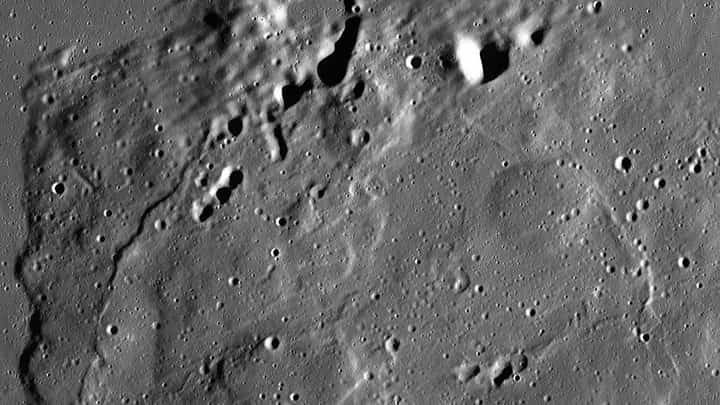
IBM and NASA have released an open-source artificial intelligence model designed to help scientists analyze decades of lunar observations and accelerate research for future Moon missions.
The NASA-IBM Lunar Foundation Model is trained on a unified dataset combining more than 30 spatially aligned layers from nine instruments across four lunar missions.
The model can analyze different types and resolutions of lunar data to help researchers identify features such as potential ice deposits, volcanic formations and craters.
In a technical paper, the NASA-IBM team found that the model reduced error in identifying areas with high potential for lunar ice by up to 22 percent compared with the SwinV2-B model.
For lunar volcanic features, the model captured the extent of Irregular Mare Patches about 3 percent better than SwinV2-B while requiring less fine-tuning.
The model also matched the accuracy of state-of-the-art methods in crater detection while offering greater efficiency. At a context-scale resolution of about 100 meters, it outperformed SwinV2-B by nearly 19 percent using half the training data.
The model was developed using data from NASA’s Lunar Reconnaissance Orbiter and GRAIL missions, along with complementary observations from Japan’s SELENE/Kaguya mission.
NASA chief science data officer and acting Chief Data and AI officer Kevin Murphy said the model demonstrates how AI can make NASA’s extensive scientific data easier for researchers to explore.
IBM Research Europe director Juan Bernabe-Moreno said the model allows scientists to connect observations from different instruments and identify patterns that may be difficult to detect when data are analyzed separately.
The model is part of IBM’s Prithvi family of open foundation models covering areas such as geospatial science, weather and heliophysics.