
Threading rigged path
If participation itself has been manipulated, then any interpretation of the threshold that counts only those senators able or willing to sit in judgment would reward that manipulation.
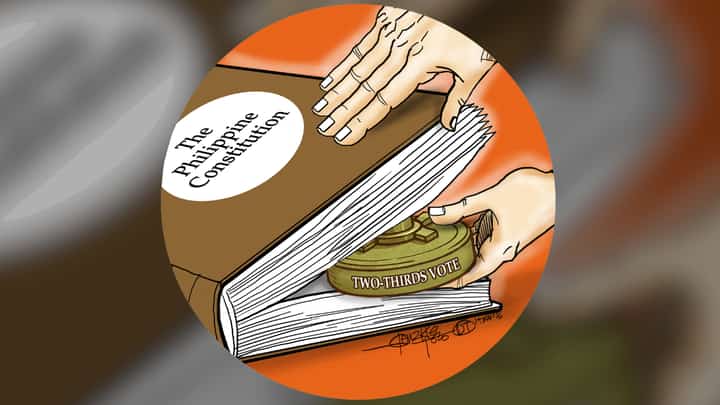
Subjecting the impeachment vote to a flexible interpretation was never the intent of the framers of the Constitution, who foresaw dangers even to the sanctity of the Charter itself.
Legal minds are now examining the question before the Senate impeachment court of whether the constitutional requirement of a two-thirds vote of all Senate members can be interpreted to mean two-thirds of those present during the vote.
The standard was drawn from protections afforded to impeachable officials under the Charter’s evolution.
Under the 1935 Constitution, according to Israelito Torreon, dean of the Jose Maria College Law School in Davao City, conviction in an impeachment case was more rigid, at three-fourths of the entire Senate.
The 1973 Constitution lowered that number to two-thirds but kept the supermajority principle intact. The 1987 Constitution carried the same standard forward. Article XI, Section 3(6) requires the concurrence of two-thirds of all the members of the Senate before a person may be convicted. The framers in the 1986 Constitutional Commission debated this number with care.
The late Constitutional Commissioner Francisco “Soc” Rodrigo asked directly whether the threshold was being reduced from three-fourths to two-thirds. Commissioner Florenz Regalado confirmed that it was, indicating the number was not arrived at randomly.
Also in the Republic v. Sereno ruling that ousted sitting Chief Justice Maria Lourdes Sereno through a petition for quo warranto, Torreon recounted, the Supreme Court traced the evolution of the supermajority requirement across three constitutions and explained why the framers wanted impeachment insulated from the ordinary pull of partisanship.
In a more recent ruling that threw out the first Duterte impeachment attempt, the Court stated without qualification that conviction requires the concurrence of two-thirds of all the members of the Senate and that a smaller number of senators cannot render that judgment.
The words “all the members” were the foundation of the required vote.
There is also a practical argument for holding the line, one made by the Vice president’s own spokesperson, Paolo Panelo.
Several senators have been unable to participate in the trial because the administration has filed or threatened non-bailable charges against them, timed to coincide with the impeachment.
One senator remains out of reach of the court, evading an arrest warrant issued by an international tribunal that Panelo argues lacks jurisdiction.
If participation itself has been manipulated, then any interpretation of the threshold that counts only those senators able or willing to sit in judgment would reward that manipulation.
It would convert an evidentiary shortfall into a procedural workaround. Once a constitutional threshold can be adjusted after the fact to fit the votes available, nothing meaningfully separates that maneuver from amending the Constitution itself by the same expedient logic, he held.
VP Duterte was elected by more than 32 million Filipinos, a mandate that does not place her above the Constitution but does mean that removing her requires more than a passing majority.
The Constitution’s insistence on an extraordinary degree of concurrence exists precisely because the judgment through the ballot of that many citizens should not be undone casually or expediently.
The trial began under a settled understanding of what conviction requires. That standard cannot be rewritten simply because securing the required votes has proved difficult.
The burden was always on the prosecution to persuade the constitutionally prescribed number of senator-judges, not a smaller number, followed by an argument that the reduced denominator should somehow be enough.
The two-thirds requirement is not an obstacle to accountability. It is precisely what makes accountability constitutional rather than arbitrary.