
Art: Who gives it value?

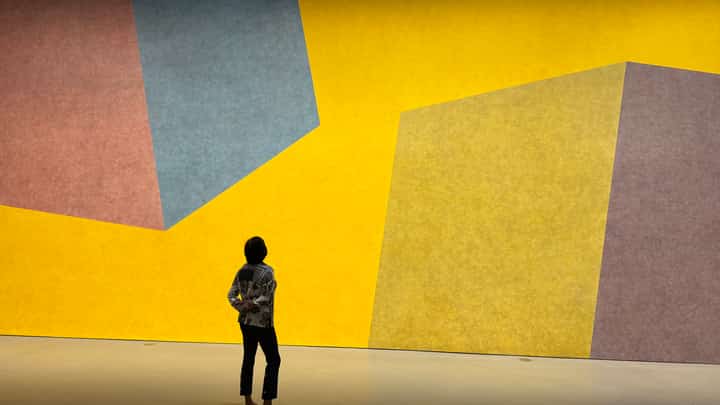
I recently attended the Frieze Seoul Art Fair, a weekend-long convergence of international galleries showcasing the pulse of contemporary art. I moved through gallery after gallery, museum after museum, chasing the latest that the scene could offer. I dove into a visual feast dense with images, objects, ideas and interpretations.
Contemporary art today is a universe unto itself — restless, provocative, beautiful, sometimes incomprehensible. I wish I could go through such events with just pure appreciation. But I left there deeply reflective with more questions than I had answers for myself, the over-thinker and analyzer. Somewhere in that blur of color, concept and commerce, I found myself dizzy — not from the art itself, but from questions that would not let go of me: Who gives art its value? And, more elusively, who gives it its meaning?
Is it the artist who creates purely for him-herself, answerable to no one but his own inner necessity — that urge that needs something within to be expressed, regardless of whether anyone sees or buys it? Such artists may be increasingly rare in a world where creation and commerce are so intimately intertwined. And where visibility is so crucial to success in the industry.
Or is value shaped by the audience, by collectors and buyers whose tastes, preferences and purchasing power inevitably influence what gets produced and what becomes visible?
Perhaps meaning is given by the artist who has learned to read the room, to anticipate the taste of a buyer, to expand through public relations, to survive by giving the market what it already wants. Or does meaning (and value) belong to the galleries — the ones who curate, who market and invest in promotions, who decide which names are worth the wall space and the price tag? They who give the legitimacy, position and cultivate a particular artistic cache. And then there are the museums, curators and curators (myself included), auction houses and institutions that participate in the great machinery of deciding what deserves to be seen, remembered and valued.
Value and meaning
Through my whole professional life in the art scene, I have known artists on every point of this spectrum: those who wrestle for years with a single unresolved idea or an inner vision, and those who produce efficiently, seasonally, for the next exhibition calendar. Between them lies a widening distance — the marketplace on one side, and, isolated at the far edge, the solitary, often unrewarded act of creation itself.
The truth is, value can now be manufactured — through scarcity, branding, the right gallery pedigree — while meaning, the older and harder currency, the one that once demanded a bridge between the artist’s inner world and the shared world we all inhabit, is left to fend for itself, sometimes abandoned altogether.
In one conceptual exhibition I viewed, I could trace with total clarity the intellectual scaffolding of the painter’s thought—each choice deliberate, each reference dense with theory. And yet I found myself doubting whether any of it still touched the world outside the museum walls. It felt sealed off, a closed loop of the mind admiring itself — what I can only call an intellectual orgasm, exquisite and self-contained, but strangely without consequence. And this, perhaps, is the real philosophical wound of contemporary art: that value and meaning have quietly become two different currencies.
Somewhere in between
Art, I have come to believe, has never truly settled in one place. It lives somewhere in between these two currencies — between what wells up from inside a person and what eventually gets shown, sold, hung, priced. Between the intimate hours in a studio and the public hour of an opening night. Between the artist’s vision or intent, and the relevance by which the piece expresses itself to society or to the times. Between meaning and value, which we so often speak of as though they were the same thing.
We say a painting “has value,” a sculpture “holds value,” as if that value sat quietly inside the material — in the pigment, the brass, the paper — waiting to be discovered by the right eye or the right buyer. But the longer I sit with this, curator’s eye and artist’s hand both, the less I believe value lives inside the object at all. I think we bring it there. We assign it, we agree on it, sometimes we invent it out of nothing but consensus and desire.
I believe that the real task before us — before artists, curators and art lovers, too — is not to resolve this tension, but to keep asking the question out loud, refusing to let the market’s silence answer it for us. What gives art meaning? And what or who gives it value?
A battleground
And this made me wonder whether contemporary art is also asking us a larger question about our own times today: Who decides what is valuable? In art, as in life, we are constantly surrounded by systems that assign worth — markets, institutions, algorithms, trends, credentials and collective opinion.
But there is the thought too that that meaning cannot ultimately be assigned. Perhaps the deepest value of art begins precisely where the marketplace ends: in that private moment when we stand before something and feel ourselves changed, deep inside, even if we cannot explain why. A painting may mean nothing to one person and open an entire universe within another. Its monetary value may be millions, while its personal value may be immeasurable — or perhaps the reverse.
These questions are, in the end, purely my own — the occupational hazard of standing where I do, as both curator and artist, forever bridging the world of creation with the world of presenting that creation to the public. I have spent years on both sides of the gallery wall: the one who labors in solitude over an idea, and the one who must later stage that idea for an audience, a market, a moment.
This search for meaning is not new to me; it has quietened and resurfaced over the years, but lately it has grown louder, because I sense that meaning itself — not just in art, but in almost every corner of life — is being contested.
Consciousness has become a battleground. Social media stages it daily, expressive and performing arts highlight it constantly, each vying to define what is worth attending to, what is worth feeling, what is worth believing is real.
Art, in this light, is no longer a quiet mirror held up for appreciation — it has become one more arena where meaning itself is fought over, claimed and sold, and where the artist, the curator and the viewer are each, whether they admit it or not, combatants in that same contest for consciousness.