
Flooding, accessibility issues hound reopened Burnham Lake
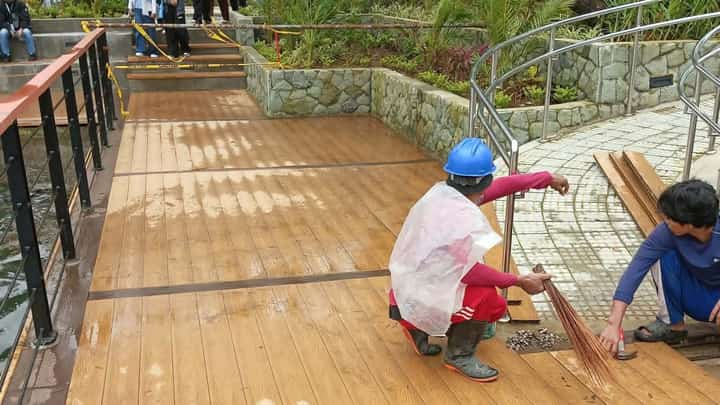
BAGUIO CITY — Parkgoers have raised concerns over continuing construction work, flooding and accessibility problems at Burnham Lake since it reopened to the public on 1 September.
Visitors reported localized flooding along the lake’s perimeter walkways during heavy rain. They also said elevated concrete sections posed challenges for people with disabilities and wheelchair users despite the presence of entrance ramps.
The Baguio City Environment and Parks Management Office said the facility had not been formally completed or turned over to the city government.
Repairs and finishing work are underway to address deficiencies identified during inspections by the mayor, city technical personnel and representatives of the Tourism Infrastructure and Enterprise Zone Authority.
The city government opened the lake during the Baguio Day celebrations to give residents and tourists access to the park and allow boat operators and concessionaires to resume their livelihoods after months of closure.
Construction is being conducted section by section to avoid closing the entire lake again.
The city government oversaw the P400-million national rehabilitation project, which was implemented by a joint venture. The project included structural upgrades, concrete perimeter capping, improved walkways and a sunken garden intended to reinforce the site and accommodate visitors.
However, residents questioned whether the changes addressed the lake’s underlying environmental condition.
Residents and environmental advocates raised structural and ecological concerns throughout the project’s planning and construction. They claimed the budget prioritized aesthetic improvements over functional restoration.
They specifically cited the absence of sand, gravel and rock substrates needed to support aquatic plant growth.
The project also lacked industrial filtration and aeration equipment, raising concerns that stagnant, untreated water could produce foul odors and algal blooms. Critics also warned that the expanded concrete surfaces could collect litter and polluted runoff.
City officials assured the public that the contractor would correct the flooding and accessibility issues and comply with contract specifications and safety standards before the city grants final acceptance.