DA studies China's high-tech farming model


The Department of Agriculture (DA) is looking to China’s smart farming technology as the Philippines seeks faster ways to raise farm productivity and modernize agricultural production.
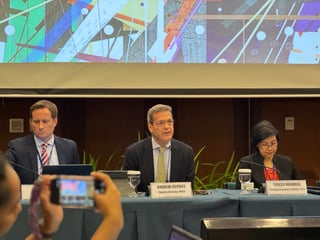
Agriculture Secretary Francisco P. Tiu Laurel Jr. led a Philippine delegation to Zhejiang Huihong Fruit and Vegetable Farm in Zhejiang province, where officials examined digital systems used to monitor crops and manage farm operations.
“We have to modernize agriculture, and we have to find the right technology that will allow us to leapfrog,” Tiu Laurel said.
He said the Philippines should be open to adopting proven approaches from other countries if they can help improve local agriculture.
“There’s nothing wrong with copying the success of others if it will help others,” Tiu Laurel said.
The delegation examined Zhejiang Huihong Biotechnology Co. Ltd.’s smart agriculture data platform, which combines environmental monitoring with water and fertilizer management and real-time production data.
Officials also toured the farm’s greenhouses and observed its fruit and vegetable production practices, including precision management and crop protection techniques.
The visit included discussions on potential cooperation in agricultural technology and fruit and vegetable production, with Tiu Laurel saying there is broad room for stronger Philippine-China collaboration.
For the DA, the Chinese farm offers a working example of how digital tools can help farmers make more precise decisions on water, fertilizer, growing conditions and production.
The department said potential cooperation could include technology transfer and partnerships in precision agriculture, crop protection and ecological farming.
But adapting the technology to the Philippines will depend on cost, farm size, infrastructure, financing and digital access, which vary widely across the country.
The DA said the exchange could help identify technologies that can be adopted or modified for Philippine conditions as the government works to close gaps in agricultural productivity and technology.