
Zero-flooding not guaranteed, says MMDA

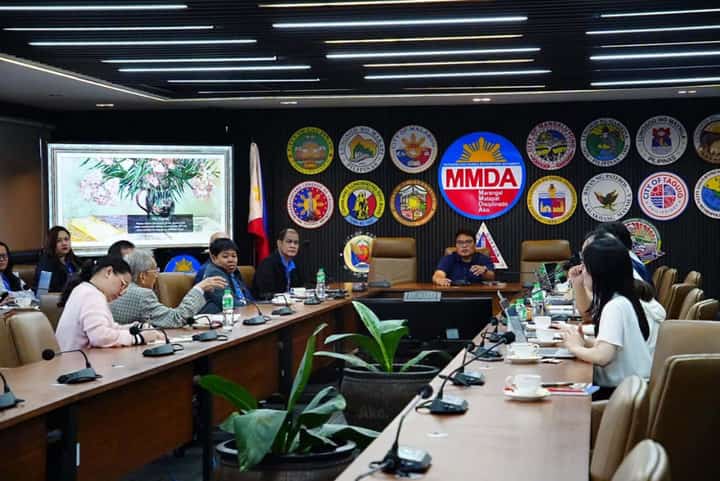
Metro Manila cannot be guaranteed to become completely flood-free despite billions of pesos invested in new catchments, pumping stations, and mitigation infrastructure, Metropolitan Manila Development Authority (MMDA) chairperson Don Artes said Wednesday.
Artes tempered public expectations while unveiling plans for 39 “sponge city” and nature-based flood control projects across the capital, warning that intensifying weather events present ongoing challenges.
“We cannot guarantee flood-free Metro Manila because you saw our rainfall events that keeps getting stronger,” Artes said, citing that major cities globally continue to experience flooding despite substantial infrastructure investments.
“What we can assure you is that these projects will be efficient in mitigating the flood,” he added.
The MMDA selected the 39 locations following three years of hydrological studies and consultations with local government units, experts, and landowners, narrowing down an initial list of 107 prospective sites.
The strategy moves away from exclusive reliance on concrete dikes and canals, opting instead for a combination of underground cisterns, permeable surfaces, sunken gardens, and retention lagoons designed to hold rainwater at the source.
“The principle is to hold the water temporarily to their source, so that our drainage system, river system, and estuaries will not be overwhelmed,” Artes explained.
Among the priority areas targeted is the Taft Avenue-Roxas Boulevard corridor in Manila, where catchments are planned near Padre Faura, Remedios, Father Arguelles and Vito Cruz streets.
Larger retention facilities are slated for installation beneath Rizal Memorial Sports Complex, Remedios Circle and Rajah Sulayman Park, alongside the rehabilitation of three existing pumping stations and the construction of a new facility at Vito Cruz.
“I think substantially, the flooding situation in Taft and Roxas Boulevard will improve,” Artes said.
Another major project under evaluation is a massive 5,000-square-meter underground cistern beneath Camp Aguinaldo in Quezon City.
Reaching 10 meters deep, the retention tank will hold up to 50,000 cubic meters of rainwater, reducing immediate runoff into shared local creek systems serving Camp Crame and surrounding neighborhoods.
The initiative aligns with directives from President Ferdinand Marcos Jr. instructing government agencies to adapt public infrastructure to withstand increasingly severe climate conditions.