
Impeachment trial teleserye
For non-democratic, totalitarian governments, the process of impeachment is far less complicated and swifter.

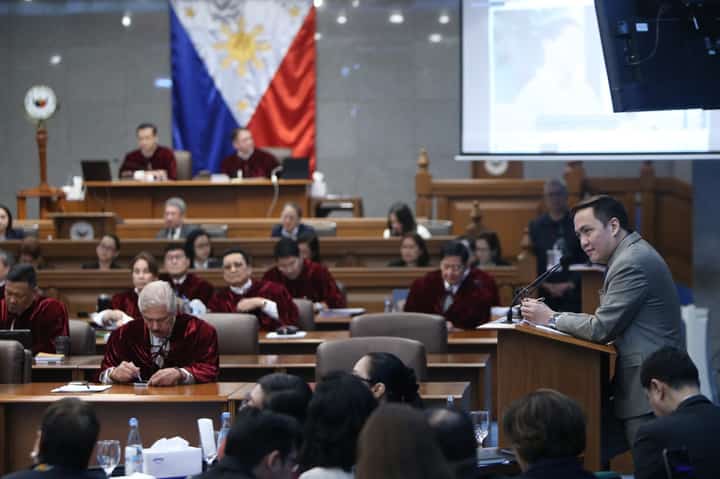
For the past few weeks, a running political drama with no cable subscription needed, no commercial interruptions, with a cast of all-star political has-beens, some wannabes, and some interesting new discoveries has been running to the delight of political soap opera watchers and boob tube addicts.
The trial of Vice President Sara Duterte for several impeachable offenses is, of course, the headliner that all are eagerly following. With the apparent continuing hefty, albeit declining, lead in the 2028 presidential surveys Duterte has over potential rival Leni Robredo — who continues to be coy about running — a successful conviction seems to be the only way to stop her.
If the second-quarter OCTA survey is to be believed, 43 percent of adult Filipinos favor Duterte, while Robredo is preferred by 34 percent of respondents. A huge undecided bloc of 22 percent theoretically could make the difference if the ongoing teleserye continues to attract millions of eyeballs to television, internet, and cable channels and public opinion is swayed against Duterte or if she is adjudged guilty.
But what technically is an impeachment anyway and how can it make a difference in the 2028 presidential elections?
By definition, to paraphrase Britannica, impeachment is a process by which a legislative body, such as the House of Representatives, by a vote of one-third of its membership as in the Philippines, could initiate charges against a public official for impeachable offenses. In Sara’s case, the allegations are the misuse of confidential funds, unexplained wealth, bribery and grave threats.
The purpose of an impeachment is to hold public officials accountable for their culpable misdeeds, thus ensuring that officials serve the public good in earnest. If found guilty in a trial by a legally constituted tribunal such as the Senate with a two-thirds vote, the public official shall be removed from office and could be subject to other punishment such as a bar from future office.
Different jurisdictions vary as to the consequences of impeachment or removal from office. In democracies such as Great Britain, conviction could result in fines or imprisonment whereas in the US, it extends no further than removal and disqualification from future office. The Philippines dispenses consequences similar to the US.
For non-democratic, totalitarian governments, the process of impeachment is far less complicated and swifter. Those found guilty, removal is not just from office, but from worldly existence, ensuring no political comeback in any form. World history shows that impeachment has always been both a legal mechanism and a political weapon. Brazil’s Dima Rousseff was impeached after a six-month trial by her political opponents but her political rights were eventually restored.
Closer to us was South Korea’s Park Geun-hye who was impeached by both the political opposition and her own party for abuse of power and fraud. America’s 45th president, Donald Trump, has the distinct notoriety of being impeached not once, but twice, and still managed to regain the presidency four years after a failed bid for reelection.
Interestingly, Trump claims he is now under threat of a third impeachment for the mishandling of the ongoing Iran war if the Republican Party loses control in the 2028 midterm elections.
The anti-Sara opposition clearly is banking on this impeachment trial strategy. But even if eventually the two-thirds vote of the Senate will not be secured to oust Duterte, the more viable alternative theorized by the opposition is to erode her credibility through the constant reminder to the public of her untrustworthiness to lead the country.
With the 2028 presidential elections looming in the background for two more years, we will have to hold our collective breath as our country surely will be unfortunately regaled with dramatic suspenseful political twists and turns worthy of any number-one teleserye or last two-minute cliff hanger such as the nail-biting victories Gilas eked out over Jordan and Iran over the weekend.
Abangan!
Until next week… OBF!