
Portents
Nature does not stop for our convenience, and certainly, we cannot control the rain. But we can control how vulnerable we are every time it comes.

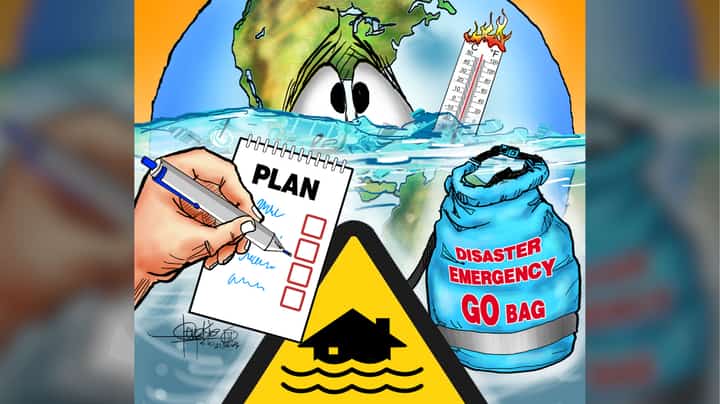
From Nepal and Tibet to Japan and parts of Europe, floods and extreme weather have been filling our screens. Here at home, Metro Manila has had its own reminders, with familiar streets disappearing beneath floodwaters after hours of heavy rain.
Commuters suffer, homes are sometimes lost. The words “lampas tao” are no longer met with extreme shock. The images have become difficult to ignore.
We are immediately riveted, alarmed, worried. We feel for the people affected and bewail the terrible conditions. But when the sun comes out again, we go back to normal. Well, here’s news for you: What is normal itself has changed.
Some may dismiss it as the product of overactive imagination or social media hysteria, but scientists have long documented a warming planet and increasing risks from extreme weather.
The term climate change is no longer meaningless to us, although it also cannot be blamed for every flood or storm. Weather has always produced extremes. And if there were an Ice Age today, the ice is melting.
A warming atmosphere and oceans can alter the conditions in which those weather extremes occur, increasing the risks of intense rainfall, heat and other hazards, as we have seen with Nepal.
The Philippines does not need to look very far for a reminder. We are an archipelago in the path of typhoons and exposed to monsoon rains, flooding, landslides and rising seas. We know our vulnerabilities because we have lived with them for generations.
And these days, it does not take a lot of time for floods to rise when the rain comes. Data shows that “a warmer atmosphere can hold about 7 percent more moisture for every 1-degree Celsius of warming, increasing the potential for heavier rainfall and more severe flooding.”
That does not mean every rainstorm will become 7 percent heavier, but it helps explain why a warmer world can produce more intense rainfall and greater flood risks.
Nature does not stop for our convenience, and certainly, we cannot control the rain. But we can control how vulnerable we are every time it comes.
We can decide where communities are built, protect waterways and watersheds, and improve drainage. We can design infrastructure for harsher conditions. We can strengthen early-warning systems. We can make evacuation plans that work before the water rises.
In other words, we can prepare.
Hard as it may seem to visualize the next weather challenge, for instance, experts have reported a brewing “strong El Niño” that is “currently active in the tropical Pacific,” predicting it might develop into a so-called “Super El Niño,” which will bring little rainfall and drought.
El Niño is not a strange concept to us. We know how it can affect crops and food supply, for example. But a warning that produces no action is merely information.
We have become accustomed to measuring government response by activity: a project was built, a warning was issued, relief goods were distributed, officials arrived. But activity is not the same as preparedness.
The question should be much simpler: Did the supposed preparations work? Did they make people safer?
A flood-control project should reduce flooding. A warning should reach people in time. An evacuation center should be accessible. A road should be designed for the conditions it is expected to face.
That’s governance.
Of course, citizens cannot outsource resilience entirely to government. We have responsibilities, too.
We need to stop throwing waste into waterways. We need to understand the risks where we live. We need to take evacuation warnings seriously. We need to prepare before disaster arrives, not when the water is already inside the house.
Adaptation cannot be a government program alone. It has to become part of how we live.
We need to retire one of our most dangerous phrases: “Pwede na.”
Yes, we cannot stop the rain. We cannot control the monsoon, stop the ice from melting, tame the ocean, or prevent every landslide. But we can choose where we build.
We can strengthen what we have. We can protect our waterways. We can listen to science. We can prepare our families and communities.
Nepal is not Manila. Japan is not France. Their disasters have different causes and different circumstances. But the images reaching us from around the world should make us ask the same question: Are we prepared for the world that is coming, or are we still preparing for the world we have always known?
The climate is changing. So must we.