
Marcos vows to protect 6.5 million Filipinos lifted out of poverty
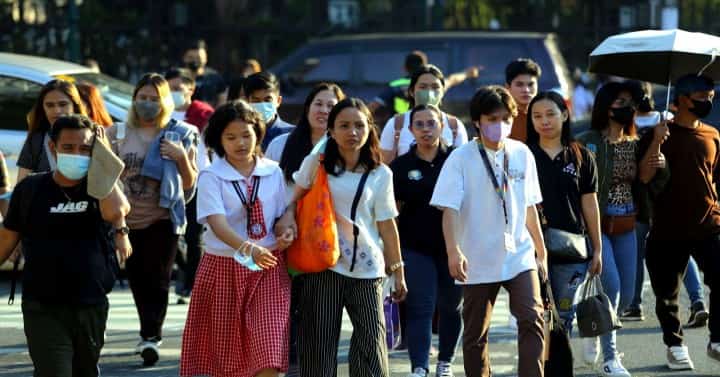
President Ferdinand Marcos Jr. vowed to protect the 6.5 million Filipinos who were lifted out of poverty over the past two years while strengthening support for the middle class.
Executive Secretary Ralph Recto said the government’s efforts have helped create more jobs, raise incomes and lower living costs for middle-class families.
“That is the marching order of the President: Support the middle class and prevent 6.5 million Filipinos from sliding back into the zone of poverty,” Recto said.
The government earlier reported that poverty incidence fell from 15.5 percent in 2023 to 9.7 percent in 2025, reducing the number of poor Filipinos from 17.5 million to 11 million.
Recto said the decline should not be treated as the finish line.
“But this is not the time to rest. That goal is not the finish line. The work goes on. The next thing to do is ensure that they will continuously elevate and will no longer go back to poverty. And we will lift more Filipino lives further, and protect our middle class,” he said.
However, former Finance Secretary Gary Teves questioned the improvement in poverty conditions, saying self-rated poverty remains high, with many Filipinos still considering themselves marginalized.
The IBON Foundation also criticized the methodology used by the Philippine Statistics Authority to determine the poverty threshold.
Under the PSA’s official methodology, faster growth in household income relative to the poverty threshold contributed to the decline in the number of Filipinos classified as poor.
In its assessment of the 2023 poverty figures, IBON cited a national average daily per capita poverty threshold of P91. Of this amount, P63 was allocated for food, or about P21 per meal at three meals a day, while P28 was allotted for non-food needs.
Government to address economic risks
Recto said the government will not be complacent, citing the unresolved Middle East crisis and its potential impact on fuel and food prices, trade, employment and economic growth.
“Then there are climate disruptions like the projected strong El Niño, which is causing too much rainfall in Luzon but too little of it in Mindanao,” he said.
The administration is responding through a program designed to fast-track high-impact infrastructure projects that can generate jobs, stimulate local economies, reduce logistics costs and attract investments.
The government is also pushing measures aimed at lowering household expenses, increasing disposable income, strengthening the middle class and stimulating consumption.
These include raising the personal income tax exemption to P350,000 annually, which could free up to P17,500 per year for each worker.
Malacañang is also seeking legislation to exempt small businesses from the Minimum Corporate Income Tax, grant a general tax amnesty and abolish the travel tax.
It is also pressing Congress to amend the Electric Power Industry Reform Act to prevent distribution utilities and electric cooperatives from passing system loss charges on to ordinary consumers.
Recto said the administration will continue prioritizing price stability measures to keep food, fuel, electricity and other basic necessities affordable while providing targeted assistance to sectors vulnerable to economic shocks.
He cited Expanded UPLIFT assistance for 7.5 million families and the Bawat Bayan Makikinabang Rice Program for 8 million households as examples of government efforts to protect vulnerable Filipinos.
The administration is also looking to leverage the country’s “competitive assets” to capture investment and job opportunities from the rapidly expanding global artificial intelligence and digital economy.