
We need safe places for people stranded by floods
Beyond getting water out of the city, we should also think about giving people somewhere to get out of the way. A place for people and property to reach safety and wait out the storm

On 17 August, Metro Manila was shut down due to extraordinarily heavy rainfall. The suspension of classes and work was announced only late that morning. The unfortunate result was that many students, parents and workers were already outside their homes. The influx of people rushing to get home or pick up their children created a nightmare scenario of traffic buildup made worse by flooding.
When conditions deteriorate that quickly, sometimes the safest journey is no journey at all. There is a good reason not to gamble with a flooded road.
Imagine sitting in a car, watching the water creep toward the bottom of the door. The road ahead has disappeared, traffic behind you has stopped moving, and your phone is down to its last few percent. If you were a stranded commuter or pedestrian, where exactly would you go? Do you turn around? Keep going? Where are you supposed to wait?
Flood-control infrastructure remains the first and most important line of defense. Drainage improvements, pumping stations, functioning waterways and better land-use planning are all necessary. But even the best flood-control systems cannot guarantee that every road will remain dry during every extreme rainfall event.
Perhaps there is another dimension to flood resilience that we can look into. Beyond getting water out of the city, we should also think about giving people somewhere to get out of the way. A place for people and property to reach safety and wait out the storm. Not an evacuation center, but rather a refuge that reduces the harmful impact of flooding on our everyday routines.
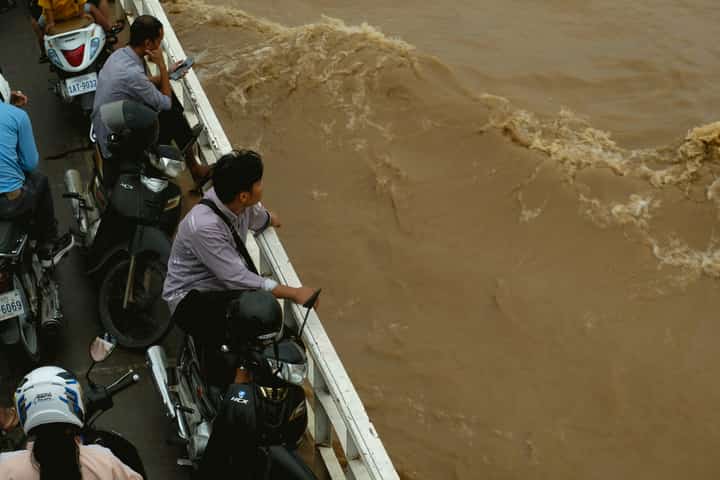
There is already a clear demand for this. Motorcyclists gather beneath flyovers. Commuters wait inside malls and convenience stores. Workers remain at the office rather than risk the trip home. Motorists search for gasoline stations or higher parking areas and hope there is still space.
FLOODED roads can leave both commuters and motorists stranded, underscoring the need for safe places where people can wait until conditions improve.
DAILY TRIBUNE file photo
TOKYO designates temporary stay facilities where commuters can wait safely when disasters interrupt their journeys, offering a useful precedent for Metro Manila.
Photograph courtesy of TOKYO Disaster Action Guide & Map
There are also promising precedents for providing safe spaces and shelter during severe weather. When Typhoon “Inday” approached last July, the MMDA asked mall operators to make parking facilities available as temporary safe spaces. SM, Robinsons, Vista, Filinvest and Megaworld malls were among those that offered free overnight parking at participating locations.
Internationally, Tokyo’s 2013 ordinance on stranded persons consequently calls for cooperation between government and private building operators to provide temporary accommodation for people with nowhere to go or when conditions make transportation difficult.
There could be a useful architectural idea hidden in that gesture.
A mall is designed for shopping, but it also happens to have roofs, toilets, electricity, security, food and, often, elevated parking. An office building has a lobby. A church has covered grounds. A government building may have a waiting area. Perhaps during severe weather, some of these places can perform one additional civic duty.
Call them rain refuges, safe waiting areas or simply places where people know they are welcome to stop. They need not become evacuation centers; Republic Act 12076 already requires permanent evacuation centers in every city and municipality for people displaced by disasters.
This is for the awkward space before that: when you are not an evacuee, merely stranded.
The requirements can be wonderfully ordinary. Somewhere dry. Somewhere to sit. A toilet. Drinking water. Lighting. A place to charge a dying phone. Clear information about which roads remain passable. For motorists, there could be designated elevated parking where vehicles can be left rather than risk another flooded intersection. Even outside of the rainy season, these amenities would still remain useful all year round.
Much of Metro Manila’s sheltered space is privately owned, so it would be difficult for the government to enact this effort alone. Cities could work with property owners and provide appropriate support or incentives for developments willing to join a clearly identified network of safe spaces that will only be open to the public during severe weather events.
The idea should be voluntary, organized and easy to understand. A sign outside a participating building could mean something quite simple: if conditions become dangerous, you can wait here.
Bayanihan usually brings to mind neighbors helping neighbors. But perhaps architecture can practice a version of it too: a private building offering part of itself to the public for a few hours. It accomplishes something smaller, but still worthwhile. They make the city kinder to people while it is flooding.