
Of earthquakes and steel bars
If Davao-made steel rebars were the culprit behind the Gensan collapse, then how come Davao-made steel performed better than that in Turkey and Syria, both also hit by 7.8-magnitude earthquakes in 2023?
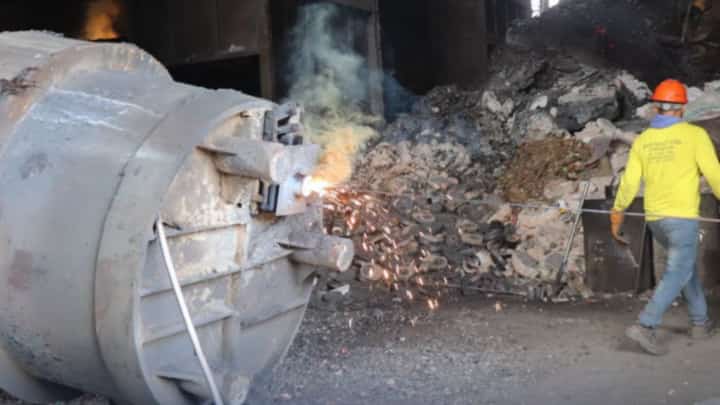
Davao City was in celebratory mode for the Kadayawan Grand Festival when fully armed operatives of the National Bureau of Investigation (NBI) and the Presidential Anti-Organized Crime Commission swooped down on Mighty Steel Corporation on the city’s outskirts.
The raid was headed by NBI Director Melvin Matibag. The press release headlined the arrest of 10 Chinese nationals and four Filipino owners, and the “rescue” of 174 workers. The purported issue: the firm was producing substandard steel contaminated with radioactive materials.
Director Matibag also claimed that the collapsed buildings in General Santos City used steel bars from Mighty Steel, suggesting the products were substandard.
I grew up hearing about Chernobyl. I have never heard of a steel factory causing deadly radiation. Prior to this “rescue,” I have not heard of any patients admitted to hospitals due to radioactive contamination.
Now that the NBI and PAOCC said the Gensan rebar came from Davao, people are asking: where was the contamination in the Gensan rubble?
The Philippine Nuclear Research Institute is duty-bound to investigate both the factory and the rubble in Gensan and neighboring towns.
The public has a right to know: was the contamination lethal enough that workers must be hospitalized, or merely detectable and therefore not deadly?
If Davao-made steel rebars were the culprit behind the Gensan collapse, then how come Davao-made steel performed better than that in Turkey and Syria, both also hit by 7.8-magnitude earthquakes in 2023?
In Turkey, buildings collapsed and claimed 53,537 lives. In Syria, 5,591 died.
Just last Saturday, 15 August, Indonesia was rocked by a 7.7 quake that killed 54. In Gensan, after validation, the toll stands at 46. How come?
It is noteworthy that the NBI led the investigation. Would it not have been better if the PNRI handled the radiation angle? And would it not have been better if the DPWH, instead of the PAOCC, led the probe on the strength of materials, planning, and building codes?
The collapse of the buildings in Gensan is not just about rebars. It is about engineering design, soil condition, and inspection before and after construction. A 7.8 earthquake tests all of these.
Today, 174 workers lost their jobs even before authoritative and scientific findings had been issued. Give us data, not drama. Give us isotope readings, not innuendo.
Shutting down a steel factory where not a single worker was sick or hospitalized will not erase the phantasmagoric scene of tons of garbage in the Parañaque River, the waterways and Manila Bay.
There are insinuations that the waste came from Davao City. Don’t believe it. That comes from sick minds.