
Lawmakers urge objective view on system loss charges

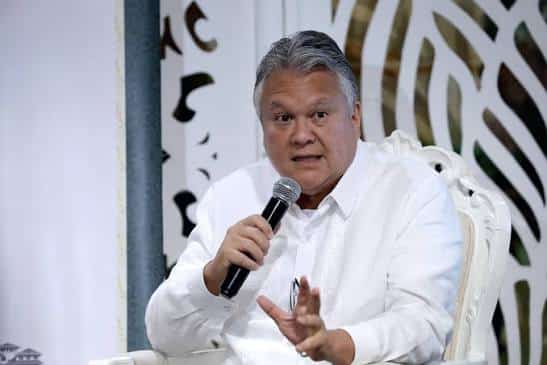
Pangasinan 2nd District Representative Mark Cojuangco, who chairs the House Special Committee on Nuclear Energy, is the country’s leading proponent of nuclear power. Cojuangco champions atomic energy as a low-cost, high-density solution to energy insecurity, economic stagnation, and high electricity costs.
Philippine News Agency
Lawmakers urged the public to take a more objective view of power system loss charges, saying energy losses are an unavoidable part of electricity distribution and should not automatically be equated with inefficiency.
During a congressional hearing, Pangasinan 2nd District Rep. Mark Cojuangco said every power system experiences technical losses, likening them to an internal combustion engine where much of the fuel’s energy is dissipated as heat rather than converted into useful work.
Does not make sense
“Around 70 percent of the energy from gasoline is lost as engine heat and exhaust. Does that mean a taxi driver should not be allowed to charge for the full cost of fuel? That does not make sense. We need to look at this issue objectively because we may be misleading the public,” he said.
Cojuangco said the focus should instead be on whether distribution utilities are operating close to their maximum possible efficiency.
For his part, APEC Partylist Rep. Sergio Dagooc warned that removing system loss charges could severely affect electric cooperatives, which operate as non-stock, non-profit entities and lack the financial capacity to absorb the additional costs.
Salaries will be used to absorb costs
“If the system loss charge is removed without corresponding adjustments, funds meant for salaries and network maintenance will instead be used to absorb those costs,” Dagooc said.
Dagooc also emphasized that distribution utilities do not profit from system loss charges, noting that existing laws allow only the recovery of allowable system loss costs because generators bill utilities for the total electricity delivered.
Energy Regulatory Commission chairperson Nino Juan agreed that eliminating the charge without adjusting electricity rates could create cash flow problems for electric cooperatives.