
Early Childhood Care Act implementing rules inked
The measure aims to integrate early childhood programs into the formal basic education system while relying on local government units to deliver services at the community level.
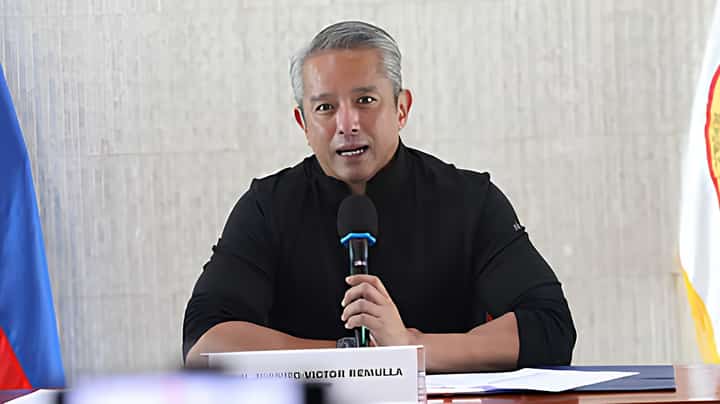
Interior and Local Government Secretary Jonvic Remulla and Education Secretary Sonny Angara signed the implementing rules Wednesday for a landmark law expanding health, nutrition, and early learning programs for Philippine children from birth to age 8.
The ceremonial signing of Republic Act 12199, known as the Early Childhood Care and Development (ECCD) System Act, took place at the Quezon City Reception House.
The measure aims to integrate early childhood programs into the formal basic education system while relying on local government units to deliver services at the community level.
“If we are serious about changing the future of the Philippines, we need to start with our youngest citizens. This is where real nation-building begins,” Angara said.
Angara, who co-authored the legislation while serving in the Senate, cited UNESCO data showing that early childhood investments yield up to a 13 percent return through improved health outcomes and long-term economic growth.
The Department of Education stressed that building literacy, numeracy, and overall child development during these early years provides the foundation for better performance throughout formal schooling.
The law’s rollout coincides with infrastructure efforts to build Child Development Centers in low-income areas. Backed by a P1-billion allocation under the Local Government Support Fund, authorities have already released P741 million to 247 target barangays.
As of 14 July, centers are completed, 113 are under construction, and 106 are in the procurement phase.
Under the new rules, local government units are directed to establish local early childhood offices, create permanent government positions for child development workers, and implement localized plans aligned with the national strategy.
The signing follows Angara’s leadership of the Philippine delegation at the 14th ASEAN Education Ministers Meeting in Singapore, where regional ministers endorsed a Philippine-led declaration on foundational learning. The agreement will be presented for final approval at the ASEAN Leaders’ Summit in November.
Wednesday’s event drew legislative sponsors, representatives from the Second Congressional Commission on Education and officials from key partner agencies, including the Department of Social Welfare and Development, Department of Health and National Nutrition Council.