
El Niño pushes more areas into calamity
The worsening conditions have prompted senators from both sides of the political divide to seek stronger government intervention.
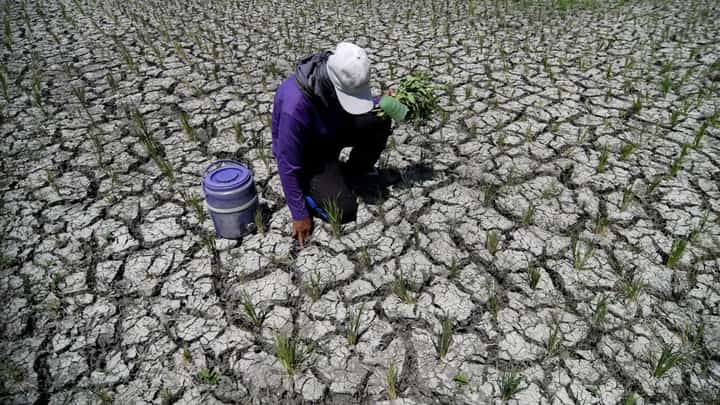
Catanauan in Quezon has become the latest local government unit to declare a state of calamity as the effects of a strong El Niño continue to damage crops, threaten water supplies, and strain affected communities.
The municipality joins the provinces of Isabela and Bohol, which earlier placed their entire territories under a state of calamity amid prolonged dry conditions.
The National Disaster Risk Reduction and Management Council (NDRRMC) said 106 cities and municipalities nationwide have been placed under a state of calamity because of the weather phenomenon.
Isabela placed its entire territory under a state of calamity for one year after prolonged drought caused P2.881 billion in agricultural losses since July.
The provincial board unanimously approved the declaration on 12 November, with the provincial government making the resolution public on Monday.
Bohol earlier declared a state of calamity on 17 November after crop losses exceeded P360 million. More than 7,400 hectares of rice fields were damaged, affecting 18,384 farmers across 36 local government units.
Catanauan declared a state of calamity after agricultural damage in the farming and fishing town reached an estimated P147 million.
The declarations followed similar moves by other provinces, including Agusan del Sur, Dinagat Islands and Basilan, where prolonged dry conditions have damaged farms and depleted water sources.
Worsening impact
The NDRRMC reported that El Niño has affected 388,375 people, or 104,149 families, and caused an estimated P5.5 billion in agricultural production losses.
Its latest report listed 66 cities and municipalities in Cagayan under a state of calamity, along with 23 in Caraga, 12 in Bicol, four in Calabarzon, and one in Soccsksargen.
The agency also recorded 39 forest fires in Caraga and water supply interruptions in at least four areas.
The Philippine Atmospheric, Geophysical and Astronomical Services Administration (PAGASA) warned that a very strong El Niño was present in the tropical Pacific and could persist through the first half of 2027, raising the likelihood of below normal rainfall, dry spells and drought.
PAGASA defines drought as a prolonged period of reduced rainfall characterized by either three consecutive months of rainfall at least 60 percent below normal or five consecutive months of rainfall 21 percent to 60 percent below normal.
For November, the weather bureau forecast drought in 12 provinces, including Albay, Camarines Norte and Camarines Sur in Bicol, as well as Capiz, Leyte, Southern Leyte, Negros Oriental, Western Samar and Siquijor in the Visayas.
Calls for wider response
The worsening conditions have prompted senators from both sides of the political divide to seek stronger government intervention.
Senate Resolution 765, filed on 9 November and authored by all 20 senators present during the session, urged President Ferdinand Marcos Jr. to place areas hit or threatened by the Super El Niño under a state of calamity.
The resolution was backed by Senate President Win Gatchalian and Senate President Pro Tempore Tito Sotto.
Under Republic Act 10121, a state of calamity allows local governments to impose price ceilings on basic necessities, prevent hoarding and profiteering, access emergency funds for rehabilitation, and provide no-interest loans to affected communities.
Malacañang, however, ruled out a nationwide declaration for the time being.
Palace press officer Claire Castro said on 10 November that the government had not given serious consideration to such a move because the needs of affected communities were being addressed.
The NDRRMC said the government had extended P39.06 million in assistance to 24,618 of the 35,893 families identified as needing aid.
With El Niño expected to persist into 2027, authorities face mounting pressure to provide timely assistance to farmers, secure alternative water sources, and prepare communities for prolonged dry conditions.