Cautious
Investors were also cautious ahead of the release of July inflation data, which could influence the Bangko Sentral ng Pilipinas’ next policy move.
Trading on the local bourse remained relatively subdued, with net value turnover reaching P4.29 billion. Foreign investors, however, provided some support, recording net inflows of P249.91 million despite the benchmark’s decline.
Sectoral performance was mixed, with Mining & Oil gaining 0.55 percent as firmer commodity prices lifted resource shares. Property, meanwhile, was the day’s weakest sector, falling 1.05 percent.
Only six PSEi constituents finished higher. Century Pacific Food Inc. (CNPF) led the gainers, climbing 3.86 percent to P32.25, while Ayala Land Inc. (ALI) was the benchmark’s biggest decliner, dropping 3.75 percent to P15.40.
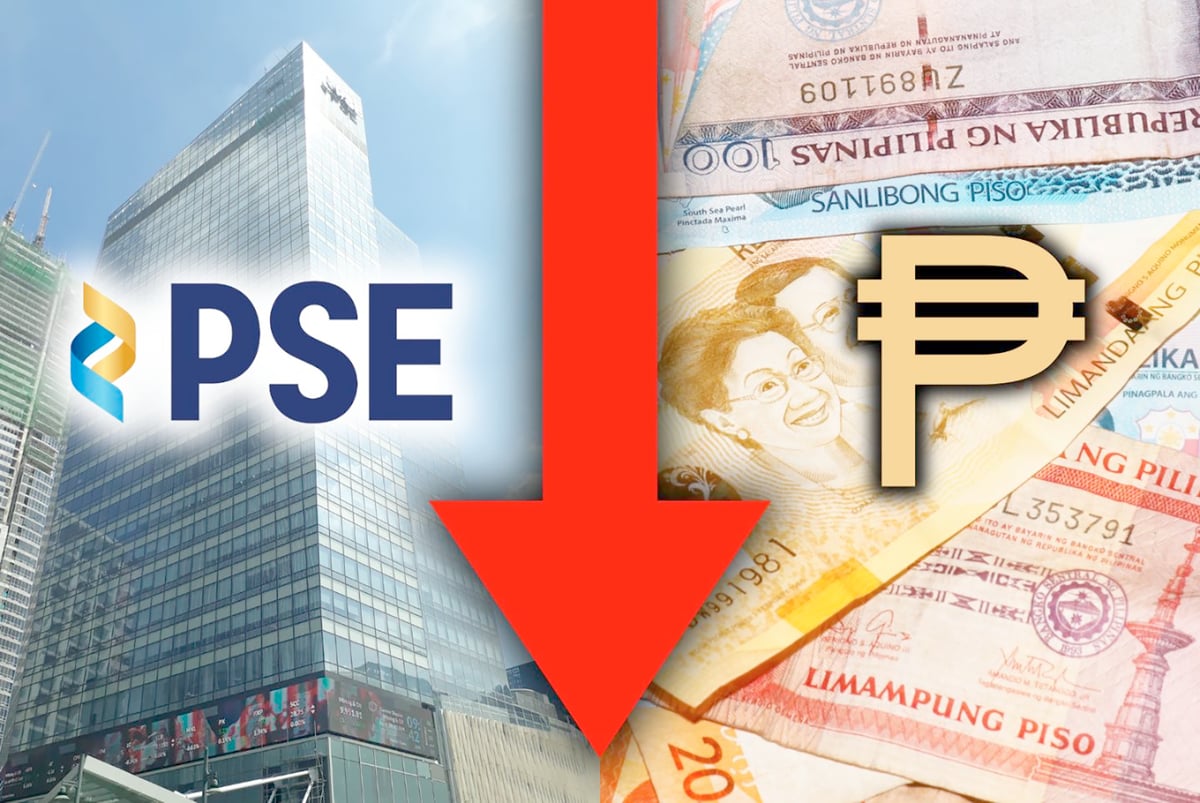
In the foreign exchange market, Bankers Association of the Philippines data showed the peso opened at P60.95, traded between P60.90 and P61.222, and closed near the weaker end of the range at P61.165.
This follows the local currency briefly dipping below the P61 level at the start of the week, closing at P60.93 on Monday.
Peso declines
The peso’s decline coincided with the resurgence of Middle East risks and the rebound in global oil prices, which revived concerns over the Philippines’ energy import costs and the corresponding demand for dollars.
Adding to the uncertainty, a cargo vessel reported being struck by an unidentified projectile near the Strait of Hormuz, renewing concerns over the security of one of the world’s most important energy corridors.