
The Clock is Ticking
Because of this ticking clock, Marcos’ national agenda is no longer about what he wants to do, but what Congress is willing to let him do.
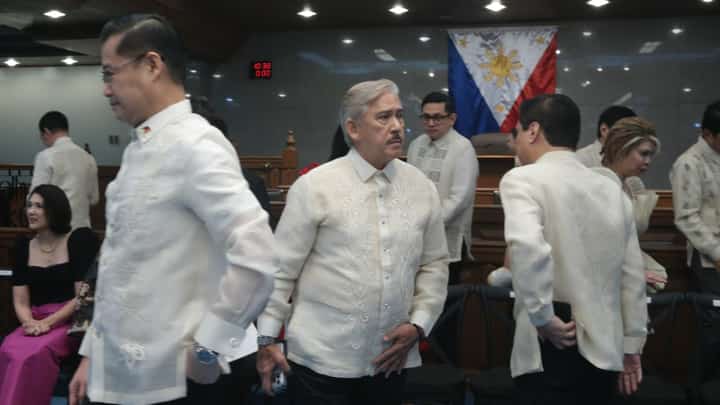
Senate president Sherwin Gatchalian leads the opening of the Second Regular Session of the 20th Congress on Monday, 27 July, 2026 in Pasay City.| Aram Lascano
Aram Lascano
President Ferdinand Marcos Jr.’s fifth State of the Nation Address (SoNA) served as a sobering reality check. Entering the final 22 months of his single six-year term, the President abandoned grand, sweeping promises for a much more grounded goal: “Sa nalalabing dalawang taon ng administrasyon, tatapusin natin ang mga nasimulan” (In the remaining two years of my administration, we will finish what we’ve started).
It was a smart, pragmatic pivot. But beneath the political rhetoric lies a harsher reality: President Marcos has entered his lame-duck phase.
In Philippine politics, this is when an administration’s power naturally erodes. Local politicians, lawmakers, and bureaucrats know Marcos will step down in June 2028, and that any political infractions they commit in the near future may go unpunished after the elections. Their loyalty will soon shift away from Malacañang and toward whoever appears to be the frontrunner in the next presidential election.
Because of this ticking clock, Marcos’ national agenda is no longer about what he wants to do, but what Congress is willing to let him do. For the next two years, the 20th Congress will play a purely transactional game with the President, passing only specific laws that secure their own political survival or advance their political career.
Breaking down the promises made at the Batasang Pambansa makes it easy to see what will succeed and what is completely dead on arrival.
What proposed measures will likely succeed? The crowd-pleasers and populist policies are a shoo-in. Marcos’s call to expand income tax exemptions for people earning up to ₱P350,000 and his push to scale up Kadiwa agri-subsidies are guaranteed wins.
Lawmakers don’t need to be forced to pass middle-class tax relief or food discounts; doing so gives them easy bragging rights for their reelection campaigns. Because the self-interest of Congress perfectly aligns with the President’s goals, these voter-friendly bills will sail through.
What is bound to fail? Conversely, no presidency can engineer structural miracles in just two years. The Philippines’ most entrenched crises demand generational timelines, massive capital investment, and sustained bureaucratic reform. For that reason, calls to amend the Electric Power Industry Reform Act (EPIRA) to lower electricity bills, build a nuclear energy network, or pass an Anti-Political Dynasty Bill are politically doomed.
Amending EPIRA means taking on powerful energy conglomerates that help fund political campaigns. Passing an anti-dynasty law would require lawmakers to dismantle their own family empires. With Marcos’s political leverage already waning, he lacks the muscle to force Congress into sacrifices that threaten its members’ long-term family interests.
There is also a gray area: the corruption crackdown. The SoNA made waves by promising high-profile prosecutions over recent flood control scandals. But don’t expect a total purge.
Going after top-tier allies close to an election cycle risks triggering a messy political war that could paralyze the government. To avoid total gridlock, expect the administration to target sacrificial lambs — mid-level bureaucrats and isolated political figures — while leaving the most powerful players untouched.
Ultimately, the grand transformation of Bagong Pilipinas has run out of time. Marcos cannot fix decades-old systemic problems in education, energy, or political corruption in 700 days.
For the remainder of his term, the President’s power is limited to what he can do directly through executive orders, foreign policy diplomacy, and targeted agency spending.