
What the Pax?
The Philippines is giving the Americans access to our country’s vast reserves of silica, copper, chromite, nickel and cobalt just so they can beat China in world trade.
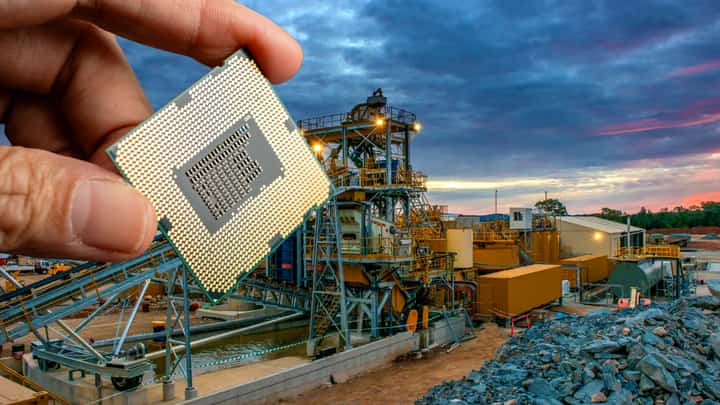
Lost in the shuffle of the ongoing impeachment trial of Vice President Sara Duterte, aside from the much much larger issue of “Floodgate,” is another one that has profound repercussions for our country’s sovereignty, environmental and ecological health, agriculture and our general psychic well-being as a supposedly independent country free from foreign interference.
I am talking about a creature called Pax Silica. I would assume it was named in (dubious) honor of the term Pax Romana (Roman Peace), that significant period of comparative peace and stability of some one hundred and fifty years, started by Emperor Gaius Octavius, across the entire Roman Empire.
Pax Silica, on the other hand, was initiated by the Empire of the United States in furtherance of its economic war against China. The USA has gathered a bunch of states across the globe (in various states of vassalage to the USA). The purpose was to secure, ostensibly for all its signatories, but mainly for the benefit of the USA, mining rights and supply of materials critical for the production of semiconductors and other technological necessities, more particularly artificial intelligence (AI) — the wave of the future.
This initiative comes as China, now overtaking the West in the said sectors, has suddenly become parsimonious in sharing with its putative Western competitors its own hoard of rare earth elements used for high technology.
You ask, high technology, say you. Where do we come in? We don’t have the capability to manufacture chips, specifically the all-important OEM wafers, that countries such as Taiwan churn out regularly; all we have are camote chips and wafer biscuits.
But then, Grasshopper, we have the raw materials, abundant deep inside the bowels of our territory. And that, dear reader, is where we come in. You see, in Tarlac lies a beautiful piece of unspoiled land one thousand and six hundred hectares of it, perfectly suited for building a secure hub for the USA to reduce its dependence on earth resources from potentially hostile governments.
Differently stated, the Philippines is giving the Americans access to our country’s vast reserves of silica, copper, chromite, nickel and cobalt just so they can beat China in world trade.
And what access we are giving them! The area — “industrial hub,” they sugarcoat it — will be off-limits to most Filipinos. It will operate under its own set of rules (read: laws), be run by foreigners, and dig deep into the land (using monster machines) to mine minerals needed by the US and its European and other allies.
In so doing, it will be trenching upon local communities and their livelihoods, polluting the earth, and using five million liters of water DAILY for production. The scenario is so repellent that I am reminded of those old Filipino movies where impoverished parents sell their daughters to rich, lecherous old men mouthing the words (in mock Spanish accent), “Acong bejele se iyo, hija.”
We are so angry at China for its daily incursions into our exclusive economic zone in the South China Sea, yet we surrender our sovereignty by giving up a former president to a foreign court and opening our territory to EDCA sites and Pax Silica.
So don’t blame our countrymen for asking, “Mr. Marcos, what the pax?”