
High Tribunal ruling binds impeach trial — defense
The ruling stated that due process protections apply even before an impeachment case reaches the Senate and that impeachment charges must involve acts committed in relation to an official’s office and during the incumbent’s current term.

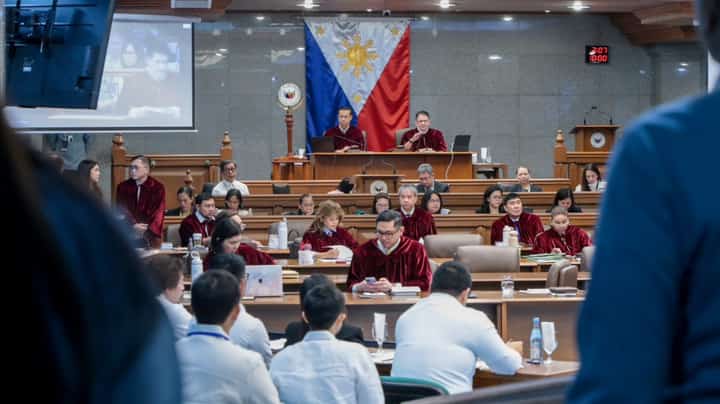
THE Senate impeachment court on Monday had its share of drama with Senators Alan Peter Cayetano and Robin Padilla ignoring colleague Erwin Tulfo’s admonition for non-trial matters to be discussed elsewhere so as ‘not to waste time.’
PHOTOGRAPH BY aram lascano FOR DAILY TRIBUNE
Lawyers for Vice President Sara Duterte on Monday argued that the Supreme Court’s ruling voiding her first impeachment complaint established binding constitutional standards for impeachment proceedings, rejecting claims that key portions of the decision were merely “obiter dicta” or nonbinding legal observations.
Defense spokesperson Michael Poa told senator-judges that the Court’s discussion on what constitutes an impeachable offense formed part of the reasoning supporting its decision and was not incidental commentary.
“The Supreme Court did not make a distinction as to the guidelines it laid down in that decision,” Poa said.
He argued that the Court’s July 2025 ruling, which unanimously voided the first impeachment complaint for violating the Constitution’s one-year bar rule, also laid down due process standards governing impeachment proceedings.
“While the end result was that the one-year bar was triggered, what the Supreme Court was really discussing was the observance of due process in every stage of the proceeding,” he said.
The ruling stated that due process protections apply even before an impeachment case reaches the Senate and that impeachment charges must involve acts committed in relation to an official’s office and during the incumbent’s current term.
The defense has cited that language to argue that allegations involving Duterte before she became vice president cannot be used in the current impeachment trial.
Senator Alan Peter Cayetano questioned whether those portions of the ruling constituted binding doctrine or were merely observations unnecessary to the Court’s decision.
House prosecutor Chel Diokno disagreed, arguing that the ruling addressed a different legal issue and did not prescribe how the Senate should conduct the present impeachment trial.
“There is no trial yet to speak of when the Supreme Court rendered that decision,” Diokno said. “How could what is happening now in the trial have been an issue when the decision was rendered?”
He said the ruling defined impeachable offenses but did not establish trial procedures for the Senate.
The defense, however, maintained that legal questions arising during the trial remain subject to judicial review if the impeachment court commits grave abuse of discretion.
Responding to Cayetano, Poa said either party could elevate constitutional issues to the Supreme Court despite the Senate’s exclusive authority to acquit or convict.
Cayetano noted that the Senate had previously recognized the Supreme Court’s authority to resolve legal questions during impeachment proceedings.
He cited the 2012 impeachment trial of then Chief Justice Renato Corona, when the Senate complied with a temporary restraining order barring the disclosure of Corona’s foreign currency accounts.