
WORTH THE TECH: Kerwin Go’s AI revolution


Long before artificial intelligence (AI) became the centerpiece of his latest work, Kerwin Go had already established himself as a filmmaker. The director of Mina-Anud (2019) and the 2024 Metro Manila Film Festival horror entry Strange Frequencies: Taiwan Killer Hospital is now reaching a much wider audience through AI-generated short films.
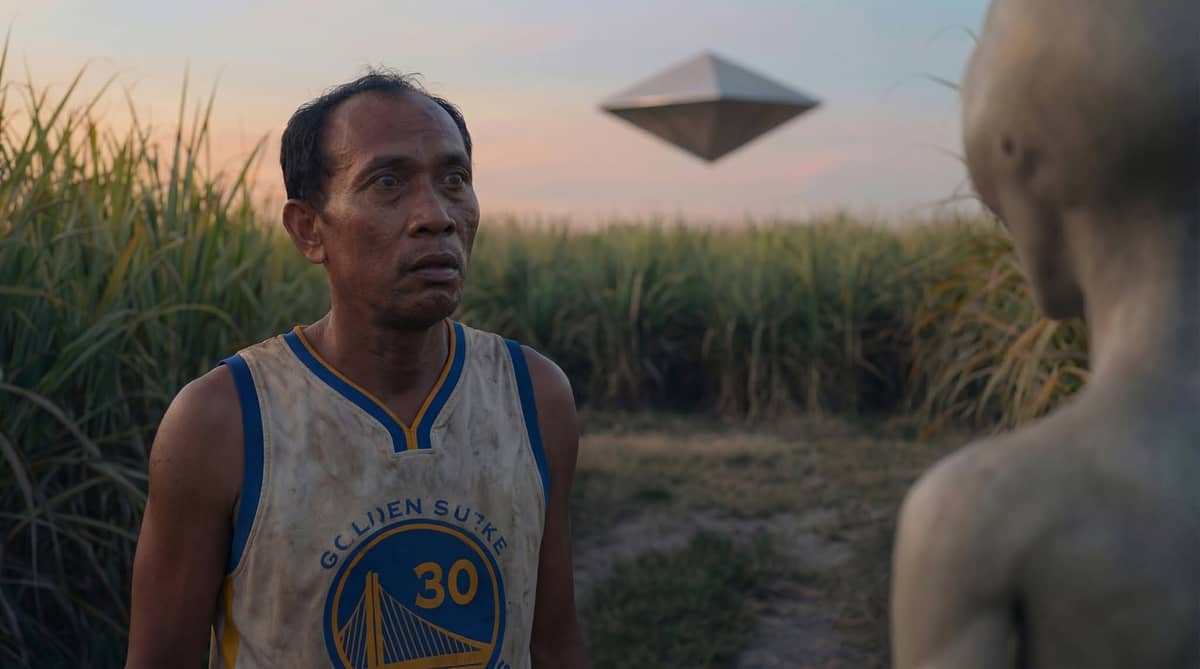
His viral Philippines: Worth It series didn't begin as a film project. It started with a satirical poster titled Philippines: Worth The Hassled, a playful jab at the country's travel realities that quickly gained traction online.

Upcoming ‘Worth It’ episode, Spain.
Go later refined the concept into Philippines: Worth It, creating a series of posters before expanding it into cinematic shorts. The campaign has since evolved into Worth It Mag Abroad, following the adventures of Dodong, a distinctly Filipino everyman, and his French-American wife Claire as they navigate cultures around the world.
From Istanbul to 'Worth It'
Go's fascination with AI as a storytelling tool began after a trip to Istanbul. Drawn to the history of Topkapi Palace, he immersed himself in Ottoman architecture, court customs, costume design and the diverse cultures that once populated the imperial harem, using AI to recreate the world he had been researching.
"That was the moment everything clicked," Go said in an exclusive e-mail interview. "I realized these tools weren't just for creating interesting images. They could become a powerful medium for visual storytelling, allowing me to bring well-researched historical worlds to life in ways that would have required an enormous production budget through traditional filmmaking."
"What excited me wasn't the technology itself, but the possibility of telling stories that previously would have been impossible for an independent filmmaker to produce."
A pre-Dodong scene from Go’s earlier online comedy shorts.
That mindset carried over to Worth It, whose growing popularity eventually led to recognition from the Department of Tourism.
"It felt like validation that if you have a strong enough idea, execute it well, and put it out into the world, it will eventually reach the right people," he said. "I hope it helps shift the conversation away from AI simply being viewed as a shortcut or a cost-cutting tool. For independent filmmakers, it can also be a tool for access. It allows you to prove an idea, build an audience, and create work without waiting for someone else to give you permission."
More tool than replacement
As generative AI continues to divide the creative community, Go admits his first reaction was no different from many filmmakers.
"I turned to my wife, who is an assistant director, and said, 'We're in trouble. We're going to be out of jobs,'" he recalled after seeing the early capabilities of Google Veo 3.
Working with the technology changed that perspective. While AI can dramatically shorten production time, he says the creative work behind a film remains firmly in human hands. Character development, research, cinematography, directing performances and editing still require taste, judgment and iteration.
"So yes, AI shortens the distance between an idea and a finished film," he said. "But it doesn't eliminate writing, directing, research, judgment, taste, editing, or endless iteration."
"Refusing to engage with the technology doesn't mean it will stop developing. That train is leaving the station whether we decide to get on board or not. I'd rather learn how to use it thoughtfully than pretend it isn't coming," he added.
Rather than seeing AI as a replacement for artists, Go believes it is a tool that can expand what creators are already capable of doing.
"My message to writers, illustrators, filmmakers and other creatives is this: don't think of AI as something that replaces you. Think of it as something that can multiply what you're already capable of doing."
He also believes the debate over whether AI-generated work qualifies as art misses the bigger question.
"At the end of the day, the better questions are: Did the work communicate something? Did it have a point of view? Did it make someone feel something? Was there an author behind it?"
The future of filmmaking
Looking ahead, Go believes AI could level the playing field for independent filmmakers, particularly in countries like the Philippines where financing has long been a hurdle.
"I think AI will democratize filmmaking in ways we've never seen before," he said. "Young filmmakers who previously couldn't afford crews, equipment, locations, or visual effects will increasingly be able to compete based on the strength of their ideas rather than the size of their budgets."
He does not believe AI will replace conventional productions, arguing instead that filmmakers will increasingly combine traditional production with AI-assisted workflows.
For Go, the more pressing conversation is about ethics. He believes creators should never use another person's likeness or voice without consent, should never present fabricated material as documentary truth, and should remain accountable for everything they create.
"As these tools become available to everyone, what will ultimately distinguish filmmakers won't be access to AI," he said. "It will be their taste, integrity, point of view, and ability to tell stories that people genuinely choose to watch."