
NBI official says Duterte remarks satisfy grave threat elements
PASAY CITY — National Bureau of Investigation (NBI) official Jeremy Lotoc on Tuesday maintained that Vice President Sara Duterte's remarks satisfied the elements of the crime of grave threats, defending the agency's findings during his cross-examination before the Senate impeachment court.
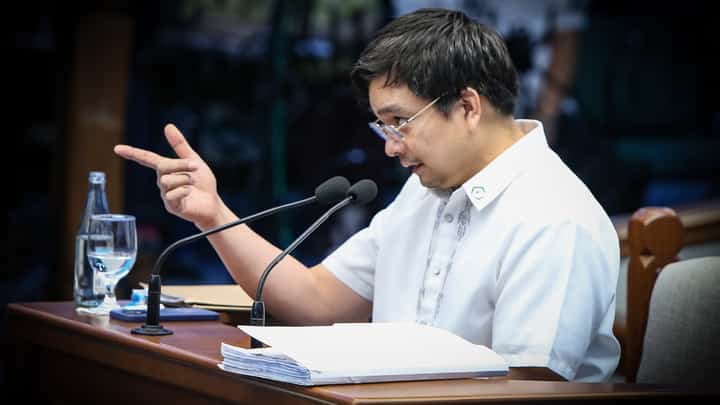
During the fifth day of Duterte's impeachment trial, Lotoc, the NBI's chief for the Bangsamoro region, was questioned by the defense when Senator Alan Peter Cayetano intervened to clarify the basis of the NBI's conclusion.
Cayetano asked whether President Ferdinand Marcos Jr., First Lady Liza Araneta-Marcos and former House Speaker Martin Romualdez truly felt threatened by Duterte's statements.
"If they felt threatened, does that mean they believed what Vice President Sara said—that they would be killed? Because they wouldn't feel threatened if they didn't think she meant what she said about killing the three of them," Cayetano said.
Lotoc replied that, based on the NBI's investigation, the three officials took Duterte's remarks "seriously."
Cayetano then pointed out that the alleged threat was conditional.
"But the threat was, 'If you have me killed, I will have you killed.' So if they had no intention of killing her, why would they feel threatened? Unless you're saying you believe they were indeed planning to kill the vice president?" he asked.
Lotoc said investigators viewed the remarks differently from a law enforcement perspective.
"Actually, sir, from the perspective of law enforcement, that was exactly what alarmed us," he said.
Cayetano responded that while he was also concerned by Duterte's language, his question centered on whether the legal elements of grave threats had been met.
"I'm also alarmed by the language, but that's not my point. My point is that, for it to constitute grave threats, the person being threatened must actually feel threatened. If the three of them had no intention of killing her, why would they feel threatened? Did that not come into your mind as an investigator?" he said.
Lotoc explained that the NBI treated Duterte's remarks as an event-based threat.
"What came to in our minds, Your Honor, was the possibility that, God forbid, something could happen to the vice president without the three officials having anything to do with it. If that happened, the alleged instruction could be triggered, and the three officials could be killed even though they had no involvement," he said.
'Other groups could take advantage'
Lotoc said one of the NBI's biggest concerns was the possibility that other groups could exploit Duterte's public remarks if she died from causes unrelated to the three officials.
"God forbid the vice president dies, but that doesn't necessarily mean the three officials were responsible. She could die for [some other reason]," Lotoc said.
He said that in such a scenario, the public could mistakenly blame the three officials, creating an opportunity for others to exploit the situation.
Lotoc reiterated that the NBI believes Duterte's remarks met all the legal elements of grave threats.
"We believe all the elements of grave threats were satisfied," he said.
Lotoc, moreover, maintained that the issue extends beyond criminal law and into national security.
"From the perspective of law enforcement, the situation would become chaotic, Your Honor. It is a matter of national security," he said.