
MySSS cardholders get P1 LRT-2 fares — DoF
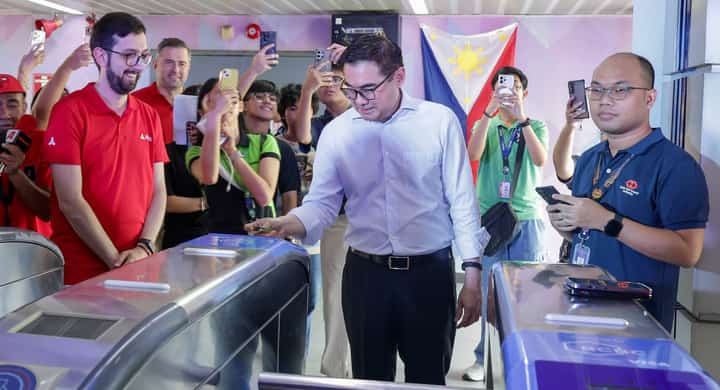
Finance Secretary Frederick Go announced that MySSS Card holders can avail of a two-week PISO Fare promotion as the government launched a cashless payment system for the Light Rail Transit Line 2 (LRT-2), a move aimed at making daily commutes faster and more convenient.
Speaking during the launch of the LRT-2 Digital Fare Payments Proof of Concept at Legarda Station, Go, who also serves as Social Security Commission chair, said the initiative aligns with the administration’s efforts to simplify transactions and reduce everyday costs for Filipinos.
President’s instructions
“This program is aligned with our government’s goal of helping our fellow citizens. This is an instruction from the President for us to find ways to make life easier, more affordable, and more comfortable for our people,” Go said in Filipino.
Under the new system, commuters can pay train fares by simply tapping Visa or Mastercard debit and credit cards, NFC-enabled mobile devices, or by scanning a GCash QR code directly at fare gates. The service is also available to foreign visitors, eliminating the need to purchase separate transit tickets.
The project is a collaboration among the Department of Transportation, the Light Rail Transit Authority and Rizal Commercial Banking Corp. (RCBC), and forms part of the government’s broader push for digitalization and financial inclusion.
Accessible, affordable digital financial services
Go said the initiative complements recent reforms aimed at making digital financial services more accessible and affordable, including government measures which encouraged banks to eliminate or reduce InstaPay and PESONet transfer fees.
The Finance chief expressed optimism that the LRT-2 pilot program would serve as a model for the wider rollout of interoperable digital fare payment systems across the country’s public transportation network, making commuting more seamless for millions of Filipinos.
RCBC’s commitment
For his part, RCBC president and chief executive officer Reggie Cariaso said the initiative underscores the bank’s commitment to supporting the government’s vision of a digitally connected Philippines.
“We are grateful for the trust and partnership of the DoTr and LRTA as we continue building accessible and future-ready digital ecosystems for Filipinos. Beyond banking, we see digital finance as an enabler of more connected, seamless and efficient daily experiences,” Cariaso said.
The LRT-2 implementation forms part of RCBC’s broader digital payments strategy, which includes innovations through RCBC Pulz, RCBC DiskarTech and RCBC ATM Go, as well as partnerships with government agencies, global payment networks and fintech firms through ecosystem banking to accelerate financial inclusion and help build a more connected digital economy.