On the merits, however, the prosecution opened cautiously — perhaps too cautiously. By putting National Bureau of Investigation Senior Agent John Mark Calilung first on the stand, prosecutors chose to authenticate the digital record of Duterte’s alleged threats before building the larger moral and constitutional case. That may be sound litigation, but as political communication, it gave the defense an opening.
The defense seized it. Through repeated objections and cross-examination, Duterte’s lawyers pushed the week’s story away from the gravity of a Vice President’s words and toward the supposed weakness of the NBI’s investigation. The admission that the first witness had no personal knowledge of an actual hired assassin did not destroy the prosecution’s case, but it became the clip of the day.
Still, the defense’s strongest week should not be mistaken for vindication. Its counter-narrative — that Duterte’s words were an unconventional but justified reaction to political persecution — asks the country to accept a perilous standard.
If threats by the second-highest official of the land can be excused as emotional overflow, then power itself becomes the alibi.
This is the point that should trouble Filipinos beyond factional loyalties. The impeachment court is not being asked merely whether Duterte spoke harshly, whether her opponents have clean hands, or whether the Marcos-Duterte alliance has collapsed into elite warfare. It is being asked whether public office still imposes discipline on language, conduct, and accountability — especially when the official speaking commands a national following and occupies a heartbeat-away constitutional post.
Yet the proceedings already show how easily that question can be swallowed by performance.
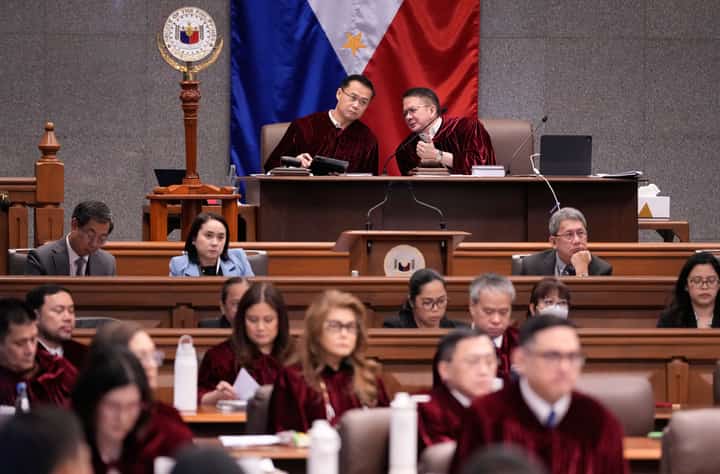
Both camps understand the trial as a legal contest and a content machine. Even the Vice President’s brief huddle with her legal team at the Senate building played to a public audience.
Lawyers crafted moments ready for short-form video. Supporters and critics harvested gestures, objections, facial expressions, and sound bites. The battle for public sympathy now runs parallel to the battle for senator-judges’ votes.
Week 1, then, belonged narrowly to the defense in terms of optics. The prosecution did not land the opening blow that could have framed the trial as an unavoidable reckoning. But optics are not verdicts. Only one witness has been heard, and the court has already moved toward the next, potentially more consequential phase by subpoenaing Duterte’s chief of staff, Zuleika Lopez.
When Lopez and other witnesses testify, the trial may move beyond public statements and into what happened inside the Vice President’s circle: who knew what, who gave orders, and whether the words in question were just angry remarks or part of a wider abuse of public trust.
That is where the prosecution must show that it has more than outrage.
For the rest of us, the task is to resist scoring the trial like a nightly debate. A vice president deserves due process. The public deserves the truth. And the Senate must prove that it can tell the difference between a political show and a constitutional duty.