
Secondhand Rolex market boosted by softer gold prices
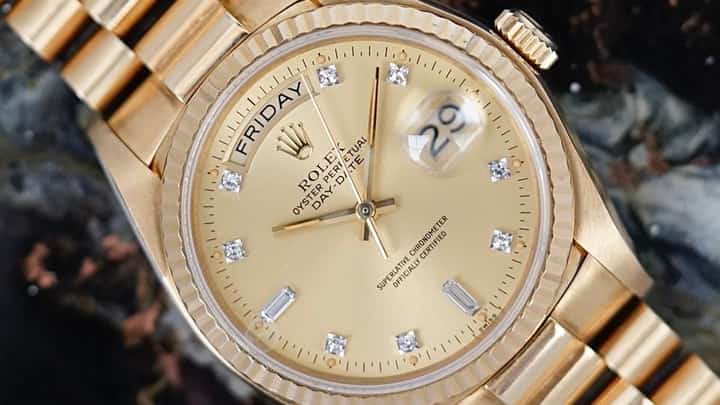
Collectors and luxury watch enthusiasts looking to acquire a pre-owned gold Rolex may find current market conditions increasingly favorable as declining gold prices begin to weigh on valuations in the secondary watch market.
After benefiting from a strong rally in bullion prices last year, gold Rolex models have recently seen their momentum slow, creating opportunities for buyers who had previously been priced out of the market. Data from the Bloomberg Subdial Watch Index showed that prices of many pre-owned gold Rolex watches have either flattened or declined since April as gold retreated from record highs.
The trend marks a reversal from 2025, when soaring bullion prices helped push the value of precious metal watches higher and supported demand for gold-cased luxury timepieces.
Among the models experiencing the sharpest pullback is the yellow-gold Rolex Daytona Oysterflex, which has declined roughly 4 percent since April. Analysts say the movement highlights how closely the luxury watch market has become linked to fluctuations in commodity prices, particularly for timepieces with significant precious metal content.
The relationship between gold prices and luxury watches has become more pronounced in recent years as watchmakers have repeatedly increased retail prices to offset higher raw material costs. When gold prices surged, manufacturers adjusted pricing upward, helping lift both primary and secondary market values.
As bullion prices moderate, however, pressure on resale values has started to emerge, particularly for models that are less scarce or less sought-after by collectors.
Despite the broader weakness, the market remains far from uniform. Highly coveted watches continue to attract strong demand and command premium valuations. According to market data, the top-performing luxury watches tracked by the Bloomberg index—including several Rolex and Patek Philippe references—have continued to post gains even as the broader market softened.
The divergence underscores a growing split within the luxury watch industry. Iconic and hard-to-obtain models continue to benefit from collector demand, while more widely available pieces are becoming increasingly sensitive to changes in gold prices, consumer sentiment and broader economic conditions.
For prospective buyers, analysts say the current environment may represent one of the better opportunities in recent years to purchase a pre-owned gold Rolex at a discount relative to the highs seen during the peak of the gold rally.
The shift also reflects a broader normalization in the luxury watch market following the extraordinary price gains recorded during and after the pandemic, when supply shortages, strong consumer demand and rising asset prices fueled rapid appreciation across many collectible watch categories.
While gold prices remain an important driver of value, industry observers note that brand strength, rarity, condition and collector appeal continue to play a far larger role in determining long-term performance, particularly for flagship Rolex, Patek Philippe and Audemars Piguet models.
As a result, buyers entering the market today may find greater negotiating power and a wider selection of gold watches than was available during the height of the precious metals boom, even as demand for the most desirable luxury timepieces remains resilient.