
Palace rejects 'hypothetical' defense in Sara Duterte threat case
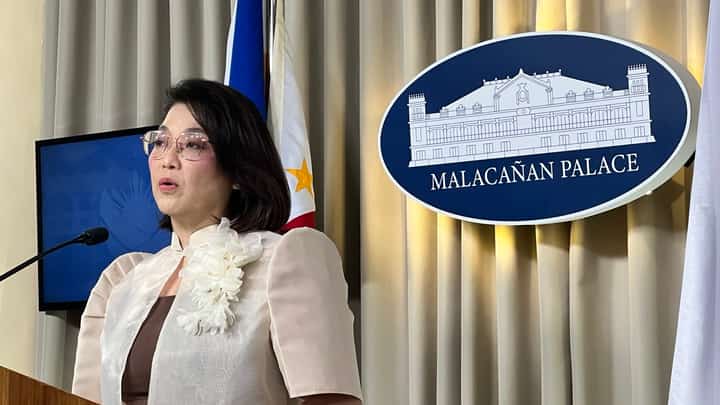
Malacañang on Thursday rejected the defense's argument that Vice President Sara Duterte's alleged threats against President Ferdinand Marcos Jr., First Lady Liza Araneta-Marcos, and former House Speaker Martin Romualdez were merely hypothetical or conditional.
Presidential Communications Office Undersecretary and Palace Press Officer Claire Castro said Duterte's own statements in the video presented during the impeachment trial contradicted the defense's position.
"Ang pagbibigay po ng salita na kumausap na siya ng tao para patayin ang Pangulo, ang Unang Ginang at ang dating House Speaker, hindi po ito hypothetical, nakita po ito, hindi po ito gawa-gawang isip, hindi po ito pantasya," Castro said during a Palace briefing.
The defense argued before the Senate impeachment court that Duterte's statement was conditional because it was preceded by the phrase, "kapag pinatay ako" ("if I am killed"), and therefore did not constitute a high crime or impeachable offense.
Castro, however, pointed out that Duterte herself emphasized in the video that her statement was "no joke."
"Sinabi po ito at mismong si Bise Presidente ay hindi pinasinungalingan ang kanyang mga sinabi... wala tayong pag-uusapan tungkol sa hypothetical, hindi po iyan hypothetical, dahil mismong si Bise Presidente ang nagsabing 'no joke, no joke,'" she said.
The Palace official also cited the Revised Penal Code and the Supreme Court ruling in Caluag v. People, saying grave threats may be punishable whether or not they are accompanied by a condition.
"In grave threats, the wrong threatened, which amounts to a crime, may or may not be accompanied by a condition," Castro said, quoting the ruling.
She further argued that the defense effectively acknowledged Duterte's statements by attempting to justify them through alleged oppression against Office of the Vice President chief of staff Zuleika Lopez and the supposed "Oplan Romanov."
"You cannot, and you will not justify something if you did not commit any act," Castro said.
She also challenged the defense to present evidence supporting the existence of the alleged "Oplan Romanov," saying it was the Vice President's camp that introduced the claim.
"Hindi po ba siya ang dapat na magbigay ng mga ebidensiya patungkol dito at hindi ang Palasyo?" Castro said.
She added that the National Bureau of Investigation had previously given Duterte the opportunity to provide details regarding the alleged threats against her and her family but that she did not respond.
Castro maintained that a person's status does not excuse threats against the President.
"Hindi natin maiwawaksi ang pagiging Bise Presidente niya at sa pagiging nanay niya. Ang pagbabanta ay pagbabanta... nagbanta ka pa rin sa buhay ng Pangulo," she said.